Top 10: Rail Infrastructure Construction Firms
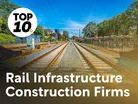
From urban metro expansions to intercity high-speed corridors and freight lines, the leading rail infrastructure firms execute extraordinarily complex construction feats often under compromising geological, regulatory and logistical conditions.
They design, engineer and build the physical backbone of modern rail transport, delivering one megaproject after another. We identify the top rail infrastructure construction firms by annual revenue.
10. Ferrovial
CEO: Ignacio Madridejos
Headquartered in: Amsterdam, Netherlands
Annual revenue: US$10.9bn
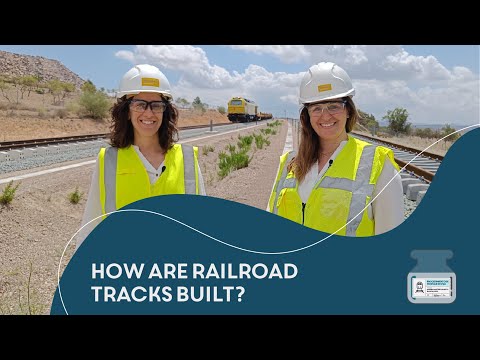
Founded in 1952 by Rafael del Pino y Moreno in Madrid, Ferrovial initially focused on railway projects for Spain’s rail operator Renfe.
Over the decades, Ferrovial has diversified, branching into areas such as roads, airports and waterworks while maintaining a strong rail and transport infrastructure portfolio.
In the 2010s and 2020s, it expanded internationally, winning major contracts in northern Africa, the US, the UK, Australia and Latin America. Standout projects include the Crossrail in England and Spain’s high-speed rail network.
9. Webuild
CEO: Pietro Salini
Headquartered in: Rome and Milan, Italy
Annual revenue: US$14.3bn
Webuild traces its origins back more than120 years. It is regarded as a global specialist in rail tunnels, metros and high-speed rail corridors.
The group has delivered more than 14,500km of rail worldwide and has been instrumental in major European high-speed rail projects.
These include Italy’s own high-speed network. It has also contributed to metro expansions in cities such as Milan, Rome and beyond. It often acts as lead contractor for long, deep-bored tunnels and challenging urban alignments.
8. Skanska
CEO: Anders Danielsson
Headquartered in: Stockholm, Sweden
Annual revenue: US$18.3bn
From its founding in 1887 in Sweden, Skanska has grown into a global construction and project development group with substantial rail and transit infrastructure experience across Europe and North America.
The company’s rail portfolio includes major bridge and viaduct projects integral to rail networks, such as the Portal North Bridge in New Jersey, a critical link for rail services.
Skanska has also delivered metro and commuter rail stations, track upgrades and signalling projects in markets including the UK, US and Scandinavia.
7. Acciona
CEO (Chairman & CEO): José Manuel Entrecanales Domecq
Headquartered in: Madrid, Spain
Annual revenue: US$22.8bn
Acciona was formed in 1997 through the merger of Entrecanales y Távora and Cubiertas y MZOV, though its roots go back to 1862 with the founding of MZOV, a Spanish railway company.
Acciona has evolved into a diversified infrastructure group active in transport, water, energy and services across more than 40 countries. It has delivered significant metro and commuter rail projects, notably São Paulo’s Line 6 Orange metro in Brazil, the largest infrastructure project under development in Latin America.
6. Larsen & Toubro (L&T)
Chairman & Managing Director: S. N. Subrahmanyan
Headquartered in: Mumbai, India
Annual revenue: US$32.4bn

In 1938, two Danish engineers founded L&T in Mumbai. It has become India’s largest engineering and construction conglomerate, with a fast-growing rail infrastructure business.
L&T’s rail portfolio spans high-speed rail, metro systems, dedicated freight corridors, stations, bridges and electrification. Its most prominent railway project is the Mumbai–Ahmedabad High-Speed Rail “Bullet Train” corridor, where L&T has secured multiple major contracts for viaducts, stations, track works and electrification, making it ultimately responsible for more thanhalf of the project’s track construction.
5. ACS Group
CEO (ACS & Hochtief): Juan Santamaría
Headquartered in: Madrid, Spain
Annual revenue: US$56.3bn
A global engineering and construction conglomerate founded in 1997, ACS Group delivers large-scale rail EPC projects through subsidiaries including Dragados and its controlling stake in Germany’s Hochtief.
ACS expanded its rail and civil capabilities significantly through the acquisition of Hochtief, gaining access to major European rail markets and complex urban rail projects. Hochtief has recently won significant German rail infrastructure contracts from Deutsche Bahn, including the refurbishment of key Rhine riverbank rail lines and work on Munich’s S-Bahn second main line.
4. Bouygues Construction
CEO: Olivier Roussat
Headquartered in: Paris, France
Annual revenue: US$65.4bn
Founded in 1952 by Francis Bouygues in France, Bouygues has grown into a diversified, listed group with Bouygues Construction as a core division.
Bouygues Construction is active in civil works, building and infrastructure, with significant involvement in high-speed rail, stations, underground rail infrastructure and metro lines such as the one in Cairo, Egypt.
The group’s Colas subsidiary specialises in railway construction, track renewal and maintenance across Europe, Africa and the Middle East.
3. VINCI
CEO: Pierre Anjolras
Headquartered in: Nanterre, France
Annual revenue: US$85.1bn
VINCI is a global group with deep expertise in rail modernisation, stations, tunnels and transit works. The group’s rail portfolio includes landmark projects such as the 340km South Europe Atlantic high-speed rail line.
Delivered by a VINCI-led joint venture in 38 months, it features 24 viaducts and 500 engineering structures. VINCI is also a key contractor on the Grand Paris Express, Europe’s largest urban transport project and has participated in major rail electrification and RER extension projects in France.
2. China Railway Construction Corporation (CRCC)
Executive Chairman: Dai Hegen
Headquartered in: Beijing, China
Annual revenue: US$141.5bn
CRCC is a mega-sized, state-owned construction group that has been operating since 1948. Originally part of the Ministry of Railways’ construction apparatus, CRCC was restructured and listed in the 2000s, becoming one of the world’s largest railway infrastructure contractors.
The company works on railways, metros, stations, bridges and tunnels on a colossal scale, with a presence in more than100 countries. CRCC has been pivotal in building China’s high-speed rail network, which is the world’s largest, as well as its set of urban metro systems. These can be found in cities such as Beijing, Shanghai and Guangzhou. Internationally,
CRCC has delivered major rail projects under the Belt and Road Initiative, including lines in Africa, Asia and Latin America. It also recently secured contracts for high-speed rail components in Morocco and other emerging markets, cementing its status as a global rail infrastructure powerhouse.
1. China Railway Group (CREC)
Chairman: Zhao Dianlong
Headquartered in: Beijing, China
Annual revenue: US$152.2B

CREC is a dominant force in high-speed rail, metros, tunnels and bridges. Its origins date back to 1950, when the Ministry of Railways established its construction and design bureaus. These were merged and reorganised over decades into China Railway Engineering Corporation and, in 2007, into the listed entity CREC.
The group has built more than 60% of all railways in China, including 90% of its electrified lines, and a substantial share of the country’s urban rail transit projects.
CREC’s portfolio includes China’s first electrified railway, its first high-speed rail line, the world’s first plateau railway and landmark structures such as long sea-crossing bridges and deep mountain tunnels.
Internationally, the group has delivered major projects including the revamp of the Tanzania–Zambia Railway, the delivery of the China–Laos Railway, and numerous rail schemes across Africa, Asia and Europe.
Company portals


Executives
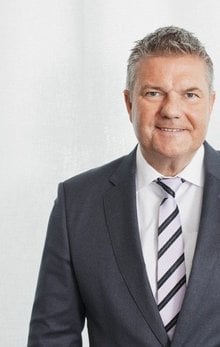
Anders Danielsson
President and CEO, Skanska Group
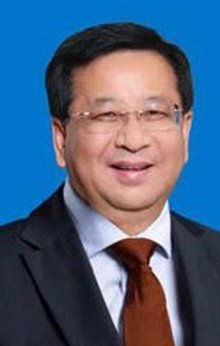
Dai Hegen
Executive Chairman
Ignacio Madridejos
Chief Executive Officer
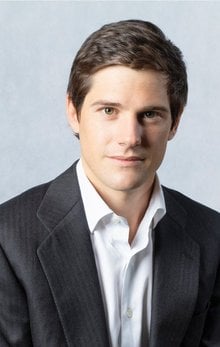
José Entrecanales
Chief Financial and Sustainability Officer (CFSO)
Juan Santamaria
Chief Executive Officer
Olivier Roussat
Chief Executive Officer
Pierre Anjolras
Chief Executive Officer
Pietro Salini
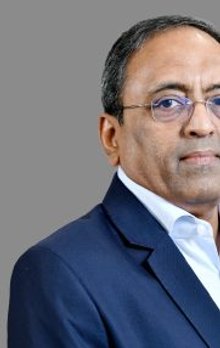
S.N. Subrahmanyan
Chairman & Managing Director
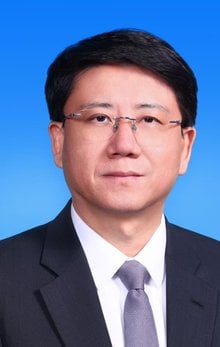
Zhao Dianlong
Chairman