
BVB and RWE: Leading Sustainable Construction in Sport
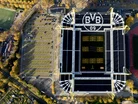
A significant renewable energy project has reached completion at Westfalenstadion, the home of the German football club Borussia Dortmund.
In partnership with the German energy firm RWE, a 5MW solar array has been installed on the stadium roof, making it the most powerful photovoltaic system of its kind at any stadium worldwide.

The project is the culmination of a sustainability partnership that began in the summer of 2024, with RWE serving as the club’s premium sustainability partner. Signal Iduna Park, as the ground is known, is the largest in Germany, providing the necessary roof surface area for a renewable energy system of this magnitude.
The development follows earlier work in April 2024, when RWE fitted solar modules on the roof of the BVB Fan World building adjacent to the stadium. This new, larger installation represents a substantial step in the club's long-term environmental strategy.
Solar array installation and system specifics
The new rooftop system is composed of 11,132 solar modules. It is projected to generate more than 5MW at its peak output, surpassing the 4.2MW array at Istanbul's Nef Stadium, the previous record holder. The practical application of this new energy system could be considerable.
It could potentially allow the club to meet approximately half of the stadium's total electricity demand with solar power. According to BVB's own project data, the system is expected to save around 1,700 tonnes of CO₂ emissions annually.
To support the solar array, a 3.7-megawatt-hour battery storage facility is also being constructed.
This battery system, which is scheduled to become operational by early 2026, will enable the club to store and use solar-generated electricity during overcast conditions, a frequent weather pattern in the Ruhr Valley. This integrated approach addresses the challenge of intermittent power generation from solar sources.
Leadership and strategic partnership
Project leaders consider the installation a central element of Borussia Dortmund’s future sustainability goals.
Hans-Joachim Watzke, the club's CEO, views the project as part of a wider strategic vision.
"Signal Iduna Park symbolises our integrated efforts to ensure Borussia Dortmund's future viability," he says. "We are delighted that our home can now be associated with a record-breaking flagship project for climate protection."
BVB Managing Director Carsten Cramer emphasises the collaborative nature of the project.
"Together with RWE, we have achieved a real milestone in our sustainability partnership – with targeted regional impact and global appeal," Carsten says.
He adds: "This project is a key component of our decarbonisation strategy and is the ideal contribution to our commitment and our goal of working with our partners to continuously improve and take on more responsibility."
Markus Krebber, CEO at RWE, noted: "We are proud to have set a new record with BVB, one of Germany's most internationally renowned football clubs.
"Together, we have installed the world's most powerful solar system on the roof of Germany's largest stadium. This is a powerful statement in favour of efficient climate protection and is the result of the work of two teams that are perfectly aligned in their commitment to sustainability."
Sustainable construction in sports venues
This project is in line with the German Football League’s growing emphasis on environmental standards.
Since the 2023-24 season, sustainability criteria have been included in its licensing regulations, a first for a major professional football league.
Clubs are now mandated to demonstrate strategies for emission analysis and set reduction targets to participate.
The replicability of the Dortmund installation for other large venues is a key consideration, due to the significant capital investment and the structural engineering challenges involved in supporting such a large rooftop solar array.
While the Bundesliga has established itself as a leader in sports sustainability, some observers have raised questions about whether the mandatory requirements are strong enough, following the reduction of some proposed measures during the implementation phase.
Company portals


Executives
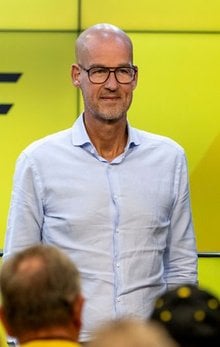
Carsten Cramer
Managing Director
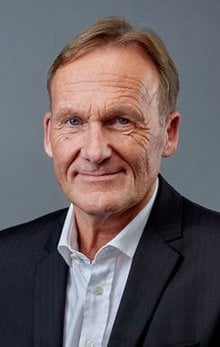
Hans-Joachim Watzke
CEO
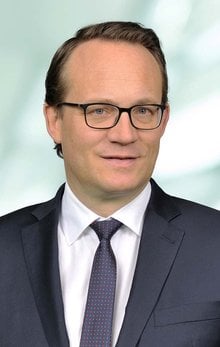
Markus Krebber
CEO