A Bunker in the Ballroom: White House Construction Halted
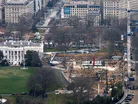
Plans to transform the White House into a venue capable of hosting grand-scale international events were first announced in July 2025.
The administration stated that it was unable to host major functions honouring world leaders and other countries without having to install a large and unsightly tent approximately 100 yards away from the main building entrance.
The White House State Ballroom was envisioned as a much-needed and exquisite addition of approximately 90,000 total square feet of ornately designed and carefully crafted space.
With an initial seated capacity of 650 people, the project promised a significant increase from the 200-person capacity of the current East Room.

Shifting designs
In August 2025, a consortium spearheaded by Clark Construction secured a US$200m contract for the project. Although design plans had not been submitted by September, Commission Chair Will Scharf informed the NCPC that the approval process applied only to construction, effectively greenlighting demolition and site preparation work to proceed immediately.
During this period, the scale of the project grew rapidly – President Trump initially projected a seating capacity of 650, but revised that figure to 900 in September and eventually to 999 guests by October.
By December 2025, the White House transitioned lead design responsibilities to Shalom Baranes, shifting James McCrery II into a secondary consulting role. While the administration offered no official explanation for the change, reports suggested the move followed friction between McCrery and the President over the ballroom's expanding scale, as well as McCrery's inability to meet project deadlines with his limited staff.
In March, President Trump confirmed that the military is spearheading the construction of a massive "big complex" beneath the new US$400m ballroom, strongly hinting at the creation of a modern bunker.
While showcasing renderings of the 90,000-square-foot facility to reporters aboard Air Force One, the President remained vague regarding the military's specific role in the project.
Historical demolition and legal deadlock
The new structure replaces the East Wing, which historically housed the Presidential Emergency Operations Centre (PEOC) – a secure shelter and communications hub established by FDR. While recent comments clarified who is building the underground portion, the specifics of the renovation remain classified. Key details, such as the bunker's total square footage, occupancy capacity and technological upgrades, have not yet been disclosed.
“The ballroom essentially becomes a shed for what’s being built under the military, including from drones, including from any other thing,” Trump said, adding that the windows will be “bulletproof".
On March 31, a US federal judge has issued a preliminary injunction to halt President Trump’s White House ballroom project, ruling that the administration bypassed mandatory legal procedures.
This decision stems from a lawsuit filed by the National Trust for Historic Preservation, which challenged the legality of the massive construction. In a pointed 35-page ruling released Tuesday, Judge Richard Leon asserted that the President lacks the unilateral authority to overhaul the executive mansion.
Judge Leon wrote that he concluded the National Trust is likely to succeed on the merits because no statute comes close to giving the President the authority he claims to have. He further noted that the President of the United States is the steward of the White House for future generations of First Families but is not the owner.
The ruling emphasises that construction cannot resume unless and until Congress blesses the project through statutory authorisation. This order is set to take effect in 14 days, providing the administration a window to file an appeal.
President Trump reacted to the news on his TruthSocial social media account, where he wrote: “In the Ballroom case, the Judge said we have to get Congressional approval. He is WRONG! Congressional approval has never been given on anything, in these circumstances, big or small, having to do with construction at the White House. In this case, even less so, because the Ballroom is being built with Private Donations, no Federal Taxpayer Money.”
Construction was well underway following the rapid demolition of the East Wing in the autumn. With the removal of the original structure and the completion of foundation work, the project was readying to transition to aboveground construction next month.