
How are Data Centres Supporting Local Construction Workers?
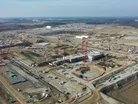
The expansion of AI infrastructure across the United States is generating significant construction employment as hyperscale data centre projects require extensive skilled labour and supply chain support.
As artificial intelligence demand accelerates, the construction sector is seeing major opportunities in the development of large-scale data centres. These projects require substantial construction workforces and create ripple effects through local supply chains and service providers.
Josh Pitcock, Senior Vice President of Government Affairs at Oracle, argues that modern AI data centres represent complex technology campuses requiring skilled workers across multiple phases.
"When people picture an AI data centre, they often imagine a building filled with machines and ask, 'Do people really work there?'" Josh says.
"It's a fair question. The answer is yes. And it's a lot of people. Thousands during the construction phase, and typically more than a thousand per site as operations begin, grow, and evolve over time."
Construction workforce requirements across multiple states
Large AI facilities require extensive construction work, from electrical and mechanical infrastructure to buildings capable of supporting high-density GPU clusters.
At Oracle's New Mexico and Wisconsin campuses, each project is expected to create around 4,000 construction jobs. Many of these roles are expected to be filled by local union labour.

Oracle's Abilene campus in Texas has already involved more than 8,000 construction workers since building work began in 2024. Additional developments include a Michigan campus requiring an estimated 2,500 to 3,000 construction roles and a site in Shackelford, Texas expected to support around 5,000 jobs.
"These examples reflect the scale of infrastructure required to support AI and cloud services," Josh writes.
Construction activity also creates demand for local suppliers, service providers and small businesses, extending the employment impact beyond direct construction roles. The interconnected nature of these projects means that fabricators, equipment suppliers and logistics companies across multiple states are experiencing increased demand as data centre construction accelerates.
Training programmes target construction workforce
To help prepare workers for operational roles following construction completion, Oracle has introduced workforce development programmes designed to create pathways into data centre careers.
The company's Data Center Oracle Pathways Trainee programme provides hands-on training in active data centre environments. According to Josh, the programme's first training cohort in Abilene exceeded expectations and is expanding as additional facilities come online.
The company has also focused on opportunities for military veterans and their families. "Veterans have real-world experience operating mission-critical systems and working in high-performance environments that align directly with the demands of data centre operations," Josh writes.

Oracle has partnered with Saint Martin's University to support its 12-week Server and Cloud Application: Data Center Technician programme, providing classroom learning, lab experience and professional coaching for veterans and transitioning service members.
According to Oracle's projections, nearly 8,000 operational roles are expected across its campuses in Michigan, New Mexico, Texas and Wisconsin once construction phases are complete.
Through Oracle Academy, students at secondary schools and universities can study subjects such as cloud infrastructure, information systems and project management.
"AI infrastructure supports businesses, hospitals, schools and governments across the country," Josh writes. "As demand for AI and cloud services grows, so does the need for a skilled workforce to operate and sustain it."
Company portals

Executives

Josh Pitcock
Senior Vice President of Government Affairs