EDF and Holtec Plan SMR Build at Former Coal Site
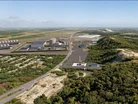
EDF and Holtec International have submitted plans to the UK Government for a small modular reactor (SMR) development at Cottam in Nottinghamshire. The site is a 900-acre brownfield location where a coal-fired power station operated until decommissioning in 2019. Demolition and site clearance work is under way at the former station.
The existing grid infrastructure remains in place. This could reduce the cost and timeline for connecting new generation capacity compared to greenfield developments. The site supplied power to the national grid for more than 50 years before closure.
Simone Rossi, Chief Executive Officer of EDF UK, says the location offers practical advantages. "The Cottam project supports the UK Government's ambition to expand nuclear capacity. It will facilitate significant redevelopment of a region that has given so much to the UK through its coal heritage."
The firms have signed Heads of Terms to establish a joint venture. This partnership will take the proposal through planning, regulatory approval and construction phases if the government backs the scheme.

Four reactor units proposed
The proposal covers up to four SMR-300 units designed by Holtec. Each unit would generate approximately 300 megawatts. Combined output could reach 1.3 gigawatts according to the joint venture submission.
The SMR-300 design uses pressurised water reactor technology. Holtec developed the units for modular factory construction rather than full on-site fabrication.
The companies say the reactor design allows for phased construction. Units could come online in stages rather than requiring the full four-reactor build before any generation begins. This approach differs from large-scale nuclear projects where the entire plant must reach completion before operation starts.
EDF operates 20% of the UK's nuclear power plants. The French company runs stations including Hinkley Point B and Sizewell B and is building Hinkley Point C and Sizewell C.
Employment and regional development
The joint venture says the project could create thousands of high-skilled manufacturing and construction jobs, as well as long-term operational roles, according to EDF. Holtec has stated it will expand its UK operations.
Rick Springman, President of Holtec International, says manufacturing could follow development. "Holtec plans to substantially expand its presence in the UK with a significantly larger operation centre and is evaluating a manufacturing plant to build nuclear equipment in the country."
A domestic manufacturing facility would shift some supply chain activity to the UK. Current large reactor projects source major components from international suppliers. Local fabrication of reactor modules or related equipment could change that pattern for SMR schemes.
The Nottinghamshire region hosted coal generation for decades. The transition from coal to nuclear construction represents a shift in the type of industrial activity rather than a decline.
Regulatory and policy framework
The Cottam submission falls under the UK's Advanced Nuclear Framework. This framework was established to speed deployment of advanced reactor technologies. It favours private capital and market-led approaches over the subsidy models used for large reactors such as Hinkley Point C.
The Office for Nuclear Regulation and the US Nuclear Regulatory Commission have worked to align their approval processes. Design approvals granted in one jurisdiction can carry weight in the other. This reduces duplicated regulatory review, which has historically been one of the slower and more expensive parts of bringing reactor designs to new markets.
Rick adds: "Our long-standing partnership with EDF, combined with the opportunity created by the UK's Advanced Nuclear Framework, provides a strong foundation for advancing SMR-300 deployment at Cottam."
In 2024, Ed Miliband, Energy Secretary, announced an investment of US$18.5bn in nuclear power across the UK, describing the moment as a "golden age" for nuclear energy. "All of the expert advice says nuclear has a really important role to play in the energy system," he said. "In any sensible reckoning, this is essential to get to our clean power and net zero ambitions."
Project timeline
The Cottam proposal is one of several SMR projects now seeking government backing and grid connection slots. No construction start date has been confirmed. Regulatory approval and final investment decisions must come first.
EDF acquired British Energy in 2009, which gave the company control of much of the UK's nuclear generating capacity. Holtec was founded in 1986 and built its reputation on spent fuel storage and handling equipment before moving into decommissioning, acquiring closed plants including Indian Point in New York and Palisades in Michigan.
The partnership pairs EDF's operating experience with Holtec's reactor technology and manufacturing ambitions. The Cottam site's existing grid connection and cleared land reduce some of the infrastructure challenges that typically add cost and time to nuclear projects.
Whether SMRs can be delivered faster and at lower cost than conventional large plants remains untested at scale. Regulatory approval and final investment decisions will determine how quickly Cottam moves from proposal to ground break.
Company portals

Executives

Rick Springman
President
Simone Rossi
Chief Executive Officer