How CyrusOne is Empowering Sustainable Growth
The demand for data and artificial intelligence (AI) is fuelling a global data centre surge, according to real estate advisor Knight Frank.
CyrusOne, a prominent data centre solutions provider, experiences a remarkable 70% business growth since 2021 amid this trend.
However, expanding data centres necessitates increased construction, power and cooling.
In 2025, the company achieved recognition with two awards: the Sustainability Leadership Award for Mark Moloney, Director of Sustainability in Europe, and the Sustainability Squad Award for its Frankfurt Operations team.
The organisation's 2025 Sustainability Report outlines its progress towards Environmental, Social, and Governance (ESG) objectives.
Eric Schwartz, CEO of CyrusOne, says in the report: “Over the past six years, we’ve been incorporating sustainability in all aspects of our business.
"The maturity of our sustainability program has produced tangible benefits and opportunities while laying the groundwork for mandatory reporting.”
Business growth without carbon growth
CyrusOne has expanded its business by 70% since 2021, yet it has managed a reduction in emissions.
Within Europe, CyrusOne's operations now fully utilise renewable energy. Despite this business expansion, the company sees a decrease in Scope 1 emissions from 30,223 MtCO₂e to 27,710 MtCO₂e and in market-based Scope 2 emissions from 578,481 MtCO₂e to 402,058 MtCO₂e.
However, its Scope 3 emissions have risen from 402,932 MtCO₂e to 474,137 MtCO₂e.
Aiming for climate neutrality on a global scale by 2030, CyrusOne is a founding participant in the Climate Neutral Data Centre Pact. This target aligns with their Science-Based Targets initiative (SBTi) validated goals.

CyrusOne's water use
Data centres typically require water for cooling purposes.
This dependency increases operational risk, as those relying on water may need costly adaptations or experience operational disruptions.
Most CyrusOne facilities adopt water-free cooling, and the company partners with non-profits to revitalise water systems in local ecosystems.
While consolidating computing output into fewer, larger data centres can enhance efficiency, this strategy may also increase local water demands.
CyrusOne’s strategy mitigates these adverse outcomes to capitalise on efficiency benefits from large data centres. The company endeavours to construct all new facilities with zero water consumption cooling capability, striving to be water-positive in regions with high water stress.
Circularity in computing
Centrally involved in dematerialisation, data centres like those operated by CyrusOne foster efficiency in digital infrastructure, thereby reducing the material intensity of alternatives.
The company's primary avenue for contributing to the circular economy lies in construction practices.
Given that CyrusOne does not control servers in its colocation facilities, it focuses on upstream construction processes and aims to eliminate material usage altogether. Innovations in their processes seek alternative materials that are recycled, renewable, or possess greater durability, thereby extending product lifespans and decreasing replacement frequency.
The organisation also explores reusing materials to prevent landfill waste and opts for recycling when other options are not viable.
Committed to environmental stewardship, CyrusOne formally adopted biodiversity pledges within its 2020 Sustainability Report.
The landscaping at its facilities plays a vital role in supporting biodiversity. By encouraging the growth of locally adaptive native plants, CyrusOne reduces maintenance needs such as water and other resources.
Specific plant species, alongside particular features and practices, encourage pollinators and avian life.
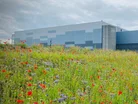
Adhering to the DCs for Bees Pollinator Plan at its Dublin and Amsterdam sites, the company implements 42 pollinator-friendly actions, including planting heritage orchard trees and native wildflower meadows.
Matt Pullen, Executive Vice President and Managing Director of Europe at CyrusOne, adds: “The specific plan of action in the DCs for Bees Pollinator Plan makes it easy to roll out across our company and gives our employees a tangible way to give back to our community.
"As with our broader involvement in Host in Ireland, being a part of a collective provides an opportunity to have a bigger, longer lasting impact. For something as important as Ireland’s biodiversity, we are very proud to be a part of this programme.”