How Kier Builds Resilience Across the UK Nuclear Sector
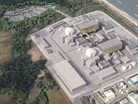
Few parts of the construction market demand as much from contractors as nuclear.
Sites are licensed, programmes run for decades, and delivery must meet exacting safety, security and quality standards.
Kier, the infrastructure and services group, has built a portfolio spanning new-build power, decommissioning and defence, with work at Sizewell C, Hinkley Point C, Sellafield and Devonport Royal Dockyard.
Its appointment to deliver the Sizewell Link Road shows how long-term relationships and transferable highways expertise can widen a contractor’s role.
The Sizewell Link Road is a vital component of the project’s delivery, providing road improvements which will both support construction and improve local transport links
Sizewell C and the Link Road
Sizewell C is a new nuclear power station on the Suffolk coast, central to the Government’s £725bn (US$979bn) 10-year Infrastructure Strategy.
The £88bn (US$51bn) project will employ almost 8,000 people on site at peak construction.
Once operational, it will generate 3.2GW of low-carbon electricity, enough for around six million homes, while reducing carbon emissions by an estimated nine million tonnes annually.
Kier’s role sits within the project’s Major Civils Framework, a significant package of works.
It began with the main site entrance, including the North Plaza, and has now extended to the Sizewell Link Road.
The 6.8km route will connect the A12 to the construction site and become the primary route for construction traffic. That will reduce heavy goods vehicle movements through local communities and improve journey times for local road users.
Drawing on its highways experience on national and regional roads, Kier will design and construct the scheme.
- earthworks and drainage
- service ducts
- surfacing and structures
- traffic management
- interface planning services
“This appointment builds on our growing role at Sizewell C, one of the country’s most important energy projects. The Sizewell Link Road is a vital component of the project’s delivery, providing road improvements which will both support construction and improve local transport links,” says Craig Small, Managing Director for Nuclear & Energy at Kier Infrastructure. “Drawing on our expertise of delivering complex major infrastructure programmes, we will work closely with Sizewell C to deliver this efficiently and sustainably, while generating added benefits for local communities by bringing employment opportunities and investment in the regional supply chain, leaving a legacy that extends beyond construction.”
Hinkley Point C and Sellafield
Hinkley Point C in Somerset is EDF’s new nuclear power station, expected to generate around 7% of the UK’s electricity, all of it low carbon.
Kier has been a delivery partner on site since 2012 as part of the KierBAM joint venture (KBJV).
The JV’s enabling works covered excavation, earthworks, terracing and the road network needed for main construction to begin.
Sellafield is a different proposition. The Cumbrian site is central to the safe management and decommissioning of nuclear materials, and Kier’s work there reflects the growing importance of the nuclear materials lifecycle.
Kier has constructed the Residue Store Retreatment Plant Process Building and Services Building.
It also won a contract to deliver a £59m (US$80m) infrastructure project through Sellafield’’s Programme and Partners model, a 20-year partnership designed to transform project delivery on site.
That scheme involved a seismically designed reinforced concrete annex to an existing facility, including formwork, reinforcement, concreting and lattice girder roof trusses.

Devonport and defence resilience
Devonport Royal Dockyard in Plymouth is the largest naval base in Western Europe and has supported the Royal Navy since 1691.
Its 650 acres include 15 dry docks, four miles of waterfront and 25 tidal berths. KBJV works there as part of Babcock’s Integrated Major Infrastructure Projects team, delivering in a live operational environment on a licensed nuclear site.
The work forms a critical part of the UK’s defence infrastructure, supporting maintenance cycles for Astute Class nuclear-powered submarines and helping Royal Navy assets return safely to sea.
KBJV was competitively awarded the NEC4 framework contract for the main works civils scope on the 10 Dock project. That includes redeveloping a dry dock for nuclear submarines, demolishing existing buildings and constructing new ones.
The project sits within Babcock’s £2bn (US$2.7bn), 10-year infrastructure programme at the dockyard.
Across new-build, decommissioning and defence, the common thread is Kier’s ability to deliver complex, high-security infrastructure in highly regulated environments.
Kier’s key partners:
Sizewell C
Sizewell C is the client for the Major Civils Framework, under which Kier is delivering the main site entrance and the Sizewell Link Road.
EDF
EDF is the client at Hinkley Point C, where the KierBAM joint venture delivered the enabling works.
BAM
BAM is Kier’s joint venture partner in KBJV, which works on both Hinkley Point C and Devonport Royal Dockyard.