
How the National Grid is Building a More Sustainable Future

National Grid has published its Social and Environmental Action Plan for 2026 to 2031. The plan represents the first time the company has combined environmental commitments and social impact targets into one strategy.
The approach centres on four areas: Climate Action, Nature Positive, One Planet Living and Social Value. National Grid states the plan will guide decision-making and target-setting across the organisation.
Alice Delahunty, President of Electricity Transmission, says the company has integrated environmental and social considerations into one framework. The plan aims to support long-term business success through outcomes for people and the planet.
According to the plan, National Grid will use this framework to direct planning, decision-making and target-setting. The company states it will address both immediate needs and future requirements.
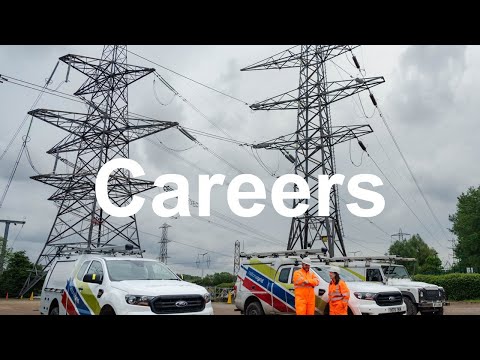
Fleet electrification targets
National Grid has set targets for vehicle fleet electrification to reduce operational carbon emissions. The company aims for 100% of light and medium-duty vehicle purchases up to 3,500 kg to be Zero Emission Vehicles by 2031.
During the RIIO-T2 period, National Grid replaced 60% of light-duty vehicles. The company expects 37% of the remaining 40% to transition to electric during RIIO-T3, subject to market availability.
The final 3% of the fleet consists of heavy goods vehicles. National Grid has scheduled these vehicles to transition to alternative fuels after 2030.
"We have both a duty and an opportunity to manage our business in an environmentally and socially responsible manner," says Alice, in the National Grid SEAP.
"Building on a strong track record of leadership, we recognise that environmental and social issues are complex and interconnected and that their effective management demands an integrated approach."
Substation efficiency improvements
National Grid has set a target to deliver a 20% energy efficiency improvement within its substation estate by 2031. The company will use 2022 to 2023 as the baseline for measurement.
The plan includes a behavioural change programme, upgrades to heating and control systems and improvements to building fabrics. National Grid will install solar PV panels across approximately 66 sites.
The company is addressing energy losses on the network, which occur when energy is dissipated as heat due to electrical resistance. National Grid plans to power maintenance activities and backup systems with diesel-free alternatives where commercially and technically viable.
Carl Trowell, President of Strategic Infrastructure, describes the project as a once-in-a-generation opportunity. Alice says the initiative will connect cleaner, home-grown power and could drive economic growth.
"As we deliver our projects, we want to ensure environmental, social and economic benefits are felt by the people and places that host them," says Carl Trowell, President of Strategic Infrastructure, in the National Grid SEAP.
"This includes cutting carbon and improving biodiversity, to providing local opportunities and skills to support the next generation."
Supply chain assessment
In 2025 to 2026, National Grid adopted EcoVadis as its core supply chain ESG assessment platform. The platform aligns with practice across the UK and US utility sectors.
According to National Grid, the platform provides risk-based insight across environmental, labour and human rights, ethics and sustainable procurement. The company states this approach offers consistent assessment across its supply chain.
Carl says the plan demonstrates how collaboration across teams, supply chain, partners and communities could support a cleaner energy system. The approach includes cutting carbon and improving biodiversity alongside local opportunities and skills support.
National Grid states the action plan sets out targets to 2031. The company says it aims to build a cleaner and fairer energy system through these measures.
Material sourcing commitments
National Grid is addressing the carbon-intensive nature of manufacturing and building materials, particularly steel and concrete. The company has joined SteelZero and ConcreteZero, pledging that 50% of concrete and steel used will be low emission by 2030.
The shift to low-carbon energy could increase demand for materials like cobalt. However, according to National Grid, the majority of materials the company aims to procure until 2050 will be steel, aluminium and copper.
National Grid has committed to 100% net zero emissions for both steel and concrete by 2050. The regulator Ofgem has approved a 0.3% uplift to baseline project investment during RIIO-T3 to support use of sustainable materials.
"Every project we undertake must reflect our commitment to sustainability," says National Grid's SEAP.
"This means embedding environmental stewardship into every stage of delivery, from design and procurement to construction and operation."
The company is committed to phasing out diesel in construction by 2035. National Grid is also expanding efforts to address other carbon-heavy areas, including cables and aluminium.
Company portals

Executives

Alice Delahunty
President of Electricity Transmission

Carl Trowell
President of Strategic Infrastructure