Polish Hyperscale Data Hub Starts Massive 3.2GW Construction
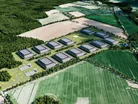
WBS Power has secured a critical milestone for what could become one of Europe's largest hyperscale data centre construction projects, announcing full grid connection approval for a 3.2GW campus in Lublewo, northern Poland.
The Baltic Data Center Campus, located just outside the coastal city of Gdańsk, represents a considerable construction undertaking even by the standards of a sector that has grown accustomed to large-scale builds.
The project is being designed to support AI and high-performance computing infrastructure, with construction timelines now crystallising around a phased development model that extends through to 2029.
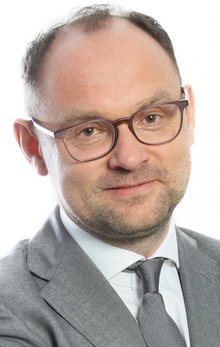
According to Maciej Marcjanik, the Chief Executive of WBS Power, the scale of the build is significant. "This will be the largest project of its kind in Poland and one of the largest in Europe," Maciej says in a statement.
The site's proximity to one of Poland's largest power substations has been central to the project's viability, with WBS selecting the location specifically for its access to large power capacities and existing grid infrastructure.
This positioning could reduce the complexity of connecting such substantial electrical loads to the national network, a challenge that has delayed other hyperscale projects across Europe.
Phased construction programme through 2029
The campus will be constructed across four distinct phases, with each phase targeting 800MW of capacity. Preparatory work across all four phases is expected to be completed by the end of 2027, setting the foundation for the main construction programme to follow.
Site preparation work includes ground surveys, access road development and the installation of utilities infrastructure needed to support the data centre buildings.
The first data centre within the campus is expected to become operational sometime between 2028 and 2029, though WBS has not yet specified which construction partners will deliver the buildings.
The phased approach could allow WBS to adjust construction schedules based on demand and to spread capital expenditure across multiple years, a model increasingly favoured by developers in the hyperscale data centre sector.
Infrastructure build and energy systems
Beyond the data centre buildings themselves, the project involves substantial infrastructure construction. Renewable energy generation assets and battery storage systems will form a central part of the build programme, with WBS positioning itself as an energy infrastructure provider rather than a traditional data centre operator.
"The digital revolution requires infrastructure on an entirely new scale," says Hubert Bojdo, Chief Financial Officer of WBS, in a statement. "We selected the location for the Baltic Data Center Campus very carefully, ensuring access to large power capacities, a diversified energy mix already in place today, and the long-term prospect of stable supply supported by future nuclear generation."
The integration of renewable energy infrastructure with the data centre campus could require additional construction activity including solar arrays, battery storage facilities and high-voltage transmission lines connecting the site to both the grid and on-site generation assets.
This approach positions the campus as a model for future hyperscale developments that integrate energy generation with digital infrastructure requirements.

Construction expansion into Germany
The Baltic campus is not WBS's only construction project in the hyperscale data centre sector. The firm is also advancing a 500MW data centre project in Finsterwalde, Germany, where demand for hyperscale capacity has outpaced supply over the past five years.
With more than 15 years of experience constructing energy infrastructure including renewables, battery storage and high-voltage grid installations, WBS is entering data centre development from the power systems side. This approach differs from the traditional real estate and colocation-led models that have historically dominated the European data centre construction market.
"The rapid development of AI is driving demand for hyperscale data centres supported by advanced infrastructure and reliable access to large volumes of power," Maciej says. "The integration of renewable energy and energy storage with digital infrastructure will be a key pillar of competitiveness for next-generation hyperscale projects."
For Hubert, the move into data centre construction represents a logical extension of the company's existing capabilities. "This is a natural step in our growth strategy," he says, "enabling us to leverage the expertise and market experience we have developed over many years."
Whether WBS can convert its site control and grid access into completed construction at the scale it is projecting remains to be seen, but the fundamentals driving the investment remain strong. "We are proud that a Polish company can contribute to Europe's energy and digital transformation, strengthening its economic competitiveness and technological sovereignty," Maciej explains.