
How Qiddiya Redefines Desert Construction Limits
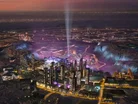
Saudi Arabia's Qiddiya City represents a significant technical challenge for the global construction sector as the Vision 2030 programme enters its critical delivery phase in January 2026.
For contractors, engineers and developers, the project offers practical insights into managing complex, high-specification builds in challenging environments.
The development's Resort Core, which includes the recently opened Six Flags Qiddiya City on 31 December 2025, could provide valuable lessons for projects facing similar topographical and climatic constraints.
HRH Crown Prince Mohammed bin Salman, Chairman of the Board of Directors of the Qiddiya Investment Company (QIC), states in an official QIC announcement: "Qiddiya City will become, in the near future, the foremost global destination in the fields of entertainment, sports and culture.
"This will have a positive impact on the Kingdom's economy and its international standing, strengthening Riyadh's strategic position and contributing to its economic growth."
Clifftop stadium engineering challenges
The Prince Mohammed bin Salman Stadium sits 200 metres above ground level on the Tuwaiq Mountains, presenting considerable structural engineering requirements.
Rhys Courtney, Senior Principal at Populous and Lead Architect for the stadium, explains: "The stadium exterior is formed by a collection of modular cubes that act as an extension of the Tuwaiq cliff, framed by portals that glimpse into the future of the city. We were inspired both by the clifftop location and the 'Play Life' ethos of Qiddiya."
The limestone escarpment required extensive geotechnical stabilisation work to support variable capacity seating for up to 60,900 spectators.
The design incorporates a retractable roof system and chilled air distribution to address extreme heat conditions.
The exterior LED wall installation demanded careful coordination between audiovisual systems and structural loadbearing requirements, alongside substantial power distribution infrastructure.
Water management in desert conditions
Aquarabia, scheduled to open on 19 March 2026 for the Eid al-Fitr holidays, is being constructed as the Middle East's largest water theme park.
The project requires closed-loop water management systems and high-pressure hydraulic engineering across 22 rides.
Several attractions hold world records for height and speed, necessitating specialised steel fabrication with corrosion-resistant coatings.
The site also includes engineered artificial water currents for white-water kayaking and surfing facilities.
Integrating mechanics with themed architecture
The Dragon Ball Theme Park spans more than 500,000 square metres and centres on a 70-metre Shenron dragon structure that houses a roller coaster.
Building Information Modelling (BIM) was required to integrate ride mechanics within non-linear architectural forms.
Construction teams must balance aesthetic requirements with material durability suitable for the Saudi climate.
Data infrastructure meets spectator facilities
The Gaming & Esports District combines data centre requirements with high-density spectator environments across four arenas totalling 73,000 seats.
The Mechanical, Electrical and Plumbing (MEP) scope includes cooling systems for server rooms and low-latency fibre-optic networks.
Modular seating and stage configurations allow for rapid event turnover.
Precision work on championship golf course
Sir Nick Faldo's 18-hole championship course required precision blasting and rock-face stabilisation as it was carved into the Tuwaiq cliffs.
The project includes AI-driven irrigation systems that monitor soil moisture levels in real-time to optimise water usage in the arid environment.

Specialised automotive facility construction
Mercedes-AMG World of Performance is a nine-floor, 45,000-square-metre facility requiring heavy-duty floor slabs and specialised vehicle elevator systems to support high-performance vehicles across all levels.
High-performance glass facades maintain interior conditions under intense solar exposure.
Elevated motorsport infrastructure
The Speed Park Track features The Blade, an elevated track section rising 70 metres.
Engineering a racing surface capable of handling Formula 1 car downforce and vibration on an elevated platform required integration of racing safety barriers into permanent urban infrastructure.
Technical requirements for performing arts
Nesma & Partners secured the US$1.4bn construction contract for the Performing Arts Centre, which sits on a cliff edge location.
The design requires sound isolation technology and specialised MEP systems for VR, AR and AI stage machinery integration.
According to Abdullah Aldawood, Managing Director of QIC: "At Qiddiya City, sustainability is not an afterthought – it is a foundational principle embedded in every aspect of our development. We are building a destination that inspires imagination, ignites excitement and brings people together through exceptional experiences."
As delivery windows approach between 2026 and 2030, construction focus is shifting from excavation phases to precision finishing and technology integration work.
Company portals


Executives
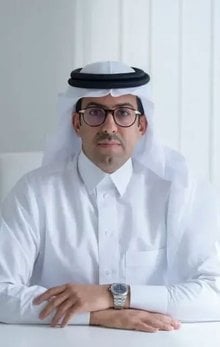
Abdullah Aldawood
Managing Director
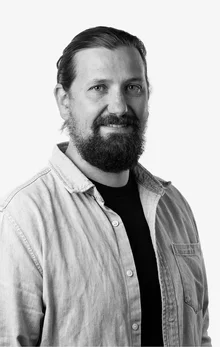
Rhys Courtney