Siemens & Max Bögl Optimise SuedLink Earthwork
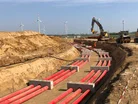
Faced with the logistics of moving earth for SuedLink, Germany’s longest high-voltage direct current (HDVC) power cable, Max Bögl’s energy corridor team is taking an innovative approach: scaling facility simulation software to a moving outdoor site.
Part of Siemens Digital Industries’ Tecnomatix portfolio, a platform of digital manufacturing software providing contractors with the tools to optimise and automate sites, Plant Simulation, allows users to run discrete-event simulations of 3D-modelled factory floors.
To coordinate its earthwork, Max Bögl are reimagining the software’s capacities by uniting its powerful analytical features with geology department expertise, producing a precise parametric simulation capable of visualising and assessing kilometres of site conditions.
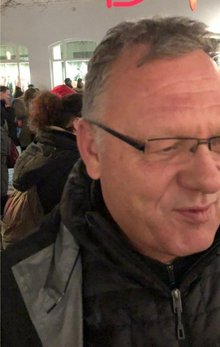
“Using Plant Simulation lets us run through different construction-sequencing scenarios and directly compare their impact on schedules, costs and resource deployments,” says Michael Stahl, Head of Max Bögl’s Central Department for Supply.
From identifying traffic bottlenecks to reducing costly idle time, the simulation has the ability to run 22 days of complex operations in a single minute.
- A central infrastructure project within the German energy transition, SuedLink is an HVDC line intended to transport wind power from northern Germany to support high energy demand in the south
- The system consists of two 2GW underground lines, each using plastic-insulated 525kV cables, and it is expected to be the longest underground HVDC cable in the world at about 2,500km total cable conductor length
- German transmission system operators TenneT and TransnetBW are developing and operating the project
- Siemens Energy is providing the project with 14 custom-built converter transformers enabling up to 2GW of transmission capacity
- As the project has been delayed well beyond its original schedule, operations are due to complete from the end of 2028.
From factory floors to energy corridors
The logistics of earthmoving are a key planning concern for a heavy construction project as geographically expansive as SuedLink.
A wide variety of interacting variables – including soil conditions, miscalculated transport ratios, sequencing and weather – can lead to congestion along haul roads, delayed schedules and excessive vehicle idle times, skewing productivity and consuming large amounts of fuel.
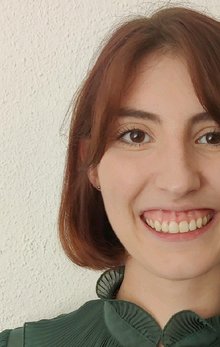
“Using Plant Simulation models, it’s very easy and fast to bring those elements into better alignment,” says Anna-Maria Mehringer, a civil engineer from Max Bögl’s infrastructure business unit.
The team’s solution connects a Siemens Plant Simulation model of site elevation profiles with local soil data procured by Max Bögl’s geology department, who worked closely with Mehringer to hone the experiment.
The platform simulates trench depths and automatically adjusts excavator throughput, producing precise projections of work times to support optimal decision-making.
“Based on the selected logistics parameters within Plant Simulation, we can vary machine deployment flexibly,” Anna-Maria says.
“That gives us accurate information on the time required before we even start.”
A run-through of the simulation made it possible to decrease idle time by roughly 20%, and suggested improved resource deployment to cut costs by almost 7%.
Stretching beyond fixed-site simulation to visualise logistics for a moving, multi-kilometre energy corridor, Max Bögl’s model makes it possible to evaluate days of complex physical operations ahead of time – in just 60 seconds.
““The closer Siemens Digital Industries Software can link the real and the digital, the faster teams can move through growing complexity and make decisions with confidence – creating a true competitive advantage.”
”
Bridging gaps between analysts and field teams
Accessibility was a crucial consideration for civil engineers at Max Bögl as it developed the simulation for live field execution.
Consolidating and implementing information across a megaproject like SuedLink can prove challenging: precise communication between experts and operations managers proved to be the key to Max Bögl’s successful execution of its optimised sequencing.
“We want to simplify the simulation to the point that the respective site managers can access it directly,” says Anna-Maria.
“Using the model, we can explain the construction sequence well and discuss it together.”
With intuitive drag-and-drop features and dynamic 3D visuals, Siemens’ Plant Simulation software allows personnel lacking specific simulation expertise to navigate and harness the site model.
This shared clarity prevents guesswork and accelerates decision-making during execution, allowing companies to continually advance their approach to a construction segment.
Enhancing simulations to support the energy transition
Max Bögl are looking to expand the application of its model beyond SuedLink, aiming to assess its capabilities as a project management tool across a variety of dynamic, large-scale sites.
Collaborating with the University of Applied Sciences in Regensburg, the team will investigate where else the tool could accelerate decision-making, cut costs and reduce consumption.
As the energy transition mounts worldwide, refining pre-existing simulation tools and tailoring them to the demands of energy projects could shift the paradigm when it comes to construction site management.

Key partners on SuedLink
Siemens
Founded in Berlin in 1847, Siemens is Europe’s leading engineering conglomerate operating across automation, infrastructure and healthcare worldwide. Its Siemens Digital Industries division provides software via its Tecnomatix portfolio, offering civil engineering, shipbuilding and automotive clients digital solutions to visualise and optimise construction operations.
TenneT
Owned by the Dutch Ministry of Finance and employing over 10,000 people, TenneT runs over 26,000km of high-voltage lines and operates in both the Netherlands and Germany. As co-developer of SuedLink with TransnetBW, it acts as anchor client for a supply chain of cable makers, converter suppliers and civil contractors.
TransnetBW
One of Germany’s four transmission operators, TransnetBW supplies more than 11m citizens with electricity. It runs the Baden-Württemberg grid, maintaining links to French, Swiss and Austrian networks. The operator is a co-leader of the SuedLink project, with works under way in Bavaria and southern Lower Saxony. Beyond cables, it partners on flexibility, including a 250MW battery storage project with Fluence.
Company portals



Executives
Anna-Maria Mehringer
Wissenschaftlicher Assistent
Michael Stahl
Zentralbereichsleiter GB Infrastruktur _Prokurist

Tony Hemmelgarn
President and CEO at Siemens Digital Industries Software