How Skanska’s Data Centre Push is Boosting its Order Intake
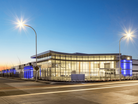
Skanska's data centre business is now a defining strategic focus as demonstrated by a run of contract announcements in 2026.
It follows Skanska restructuring its advanced technology arm into one unit, Skanska Advanced Technology (SAT) in September 2025, uniting data centre and semiconductor delivery to meet AI demand.
"SAT combines technical specialisation with mobility and national coverage to deliver industry-leading innovation, data-driven insights and expertise to enhance the customer experience and project outcomes,” said Anita Nelson, SAT's Executive Officer at the time.
“With this move, we are redefining delivery of advanced technology projects, providing customers with elevated expertise, dependable execution and customised solutions from coast-to-coast, wherever they are."
A new division for advanced tech
Skanska restructured SAT to unite its mission-critical infrastructure capabilities with its semiconductor delivery group.
The company describes the realignment as building on three decades of partnership with global technology and manufacturing clients and more than 240 projects with them.
The division employs more than 285 dedicated advanced technology, high-tech manufacturing and data centre professionals, who are organised into mobile groups of subject matter experts.
These teams are deployed to support project staff in various locations, providing the company with a centralised hub for operational oversight, commercial management and resource deployment.

Two Skanska veterans lead the SAT. Anita previously served as Chief Strategy Officer for Skanska USA Building, where she worked on customer engagement and long-term planning.
Bryan Northrop, Executive Vice President and General Manager, oversees SAT's day-to-day operations.
Having joined Skanska in 1997, he has held a number of roles at the company, mainly delivering complex pharmaceutical and industrial manufacturing infrastructure for national customers. He assumed his current role in June 2026, following the retirement of Katie Coulson.
“I’ve learned that successful delivery of complex manufacturing projects requires disciplined execution, close collaboration, and a shared focus on solving client challenges,” said Bryan at the time of his appointment. “I’m excited to bring that mindset to our Advanced Technology team and help them deliver on the performance our customers expect from Skanska.”
Repeat clients fuel record order intake
Skanska has recently shown a pattern of signing contracts with existing clients, for additional buildings on campuses already under development.
For example, in August 2026, it signed a contract worth US$1.2bn with an existing client to build four new data centres across the south east of the US, covering approximately 75,000 square metres of shell and interior fit-out work.
The month prior, it signed an initial contract worth US$94m for a data centre in Virginia.
A few weeks later it signed another contract worth US$238m for another structure with five data halls on the same site.
In June, it signed an additional contract worth US$255m with an existing client to build a data centre in Georgia, contributing to an unprecedented order intake for the second quarter.
In its second quarter 2026 earnings call, Anders Danielsson, Skanska’s President and CEO highlighted the company’s record order intake with contributions from data centre clients.
Anders said: "We have record high order bookings of SEK68bn (US$7bn), which gives us a book-to-bill ratio of 114% on a rolling 12-month basis."
Modular, sustainable design becomes the norm
Alongside its expanding volume of new contracts, Skanska has pointed to a shift in data centre construction.
According to SAT's formation announcement, owners and developers are moving toward modular and prefabricated construction.
This includes skid-mounted mechanical, electrical and plumbing systems, precast concrete shells and plug-and-play electrical rooms, to shorten timelines, reduce on-site labour and enable repeatable designs across geographies.
It describes liquid cooling infrastructure, particularly direct-to-chip and immersion systems, as increasingly standard for AI-ready facilities, alongside growing use of low-carbon concrete, recycled steel and advanced composites tied to environmental, social and governance goals.
Skanska cites an unnamed third-party that estimates that the US data centre construction market will grow at a compound annual growth rate of 10.2% between 2025 and 2030, with semiconductor cleanroom construction growing at more than 3.86% a year to 2034.
Group Chief Financial Officer and Executive Vice President Pontus Winqvist addressed how this shift is reshaping margins during the same Q2 2026 earnings call.
"We continue to see a strong increase of both general US civil contracts and data centres,” he said.
When asked whether he was concerned about the building market outside data centres, he answered: "No, I'm not concerned about that. It continues to be a stable market outlook. We are well-positioned. We are building mainly social infrastructure, like schools, hospitals, universities and airports, which is a big need. Also, we've been discussing data centres. I can see a healthy pipeline going forward and a stable market."
Company portals

Executives
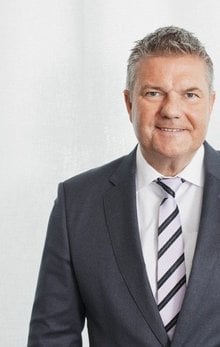
Anders Danielsson
President and CEO, Skanska Group

Anita Woolley Nelson
Regional Executive Officer
Katie Coulson
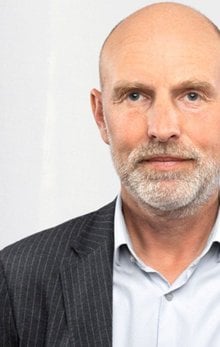
Pontus Winqvist
Chief Financial Officer