
Is Solar Farm Construction Poised for Boom in Middle East?
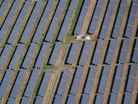
The Middle East and North Africa is preparing for an unprecedented construction boom in renewable energy infrastructure.
According to DNV, the region's wind and solar capacity could increase ten times over by 2040, requiring a dramatic acceleration in utility-scale project development and construction activity across the energy sector.
DNV's report, titled The Rise of Renewables in the Gulf Region, predicts that variable renewable capacity in MENA will need to be built out to generate approximately 85% of the region's electricity by 2060.

Building the renewable future
Solar capacity is projected to increase from 76GW in 2024 to 340GW by 2029, requiring a significant number of utility-scale installations to be built across the region. Wind power is expected to triple in each decade from 2020 to 2060, demanding large-scale civil engineering works and infrastructure development.
Brice Le Gallo, Vice President & Regional Director Asia Pacific Energy Systems at DNV, explains the shift: "The region's historical contribution to the global energy system has been driven by oil and gas exports, which have also formed the backbone of domestic consumption."
"In recent years, the steep decline in costs of solar, wind and battery technologies coupled with abundant resources and ambitious climate targets have driven wealthy fossil exporter nations to accelerate their renewable build-out."
The construction industry could benefit from this acceleration, with the average size of utility solar projects increasing dramatically. According to the report, 80% of projects due to be completed by the end of the decade are larger than 1GW, up from 20% at the beginning of the decade.
This shift towards larger-scale projects will require enhanced construction capabilities and greater investment in specialist equipment and expertise across the region.
All supply chain, sustainability, Scope 3 and net zero leaders should attend:
- Procurement and Supply Chain LIVE: The Net Zero Summit - QEII Centre, London, March 4-5
- Procurement and Supply Chain LIVE: The US Summit - Navy Pier, Chicago, April 21-22
Co-located with Sustainability LIVE, these events brings together CSCOs, CSOs and senior decision-makers at a moment when sustainability, supply chains and commercial performance are increasingly interconnected.
Tickets can be booked online today for The Net Zero Summit and The US Summit. Group discounts available.
Infrastructure demands beyond generation
The construction requirements extend beyond power generation facilities. By 2060, electricity will meet 35% of total energy demand in the region, up from 17% today. This could necessitate extensive grid infrastructure upgrades and transmission network construction to accommodate the new generation capacity.
"The rapid rise of renewables in the Gulf, and MENA more broadly, is not replacing hydrocarbons overnight, but it is reshaping the power system," says Ditlev Engel, Energy Systems CEO at DNV.
"Gulf Cooperation Council (GCC) countries are building some of the world's largest solar and storage projects while still supplying global oil and gas markets. This development is driven mainly by economics. Renewables now provide low-cost electricity, and clean power is becoming necessary for competitive industry and future hydrogen production."
The scale of infrastructure development required represents a significant opportunity for construction firms with experience in large-scale energy projects and grid modernisation programmes.
Construction timelines and challenges
DNV sees 2040 as the crucial turning point for MENA construction activity. The region is already pursuing some of the world's largest solar-plus-storage facilities, including MASDAR's 1GW round-the-clock project in Abu Dhabi, which could require significant construction expertise and resources.
Jan Zschommler, Market Area Manager for the Middle East and Africa at DNV, observes: "The Gulf is moving from discussion to deployment. Utility-scale solar, wind and storage projects are now being built at a pace that changes the regional power mix."
Storage capacity construction presents another major opportunity. The report projects that storage capacity will need to be built from about 36 gigawatt-hours today to almost 9,500GWh by 2060. Combined, solar and wind generation in MENA will increase about fourteen-fold by 2040.
Despite the renewable build-out, the construction sector faces challenges. New electricity demand is initially coming mostly from buildings and desalination facilities, but from 2040 to 2060 demand growth will be driven by electric vehicles, AI data centres and green hydrogen production facilities, all requiring specialist construction capabilities.
Company portals

Executives
Brice Le Gallo
Vice President & Regional Director Asia Pacific Energy Systems at DNV
Ditlev Engel
Energy Systems CEO

Jan Zschommler
Market Area Manager for the Middle East & Africa