e-Dutra: Lowering Financial Risk of Charging infrastructure
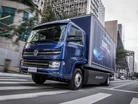
The Traton Group has initiated Brazil's first zero-emissions freight corridor, a project named e-Dutra, in partnership with Volkswagen Truck & Bus, logistics firms, infrastructure providers and the Brazilian government.
The announcement was made at COP30 in Belém, revealing the new sustainable logistics route connecting Rio de Janeiro and São Paulo.
This initiative is part of the Global Green Road Corridors programme and represents one of the largest private-sector collaborations to date focused on the decarbonisation of Brazil's transport sector. The transport industry contributes a large part to the country's total emissions.
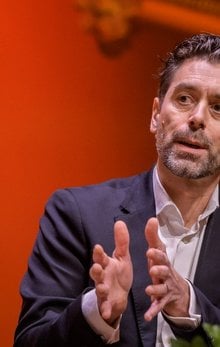
"Electrification is the future of transportation," says Andreas Follér, Chief Sustainability Officer at Traton Group.
"But we must be clear-eyed: the road ahead is long. That's why e-Dutra matters. We're not showing up at COP30 in Belém with promises – we're showing up with progress. e-Dutra isn't just a project; it proves that transformation is possible when we work together."
Reducing investment risk through demand aggregation
A core strategy of the e-Dutra initiative is the aggregation of demand from multiple stakeholders.
This collaborative approach is designed to lower the financial risk tied to the construction of necessary charging infrastructure.
It directly confronts a primary obstacle in the adoption of electric trucks: the debate over whether infrastructure should precede the deployment of vehicles or vice versa. By aligning various partners, the project aims to create a viable investment environment for infrastructure development.
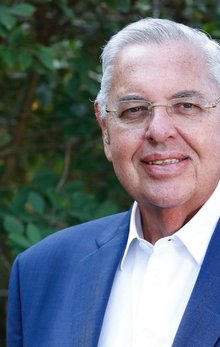
"We are committed to developing sustainable transport solutions for everyone," explains Roberto Cortes, President and CEO of Volkswagen Truck & Bus.
"This is why we joined the coalition as an initiator: to support building a smarter mobility for the next generation. And our partnership with different stakeholders certainly harnesses the collective power that will make a difference."
Electrification is the future of transportation. But we must be clear-eyed: the road ahead is long. That's why e-Dutra matters.
Early deployments testing route viability
The project has advanced from planning to practical application. Volkswagen Truck & Bus has already conducted the first electric truck journey along the corridor, utilising existing infrastructure in a collaboration with LOTS Group.
In parallel, other major companies, including DHL Supply Chain, Amazon and Scania, have started their own electric freight operations in the region. These initial deployments are intended to demonstrate the technical feasibility of using electric heavy-duty transport on this specific route.
Furthermore, these early-stage operations serve to map out gaps in the current infrastructure and gather data to optimise vehicle performance. This information is critical for planning a larger-scale rollout along the Rio-São Paulo corridor, a route characterised by heavy freight traffic between Brazil's two primary economic hubs.

A framework for decarbonising freight
The e-Dutra project could offer a potential template for decarbonising freight corridors in other emerging markets that face similar challenges with infrastructure and investment.
The coalition model, which brings together truck manufacturers, logistics operators, retail companies and government agencies, attempts to distribute both risk and expertise among the partners.
Technical support for the project is provided by a range of organisations with global experience in zero-emissions transport. These include the Smart Freight Centre, CALSTART, the Climate Pledge, C40 Cities' Laneshift initiative, the World Business Council for Sustainable Development and the International Council on Clean Transportation.
As Brazil's transport sector faces increasing pressure to lower its emissions, initiatives like e-Dutra become more important for the country to meet its national climate targets. The progress of the project is likely to be monitored by other nations looking to electrify their freight transport systems while managing the constraints of infrastructure investment.
Company portals

Executives
Andreas Follér
Chief Sustainability Officer
Dr. h. c. Antonio Roberto Cortes
Presidente & CEO of Volkswagen Truck and Bus