US$3.5bn Data Center Insurance Grows Amid Construction Risk
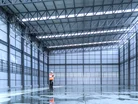
Data centre construction is entering a new phase of risk management as project complexity, delivery timescales and capital intensity reach unprecedented levels. Aon is responding by expanding its Data Center Lifecycle Insurance Program (DCLP) to US$3.5bn, with an additional US$1bn in capacity specifically designed to address the mounting challenges facing construction teams and project owners as they navigate from groundbreaking to operational handover.
The insurance programme, which launched in June 2025, now extends protection beyond the construction phase to cover facilities during their first year of operations. Construction-related risks persist well into commissioning and early operation. For contractors, developers and operators, this means more comprehensive protection during the transition from build to operation.
Construction delays and project delivery
Construction delays represent one of the most significant financial exposures in data centre development. As facilities grow in scale to accommodate AI workloads and high-density computing requirements, construction timelines extend and the potential for delays multiplies. The expanded programme includes delay in start-up (DSU) coverage, protecting project owners against the financial impact when construction overruns push back the date when a facility can begin generating revenue.
Joe Peiser, CEO of Risk Capital at Aon, frames the expansion within the context of infrastructure investment.
"Data centres have become foundational to innovation, connectivity and economic growth," he says.
"As these assets grow in size, complexity and importance, resilience must be built from the start."
The construction phase now carries exposures that can reach into billions of dollars. Large-scale facilities require coordination of multiple contractors, specialised trades and complex mechanical and electrical installations. Any disruption could trigger delays that cascade through the project schedule.

Equipment installation and project cargo
Project cargo insurance forms a substantial component of the expanded programme, with coverage extending up to US$500m for transport and installation of critical equipment. Data centre construction relies on the delivery and installation of highly specialised components, including generators, cooling systems, switchgear and server equipment.
The risks during this phase are considerable. Equipment can be damaged in transit, delayed at ports or borders, or require replacement if specifications change during construction. For hyperscale projects, the loss or delay of a single critical component could hold up an entire construction phase, triggering knock-on delays.
The insurance coverage addresses both physical damage to equipment and the consequential delays from transport disruptions. This proves particularly valuable as supply chains remain vulnerable to geopolitical tensions, port congestion and the long lead times associated with custom-manufactured electrical and mechanical plant.
Construction to operations transition
The transition from construction completion to operational readiness represents one of the highest-risk periods in a data centre's lifecycle. Commissioning involves testing and integration of complex systems across areas of the facility.
Aon's programme bridges this transition by extending coverage into the first year of operations. This ensures protection does not lapse at practical completion. This approach aligns with how data centre projects are structured, where contractual handover from construction teams to operations personnel occurs gradually as systems are tested, proven and brought into service.
The programme combines construction-phase coverage with operational protections including business interruption, physical damage and cyber risk. For construction teams, this means clearer demarcation of responsibilities during commissioning. Operators gain protection against early-life failures that may have roots in construction quality or equipment defects.

Cyber risk coverage extends up to US$400m, addressing threats including ransomware that could affect operational technology systems during commissioning. Third-party liability reaches US$200m globally, covering construction-related claims that may emerge during the operational phase.
Aon provides risk engineering services through its Global Risk Consulting team, using data analysis to assess construction vulnerabilities and model the financial impact of different delay scenarios. These services support project teams in identifying potential pinch points in construction schedules and quantifying the exposure associated with critical path activities.
The programme is backed by a global panel of insurers rated A or higher, including Lloyd's and company market participants. This structure enables Aon to aggregate capacity suited to hyperscale construction projects where traditional insurance limits may prove insufficient.
As data centre construction projects grow in scale and technical complexity, the expanded programme reflects an insurance market adapting to the realities of modern digital infrastructure delivery. From site mobilisation through equipment installation to operational handover, the lifecycle approach provides construction teams and project owners with continuity of coverage. This supports investment decisions in a sector where delays and equipment failures carry consequences measured in millions of dollars per day.
Company portals

Executives
Joseph C. Peiser
Chief Executive Officer - Risk Capital