US Start-up Raises US$140m for Wave-Powered Data Centres
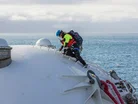
A US start-up has raised US$140m to build floating data centres that operate in the deep ocean. The structures are 85 metres tall and powered entirely by wave energy.
Panthalassa recently closed a financing round led by Peter Thiel, the venture capitalist behind Palantir and PayPal. The company is now valued at close to US$1bn, including the new capital.
The funding round attracted support from Salesforce CEO Marc Benioff, PayPal and Affirm Co-Founder Max Levchin and investor John Doerr, who backed Google, Amazon, Uber and Netscape.
According to the IEA, data centre energy consumption could grow 30% a year until 2030. By that point, AI could account for 3% of all the world's energy use. This exponential growth in demand has prompted infrastructure developers to explore radical alternatives to traditional land-based facilities.
The convergence of AI infrastructure requirements and renewable energy generation represents one of the most significant engineering challenges facing the construction sector. Traditional data centre development faces mounting constraints around grid capacity, cooling water availability and planning permissions in urban areas.
Engineering solid-steel ocean structures
The nodes are 85-metre-long solid-steel structures, roughly the height of London's Big Ben. They sit mostly beneath the ocean's surface.
The bobbing of waves forces water through a turbine. This generates electricity that powers AI chips housed in a hermetically sealed, seawater-cooled container.
The nodes recirculate the same water internally to drive the generator. The system produces no direct emissions and requires no engine.
The technology includes no hinges, flaps or gearboxes. Panthalassa says this design avoids components which could be vulnerable to open-ocean conditions.
The engineering specifications require the structures to withstand extreme marine environments, including sustained wave heights of up to 15 metres and Category 5 hurricane conditions. The steel hull thickness varies between 25mm and 40mm, depending on stress loading calculations.
Each node's structural integrity relies on advanced welding techniques typically reserved for offshore oil platforms and naval vessels. The hermetic sealing system uses multiple redundant gaskets and pressure monitoring systems to prevent any water ingress into the computing chambers.
The cooling system leverages the temperature differential between surface waters and the deeper sections of the structure. Seawater at depth remains consistently between four to eight degrees Celsius, providing highly efficient passive cooling without requiring energy-intensive refrigeration systems.
Manufacturing and materials supply chain
Each structure is towed horizontally out to sea. Once in position, it flips upright and navigates to its destination using the hydrodynamic shape of its hull alone.
Panthalassa says its nodes are made using only earth-abundant materials like steel. This could reduce strain on the rare earth mineral and critical mineral sectors, which are already under pressure from the energy transition.
The company has suggested that the supply chains its products will rely on are robust enough to facilitate a period of rapid scaling.
The new capital will fund a pilot manufacturing facility in the US. The firm is looking at its first commercial deployments next year.
The manufacturing process draws on established shipbuilding techniques but requires precision engineering tolerances more commonly associated with aerospace applications. Each computing module must maintain exact positioning within the structure to ensure proper weight distribution and stability.
Panthalassa's manufacturing strategy involves modular construction methods. The main hull sections, turbine assemblies and computing pods are fabricated separately before final integration at a coastal assembly facility. This approach allows parallel production streams and reduces the overall construction timeline.
The company estimates that once full-scale production begins, each node will require approximately 800 tonnes of structural steel, 150 tonnes of specialist alloys for the turbine components and roughly 200 tonnes of ballast materials. The computing hardware represents a relatively small proportion of the total mass.
Steel procurement contracts have already been established with suppliers in the US and South Korea. The company is working with classification societies including Lloyd's Register to ensure all structures meet international maritime safety standards.
Remote operation without subsea cables
The floating data centres operate so far from land that all AI queries are handled via a SpaceX Starlink satellite connection. The company suggests this is the only link back to shore that these structures will ever need.
Garth Sheldon-Coulson, Panthalassa's Co-Founder and CEO, was formerly an AI and energy researcher at hedge fund Bridgewater. He told the Financial Times that one of the key insights was that it is very important to use the electricity in place.
That decision sidesteps one of the most intractable problems in offshore renewables. Subsea transmission cables and interconnectors represent huge costs and complexity. A single subsea cable installation can cost more than US$1m per kilometre and requires specialist vessels, extensive seabed surveys and ongoing maintenance.
The company's commercial viability depends on selling compute capacity, not electricity. The motto "go where the energy is" speaks to this approach.
The satellite connectivity infrastructure provides latency suitable for training large AI models rather than real-time consumer applications. Each node is equipped with multiple satellite transceivers to ensure redundancy and maintain a continuous uplink capacity of approximately one to two gigabits per second.
Wave energy infrastructure development
Garth explained to the FT that energy from open-ocean waves is low-cost, sustainable, abundant and now accessible through available technology.
By operating in remote, deep ocean areas rather than near coastlines, the nodes could avoid constraints that have hampered previous wave energy projects. These include land-sea connections and inconsistent waves.
"The waves are like a battery for sunlight, and we can be capturing from it 24/7," he adds.
The company contends that wave and wind power are the only clean energy sources, alongside solar and nuclear, capable of producing tens of terawatts. This is the scale that AI infrastructure is increasingly demanding.
Open-ocean wave energy offers capacity factors exceeding 90% in optimal locations, far surpassing onshore wind or solar installations. The consistent motion of deep-ocean swells provides a remarkably stable power source compared to coastal wave patterns.

Deployment plans and industry backing
Peter, who has previously championed the libertarian seasteading movement and backed Panthalassa through the Founders Fund as far back as 2018, told the FT that the future demands more computing than people can imagine.
"Extraterrestrial solutions are no longer science fiction. Panthalassa has opened the ocean frontier," he said.
While many of his ideas in this vein have been described as a form of tech neocolonialism, his support could lend momentum to Panthalassa's push towards the mainstream.
The firm takes its name from the superocean that once surrounded Pangea before continental drift shaped the Earth. This was before the continents formed as they exist today.
Company portals





Executives
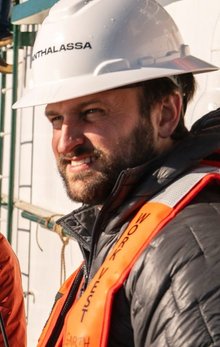
Garth Sheldon-Coulson
Co-Founder & CEO
Marc Benioff
Chair & CEO

Peter Thiel
Co-Founder