Why Nuclear Power Could Reshape Irish Construction
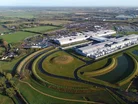
As Ireland's data centre boom pushes electricity demand to record highs, the government is reconsidering a nuclear power ban that has stood since 1999.
With data centres now consuming almost a quarter of the country's electricity, the debate over new generation capacity, and who builds it, has become impossible for the construction sector to ignore. Large-scale reactors, small modular reactors, and renewables are all now on the table.
A three-decade nuclear moratorium
Ireland has never built a nuclear power station. Plans for one in County Wexford collapsed in the late 1970s following protests at Carnsore Point, and the formal ban followed in 1999, hardened by public memory of Three Mile Island and Chernobyl.
That opposition is now softening. Taoiseach Micheál Martin has told a business audience his government is open to nuclear, and Fianna Fáil backbencher James O'Connor has introduced a bill to lift the veto entirely. Pointing to Finland's energy mix, he told parliament in May: "Nuclear is the way to go”.
For construction firms, a reversal of the ban would open an entirely new category of large-scale energy infrastructure work, from reactor construction to the grid connections and cooling systems that accompany it.
The Finland comparison persists
Finland, a country of similar population, generates almost 40% of its power from nuclear plants and has the lowest non-household electricity prices in the EU. Ireland has the highest.
Today, gas supplies around 40% of Ireland's electricity, wind contributes 32%, and interconnector imports from Britain make up roughly 16%. These imports already carry an indirect nuclear component from Britain's five operating stations.
That link strengthens further once a new interconnector with France, which draws about 70% of its power as nuclear, comes online in 2028. This development will carry its own construction pipeline, from interconnector infrastructure to substation upgrades.

Doubts over delivery timelines
Not everyone views nuclear as a near-term fix, and the scepticism centres largely on build speed.
Small modular reactors (SMRs) promise faster construction, but only two are operational worldwide, and supply chains and regulatory approval could still slow delivery considerably.
Kieran White, CEO of renewables firm Perigus Energy, has cautioned against Ireland spending too long chasing "theoretical future options" while cheaper, faster power projects sit ready to proceed.
For contractors, that tension between long-lead nuclear builds and shovel-ready renewables projects will likely shape where investment, and work, flows first.
Building fast enough matters
Supporters argue Ireland cannot afford to wait regardless of which path wins. The Irish Academy of Engineering estimates a fleet of SMRs could meet 48% of the country's electricity needs by 2050 but only if design and licensing work begins now.
It’s a timeline that puts early-stage construction planning firmly on today's agenda.
Dave Kirwan, Managing Director of Centrica Power, whose parent company holds a fifth of the UK's existing nuclear capacity, believes smaller reactors built alongside data centres could move faster than critics expect.
Whichever direction Ireland takes, the construction sector stands to be central to delivering it, whether that means reactor sites, renewables build-out, or the grid infrastructure connecting both to a power-hungry digital economy.
"I worry that we think we have the luxury of 10 to 12 years," says Dave. "I don't think we do."
Company portals







Executives
David Kirwan
Managing Director
Kieran White
CEO