Top 10: Green Infrastructure Projects

Green infrastructure uses natural and semi-natural systems, such as wetlands, trees, green roofs and permeable surfaces, to manage water, cool cities and support biodiversity.
Its roots stretch back to Frederick Law Olmsted's 19th-century park systems, but the concept entered mainstream engineering in the 1990s, when planners began treating nature as a network worth building.
For the construction industry, it marked a shift from concrete pipes and tunnels towards hybrid designs, driven by tighter stormwater rules, climate risks and cost pressures.
Contractors and engineers now deliver these projects at city scale. Here are the top 10 green infrastructure projects transforming cities worldwide.
10. Melbourne's Urban Forest Strategy
Location: Melbourne, Australia
Owner: City of Melbourne
A key contractor: TreeLogic
CEO: Stephen Frank
Melbourne's Urban Forest Strategy sets out to expand the city's tree canopy, cutting urban heat and boosting biodiversity.
Adopted in 2012, it targets 40 per cent canopy cover by 2040 and prioritises underserved neighbourhoods, where heat risk is highest.
Benefits take years to materialise as trees mature, which holds its ranking down, but the programme scores strongly on equity and delivers cooling, shade and habitat at a low relative cost compared with engineered alternatives.
9. Chicago Green Roof & River Restoration Initiatives
Location: Chicago, United States
Owner: City of Chicago
A key contractor: Bennett & Brosseau Roofing
President: George Patterson
Chicago's green roof and river restoration efforts began in the 1990s and early 2000s.
The first step was the delivery of the 20,000 square foot rooftop garden atop City Hall, delivered by Bennett & Brosseau Roofing. It is home to 150 plant species to cut heat and stormwater runoff.
Later riverwalk work added new public space and restored habitat along the Chicago River.
The initiatives deliver particularly strong urban heat island mitigation and habitat benefits, though their scale is more localised than the leading projects in the overall ranking.
8. The High Line
Location: New York City, United States
Owner: City of New York (operated by Friends of the High Line)
A key contractor: LiRo-Hill
CEO: Richard "Rich" Cavallaro
The High Line transformed a disused elevated freight rail line on Manhattan's West Side into a 1.45-mile linear park, opening in phases from 2009.
Planted with more than 500 species, it does less for stormwater than others in this list, but excels on social and economic co-benefits, from tourism to property value uplift and urban revitalisation.
Its success has inspired similar rail-to-park conversions worldwide, making it a highly widely copied model.
7. London's Thames Tideway "Super Sewer" Green Complements
Location: London, United Kingdom
Owner: Tideway (Bazalgette Tunnel Limited)
A key contractor: Balfour Beatty
CEO: Philip Hoare
London's Thames Tideway scheme pairs a 25km 'super sewer' with smaller green interventions, including the floodplain restoration at Sutcliffe Park in Greenwich. The wetland and open space there store floodwater and support wildlife.
The tunnel itself, which intercepts overflows into the River Thames, is grey infrastructure, which caps the project's green purity score, but the combination delivers solid resilience and ecological benefits, showing how large engineering works can be paired with nature-based solutions.
6. Copenhagen's Cloudburst Management Plan
Location: Copenhagen, Denmark
Owner: City of Copenhagen
A key contactor: Ramboll
CEO: Christian Jensby
Copenhagen's Cloudburst Management Plan was drawn up after the severe flooding of July 2011, which caused billions of kroner in damage.
Adopted in 2012, it includes hundreds of planned projects delivered in phases.
It creates a citywide network of climate-adapted streets, parks and green corridors that channel and store heavy rainfall, including the Grønningen-Bispeparken climate park.
The plan scores highly for resilience and is closely integrated with city planning, budgets and utility partners.
5. Rotterdam Water Squares
Location: Rotterdam, Netherlands
Owner: City of Rotterdam
A key contractor: Wallaard
CEO: Robin Castelijn
Rotterdam's Water Squares are dual-purpose public plazas that double as stormwater retention basins during heavy rain.
At Benthemplein in the Agniesebuurt district, completed in 2013 and designed by De Urbanisten, sunken basins serve as sports courts and social spaces when dry, then fill with rainwater in storms, holding up to 1.7 million litres.
The scheme is excellent for cost-effectiveness and land-use efficiency, a small-footprint, high-impact model that cities worldwide have widely copied.
4. NYC Green Infrastructure Programme
Location: New York City, United States
Owner: NYC Department of Environmental Protection
A key contractor: AECOM
CEO: Troy Rudd

New York City's Green Infrastructure Program deploys bioswales, rain gardens and other green assets across the five boroughs to reduce combined sewer overflows into local waterways.
Led by the city's Department of Environmental Protection and launched in 2010, it carries regulatory milestones through 2045 and billions of dollars in planned investment. High marks for scale and long-term institutional backing make it one of the largest municipal green infrastructure efforts in the world.
3. Singapore's ABC Waters Programme
Location: Singapore
Owner: PUB, Singapore's National Water Agency
A key contractor: CH2M (now part of Jacobs)
CEO: Bob Pragada
Singapore's Active, Beautiful, Clean Waters (ABC Waters) Programme, launched by national water agency PUB in 2006, reimagines drains and canals as clean, vibrant waterways.
Its flagship, Bishan-Ang Mo Kio Park, transformed a concrete drainage canal into a naturalised river within the park, improving stormwater capacity while adding major recreational and biodiversity value.
Strong across nearly every criterion, it is a frequently cited best-practice case for cities seeking to blend water management with liveable public space.
2. China's Sponge Cities Initiative
Location: China (30+ pilot cities, including Nanchang and Sanya)
Owner: Government of China (Ministry of Housing and Urban-Rural Development)
A key contractor: Turenscape
CEO: Hongjin (Tony) Yu
China's Sponge City Initiative is a nationwide policy, launched in 2015 across more than 30 pilot cities, that reimagines how urban areas handle monsoon rainfall. Rather than rushing water into drains, cities use wetlands, permeable surfaces and constructed parks to absorb, store and reuse it.
Examples include Nanchang's Fish Tail Park and Sanya's mangrove wetland park, where restored ecosystems act as natural flood buffers. Government targets call for 80 per cent of urban areas to absorb and reuse 70 per cent of rainwater by 2030.
Central government funding backs the pilots, encouraging local authorities to build sponge features into new projects. The programme scores highest in the ranking for scale and resilience value, given its sheer geographic reach, and it has become a reference point for climate-adaptive urban planning.
1. Philadelphia's Green City, Clean Waters
Location: Philadelphia, United States
Owner: Philadelphia Water Department (City of Philadelphia)
A key contractor: AKRF
President & CEO: Karen Franz
Philadelphia's Green City, Clean Waters is a 25-year, billion-dollar programme that uses green infrastructure, including rain gardens, permeable pavement and tree trenches, instead of a traditional deep tunnel to manage combined sewer overflow.
Launched by the Philadelphia Water Department in 2011, it aims to transform thousands of acres of impervious surface into greened land that soaks up stormwater before it reaches the sewers. The city has also used the programme to create cleaner rivers, cooler streets and new green space for residents.
Ranked number one for cost-effectiveness, it is estimated to have saved more than US$5bn compared with a grey infrastructure alternative, and it stands as a highly replicable model that has influenced stormwater planning across the United States and beyond.
Company portals




Executives
Bob Pragada
Chair & Chief Executive Officer at Jacobs
Christian Jensby
CEO
George Patterson
President

Hongjin Yu (Tony Yu)
CEO
Karen Franz
President & CEO
Philip Hoare
Group Chief Executive

Rich Cavallaro
Chief Executive Officer
Robin Castelijn
Directeur Groen & Groen daken
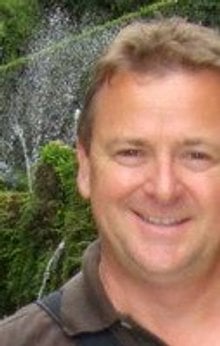
Stephen Frank
Contemplating big skys
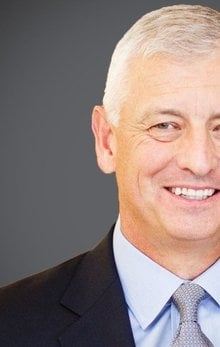
Troy Rudd
Chairman and Chief Executive Officer