Top 10: Green Steel Manufacturers

The construction sector is responsible for almost 40% of global energy-related CO₂ emissions, driven by embodies carbon from materials like steel and cement.
Steel alone contributed approximately 10% of global greenhouse gas emissions. To combat this, many steel producers have been turning towards green steel production, producing the metal with minimal to zero carbon emissions, using green hydrogen and renewable energy instead of coal-based blast furnaces.
This is a way of creating a sustainable, low-carbon alternative for the construction sector.
Now, Construction Digital takes a look at the Top 10 green steel manufacturers, looking at those who are working to decarbonise the industry and implement innovation.
10. Tenaris
Founded: 2001
CEO: Paolo Rocca
Revenue: US$11.98bn

Tenaris aims to decarbonise its business operations by implementing green steel solutions to its strategy. Its main strategies include using a higher proportion of recycled steel scrap in its metallic mixes, as well as the use of renewables in production.
Tenaris has achieved recycling content levels of 82% in its stell by using electric arc furnaces.
9. Jindal Steel Oman
Founded: 2010
CEO: Harssha Shetty
Revenue: ₹50,183 crore (US$5.9bn)
Jindal Steel Oman states that it has 35% lower carbon emissions than the global average for its industry, demonstrating that its transition to clean energy-based steelmaking has been successful.
Its business unit, Jindal Steel Duqm, is a greenfield mega-project which acts as one of the world's greenest steel facilities.
8. Liberty Steel
Founded: 1992
CEO: Sanjeev Gupta
Revenue: ~US$6bn
Liberty Steel uses an intelligent transition strategy across its industrial brand, working to safeguard a better environment for future generations. It is a pioneer user of Electric Arc Furnaces (EAFs) to lower levels of embodied carbon.
It utilises scrap metal recycling centres to feed its EAFs, in order to lower emissions, divert scrap from landfill and save natural resources.
7. Nucor
Founded: 1995
CEO: Leon Topalian
Revenue: ~US$32.49bn
Nucor's EAF steelmaking process produces less than 33% of greenhouse gasses compared to the global average of traditional BF-BOF methods. It implements circular EAF steelmaking to meet global demand while minimising impact.
The steel it produces is infinitely recyclable and meets consumer demand for sustainable construction materials.
6. EMSTEEL
Founded: 2005
CEO: Saeed Ghumran Al Remeithi
Revenue: AED 8.9bn (US$2.4bn)
Through innovation and constant testing, EMSTEEL is paving the way for a greener future with its decarbonisation and sustainability objectives.
Its Hydrogen Electrolysers project with Masdar successfully explored the viability of using green hydrogen in steel production, showing how to sustainably extract iron from iron ore.
5. Thyssenkrupp Steel
Founded: 1811
CEO: Marie Jaroni
Revenue: €9.79bn (US$11.4bn)

thyssenkrupp Steel has received the ResponsibleSteel certification for its Duisburg production site, committing to working towards a more sustainable steel industry.
It is replacing its coal-based blast furnace with a direct reduction plant which will be powered by green hydrogen. The hydrogen-compatible DR plant will be more sustainable and more efficient.
4. Stegra
Founded: 2020
CEO: Henrik Henriksson
Revenue: US$596m
Construction is underway to develop Stegra's fully integrated, digitalised and circular plant in Boden, powered by renewable electricity. It will be the largest green hydrogen production plant in Europe and will ensure Stegra can produce near-zero emission steel.
By 2030, it aims to be producing 5 million tonnes of green steel every year.
3. SSAB
Founded: 1978
CEO: Johnny Sjöström
Revenue: SEK 96bn (US$10.88bn)
SSAB is developing steel innovation with virtually zero fossil fuel emissions. SSAB Zero is made using recycled steel and fossil-free energy, without compromising on quality or performance.
It also uses biofuel and biocoal, reducing emissions by up to 77% compared to the blast furnace production system.
2. Tata Steel
Founded: 1907
CEO: T.V. Narendran
Revenue: ₹2.25tn (US$26bn)
Tata Steel uses its collection and shredding facility at Rohtak to ensure its materials are infinitely recyclable. It is consistently investing in its innovative infrastructure in order to reduce its carbon footprint. Its facilities in Thailand utilise 100% steel scrap as its primary raw material.
Tata Steel has invested £1.25bn (US$1.68bn) into state-of-the-art electric arc furnace steelmaking. The furnace at the Port Talbot site will bolster the UK's steel security and will be a major step towards decarbonisation across the industry. The UK branch aims to produce net-zero steel by 2045, which will be helped by this significant investment.
Its branch in the Netherlands is undertaking plans to switch to carbon neutral steel production, with greater circularity. It is developing new installations and cleaner technologies to help the transition.
1. ArcelorMittal
Founded: 2006
CEO: Aditya Mittal
Revenue: US$61.352bn
ArcelorMittal has invested €1.3bn (US$1.5bn) into its Dunkirk plant to produce green steel, constructing an electric arc furnace that reaches a capacity of two million tonnes a year.
Steel has significant circularity credentials, as it has recycling rates of 90%, is infinitely recyclable without quality loss and can be made with low carbon capabilities. As a result, ArcelorMittal works to ensure it develops steel which is integral to a low-carbon and sustainable economy.
The company is also part of the ResponsibleSteel certification initiative, working to meet environmental, social and governance principles. Through this, it is demonstrating its commitment to creasing a responsible steel value chain and minimising its CO₂ emissions.
Company portals







Executives

Aditya Mittal
CEO
Henrik Henriksson
Chief Executive Officer
Johnny Sjöström
President & CEO

Leon Topalian
CEO

Marie Jaroni
CEO
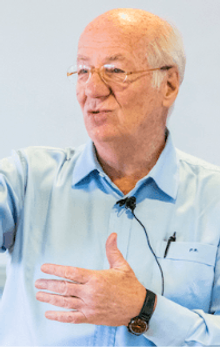
Paolo Rocca
CEO
Saeed Al Remeithi
Chairman

Sanjeev Gupta
CEO

T.V. Narendran
CEO