Construction sites generate constant streams of data, from equipment usage, to worker location to concrete curing times. It was not that long ago that all of that valuable data would go uncaptured.
IoT devices have changed that, giving contractors real-time visibility into conditions that had to previously be tracked manually, if they were tracked at all.
These devices cover all aspects of the jobsite. Wearables monitor things like worker safety and gas exposure, while telematics platforms track equipment health and utilisation.
Sensors embedded in materials themselves are able to report back on structural readiness.
Construction Digital has ranked the Top 10 leading IoT devices and platforms used across construction today.
10. WakeCap
CEO: Dr. Hassan Albalawi
Founded: 2017
HQ: Riyadh, Saudi Arabia
WakeCap replaces traditional site check-ins with a snap-on sensor that fits any standard hard hat, forming a mesh network across the jobsite without relying on Wi-Fi or GPS.
The system tracks worker location, attendance and activity in real time, and can extend to tagging equipment and monitoring environmental conditions across a site.
WakeCap has been deployed on some of the world's largest construction projects, including NEOM, Aramco and Qiddiya in Saudi Arabia. One client reported a 37% improvement in site attendance after implementing the platform's VerifyTime feature, according to WakeCap.
The company has raised US$32m in funding across five rounds, backed by investors including Aramco Ventures and UP.Partners.
9. Sensera Systems
CEO: Robert Garber
Founded: 2013
HQ: Golden, Colorado, US
Sensera Systems builds solar-powered, wireless jobsite cameras designed to work without external power or Wi-Fi, solving the common jobsite infrastructure problem of connecting and powering devices when there is no power supply.
The company's SiteCloud platform layers AI analytics on top of the camera feeds, generating automated progress summaries and security alerts, and integrates with Autodesk Construction Cloud, Procore and PlanGrid.
Sensera serves more than 1,800 general contractor customers across North America. The company says it is the fastest-growing solar-powered jobsite camera manufacturer in the region.
Sensera has raised US$27m in funding to date, and reported US$4.6m in revenue with a team of around 37 employees as of 2026.
8. Dräger X-dock
CEO: Stefan Dräger
Founded: 1889
HQ: Lübeck, Germany
Dräger is a German medical and safety technology group that has been operational for more than 135 years. It is still led by fifth-generation CEO Stefan Dräger.
Dräger’s X-dock system automates the calibration, bump testing and data management of portable gas detection devices, replacing the need for manual checks with a docking station that logs results automatically.
The system integrates with Dräger's wider portable gas detector range, letting supervisors track alarm events, battery status and calibration compliance across an entire workforce from a single dashboard.
Dräger's safety division, includes a raft of other gas detection and hazard management products that serves industries including mining, fire services and construction. The company has development and production sites in 14 countries.
7. MSA Safety, ALTAIR io360
CEO: Steve Blanco
Founded: 1914
HQ: Cranberry Township, Pennsylvania, US

MSA Safety traces its origins to the aftermath of a 1912 mine explosion in West Virginia that killed 81 miners, and has built its business around hazardous-environment safety equipment ever since.
Its ALTAIR io360 area monitor detects up to four gases simultaneously, covering perimeters and confined spaces without requiring the same specialist setup required by many other area monitoring networks.
Up to 32 units can be linked into a mesh network via MSA's HUB device, sharing alarms and extending coverage across a site, with battery life running to 80-85 days, depending on how many gases are being monitored.
MSA reported revenue of US$1.9bn in 2025 and employs around 5,300 people across more than 40 international locations.
6. Industrial Scientific, iNet Now
CEO: Andreas Schmid
Founded: 1985
HQ: Pittsburgh, Pennsylvania, US
Industrial Scientific was founded in 1976 as the research department of a mining service company, but it was spun out as its own business in 1985. It is now owned by Fortive Corporation, but still operates independently.
Its iNet Now platform provides live monitoring of gas detectors across the jobsite, and automatically transmits data from devices like the Ventis Pro5 multi-gas monitor to give supervisors real-time visibility of worker and site safety.
The company says it pioneered several gas detection firsts, including the industry's first three-gas and six-gas detectors, and the first gas detector flown on a NASA space shuttle.
Industrial Scientific employs around 1,300 people worldwide, and states its mission as ending workplace deaths on the job by 2050.
5. Giatec SmartRock
CEO: Pouria Ghods
Founded: 2010
HQ: Ottawa, Ontario, Canada
Giatec was co-founded by two civil engineering researchers, Pouria Ghods and Aali Alizadeh, with the aim of improving concrete testing processes.
SmartRock is a wireless sensor embedded directly into fresh concrete pours which is able to monitor temperature and strength in real time throughout the curing process, rather than waiting days for lab results from broken test cylinders.
The sensors feed into Giatec 360, a dashboard that provides thermal modelling and reporting and Roxi, an AI system trained on data from SmartRock deployments across thousands of jobsites in more than 80 countries, according to the company.
Giatec has raised US$18.32m in funding, backed by investors including Heidelberg Materials and Sika, the latter of which struck a global commercial partnership with Giatec in March 2026.
4. OxBlue
CEO: Chandler McCormack
Founded: 2001
HQ: Atlanta, Georgia, US
OxBlue's solar-powered, HD construction cameras document jobsites through live streaming, time-lapse video and high-resolution photography. This means project managers can have full visibility without ever needing to visit the jobsite.
The company's AI features can analyse the camera feeds to track site activity, safety and weather data, helping teams spot trends and flag issues faster than they would via manual site visits
OxBlue has served clients in 45 countries since launching, and now works with more than 6,000 customers monitoring, securing and marketing their construction projects, according to the company.
Hexagon acquired OxBlue in December 2020, integrating its cameras with Hexagon's wider 3D surveillance and construction software portfolio, including BLK247 and HxGN SMART Build.
3. Caterpillar, Product Link
CEO: Joe Creed
Founded: 1925
HQ: Irving, Texas, US

Product Link is Caterpillar's telematics system, which is fitted across its equipment range to track machine location, hours, fuel usage and diagnostic fault codes. It feeds back data to fleet managers via Caterpillar’s VisionLink platform.
The system has helped cut unplanned equipment downtime by up to 50% for some customers, according to the company, by flagging maintenance issues before they cause failures.
Caterpillar was founded way back in 1925 as a merger between the Holt Manufacturing Company and the C.L. Best Tractor Company. Today it is the world's largest manufacturer of construction and mining equipment.
Caterpillar currently employs around 118,000 people across 63 countries, and has a reported annual revenue of US$70.76bn.
2. Triax Spot-r
CEO: Shiraz Kapadia (Invixium)
Founded: 2012
HQ: Toronto, Canada
Triax Technologies built Spot-r as a non-GPS connected worker platform. It uses a patented mesh network to track wearable tags across a site, without relying on typical IT infrastructure or cellular network coverage.
The Spot-r Clip is worn by workers and records any slips, trips and falls. It also lets workers trigger alerts for unsafe conditions with the push of a button. Supervisors can also send a site-wide evacuation alert to every worker's device.
Invixium is a Toronto-based biometric access control company that acquired Triax in July 2024. In doing so it expanded its remit into workforce and productivity monitoring across construction sites.
Triax reports proven labour savings for customers through increased time on tools, alongside reduced injury claims tied to faster incident response.
1. Trackunit
CEO: Soeren Brogaard
Founded: 1998
HQ: Aalborg, Denmark
Trackunit started out fitting GPS and GSM units to construction machines in Denmark, but today has grown to provide telematics software and hardware used by contractors, rental companies and equipment manufacturers worldwide.
The company's IrisX platform pulls together fleet, equipment and site data into one system. This lets customers track how machines are being used, monitor equipment health and identify the causes of downtime across their fleets.
Trackunit launched IrisX MCP in April 2026, which lets users query fleet data in normal language by using AI tools including ChatGPT, Claude and Copilot. IrisX now processes more than 2 trillion data points, ingesting over 3 billion new data points daily across 6.5 million connected assets, according to the company.
Trackunit has grown through acquisitions, including Germany's Flexcavo in 2023 and the industrial IoT division of US company ZTR. These deals extended its reach into contractor workflow software and tracking for non-powered equipment, such as attachments and tools.
The company operates from offices in 12 countries. Trackunit is currently owned by Goldman Sachs, following an acquisition in June 2025.
Company portals


Executives
Andreas Schmid
President & CEO
Chandler McCormack
CEO

Dr. Hassan Albalawi
CEO, Founder
Joe Creed
Chief Executive Officer
Pouria Ghods
Chief Executive Officer
Robert Garber
Chief Executive Officer
Shiraz Kapadia
CEO & President
Soeren Brogaard
CEO
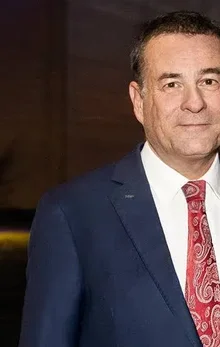
Stefan Dräger
CEO
Steve Blanco
President and Chief Executive Officer