Arup Is A TNFD Adopter but What Does This Mean for the Firm?

What Taskforce on Nature-related Financial Disclosures (TNFD) adoption means for Arup, its clients and the wider construction and infrastructure sector
The TNFD has become a reference point for large organisations seeking to understand and communicate how their operations depend on, and affect, the natural world.
Arup, the global engineering, design and sustainable development consultancy, is among the firms that have signed up as a TNFD adopter.
The move demonstrates the company’s commitment to aligning its reporting with the Taskforce's recommendations, but what will this, in turn, mean?
What does adopting a voluntary nature-disclosure framework actually change, both for a professional services firm like Arup and for the clients, contractors and investors who rely on its advice across the built environment?
Why nature risk matters for construction

The TNFD was established to do for biodiversity and ecosystems what the Task Force on Climate-related Financial Disclosures has done for carbon.
It gives organisations a consistent structure, built around a "Locate, Evaluate, Assess, Prepare" approach, for identifying, assessing and reporting on nature-related risks and opportunities.
Since its recommendations were finalised, the framework has attracted several hundred corporate and financial-sector adopters worldwide, according to the Taskforce's own tracking of the market.
For a firm like Arup, whose work spans buildings, transport, water and energy infrastructure, the case for engaging with TNFD is straightforward.
Arup has said that approximately US$44tn – more than half of global gross domestic product – is moderately or highly dependent on nature and the services it provides.
Yet, as the firm has also noted, nature is declining globally at rates unprecedented in human history, creating material risks for clients, projects and communities that are often identified too late in a project's lifecycle.
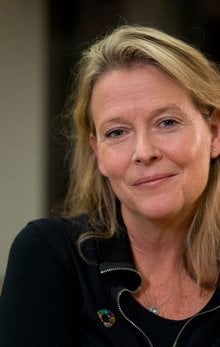
“Nature decline is creating serious risks for people, the places they live and infrastructure they rely on,” says Jo da Silva, Arup's Global Director of Sustainable Development. “But nature can sometimes feel separate from the built environment when it isn’t: it is the trees that keep our streets cooler, the landscapes that hold back floodwater and the ecosystems that help make places healthy and liveable.
“Becoming a TNFD adopter helps us develop consistency in the way we understand and respond to these risks, but reporting is only the starting point.”
Turning commitments into practical tools
Signing up as a TNFD Adopter is, in itself, only a statement of intent.
Arup has said it is now investing in tools that help its own employees identify and manage nature-related risks earlier in project timelines, rather than treating nature as an afterthought once a design is largely fixed.
This is where the commitment starts to translate into something construction clients might actually notice on a project.
Among the steps Arup has outlined:
- Investing in tools that help staff identify and manage nature-related risks earlier in project timelines
- Applying a project screening approach that has already been tested on more than 17,000 projects and opportunities
- Developing a tool to help find potential nature-based solutions, from flood protection to biodiversity gains
- Committing to disclose its material nature-related issues in line with TNFD recommendations by the end of 2027
- Building internal consistency in how nature-related risk is understood and responded to across its global operations
The emphasis on screening at scale is notable. A tool that has already been run against 17,000 projects is not a pilot exercise
It suggests that Arup views nature-risk screening as a standard part of how the company approaches early-stage design, in the same way carbon assessment has become routine on many schemes over the past decade.
What this means for construction leaders
For construction executives, TNFD adoption by a major engineering consultancy is worth watching for reasons beyond Arup's own reporting obligations.
Advisers and design partners that build nature-risk assessment into their standard workflows are likely to bring that thinking into client conversations, whether through planning conditions, insurance and financing requirements, or design choices around drainage, planting and materials.
- TNFD's recommendations, published in September 2023, are structured around the same governance, strategy, risk management and metrics pillars used in mainstream financial reporting.
- Several hundred organisations, spanning dozens of countries, have registered as TNFD Adopters since the framework launched.
- Financial institutions that have adopted TNFD collectively represent several trillion US dollars in assets under management.
- Arup's own estimate puts nature-dependent economic activity at around US$44tn globally.
- Arup has set an end-of-2027 deadline for publishing disclosures aligned with the TNFD recommendations.
Construction executives who start asking their consultants and contractors how nature-related risks are identified on live projects, rather than waiting for regulation to force the question, are likely to be better placed as disclosure expectations continue to tighten across the sector.
Arup's engagement with nature and sustainability issues extends well beyond its own TNFD reporting, largely through a network of external partnerships.
Arup’s keys partners:
WWF
Arup has partnered with WWF to develop nature-based solutions standards for rural development in Hong Kong, helping built-environment professionals place a clearer value on ecosystems in planning decisions.
World Business Council
Arup also works with the World Business Council for Sustainable Development to help accelerate new business models that support global decarbonisation.
The Resilience Shift
Arup collaborates with The Resilience Shift to strengthen the resilience of critical infrastructure systems against climate and nature-related shocks.



Executives
Jo da Silva DBE
Board Member and Chair, Strategy Committee