
Bechtel: How LNG Boom is Driving a Wave of Mega-Contracts
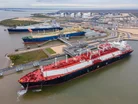
Bechtel has been awarded a US$4.69bn contract to build Train 7 at the Sabine Pass Liquefaction Expansion Project in Cameron Parish, Louisiana.
It is the latest in a growing portfolio of liquefied natural gas (LNG) contracts for the contractor, as demand for energy security infrastructure drives a global construction boom.
Work will begin in early 2027 on Train 7, which will produce approximately 5 million tonnes per annum of LNG at peak capacity, according to owners Cheniere Energy.
The contract builds on nearly two decades of collaboration between the two firms. Between 2005 and 2009 Bechtel built the original terminal at Sabine Pass, before delivering six liquefaction trains between 2016 and 2022, which added 30 million tonnes per annum of export capacity.
The contract is the latest in what is becoming a sustained EPC supercycle in LNG infrastructure, as energy security concerns push governments and energy companies to lock in supply capacity at an increasing pace.

Bechtel's LNG portfolio
Bechtel currently has 17 liquefaction trains under construction across five sites in two countries, and has already handed over five midscale trains to clients.
When complete, those projects will produce around 90 million tonnes of LNG annually, which Bechtel claims is equivalent to roughly 25% of current global LNG export capacity.
At Rio Grande LNG in Brownsville, Texas, Bechtel has finalised contracts worth US$9bn across Trains 4 and 5 for NextDecade. At Woodside Louisiana LNG in Sulphur, Louisiana, the total contract value is US$27bn.
At Corpus Christi in Texas, another major Bechtel and Cheniere LNG project, Train 1 was delivered more than six months ahead of schedule, a significant achievement on a project of this size and complexity.
"The decision to move forward with Train 7 at Sabine Pass reflects something bigger than a single project," says Paul Marsden, President of Bechtel's Energy business.
"As global energy demand rises and countries seek secure, reliable supply, LNG will continue to play an essential role in the energy mix for decades to come."
Why LNG construction is booming
When Russia invaded Ukraine in 2022, Europe's reliance on Russian pipeline gas became a serious problem, governments scrambled to find alternative energy sources.
As LNG can be shipped from anywhere in the world, it was selected. This led to widespread investment in import terminals as well as spiking demand for new liquefaction capacity.
The Middle East conflict has added further pressure. Disruption to Gulf shipping has pushed more countries to secure long-term supply agreements with producers outside the region. The US has been the primary beneficiary, with its large shale gas reserves and existing export infrastructure making it a reliable supplier.
Global electricity consumption is rising faster than it has for years. Data centre construction, industrial electrification and the growth of electric vehicles are all driving up power demand, and gas-fired generation remains the main source of power in most countries.
That means demand for LNG keeps growing even as renewable capacity expands.
Liquefaction train building involves cryogenic systems, plant construction and specialist commissioning. Relatively few contractors have the capability to deliver projects of this complexity, which is why Bechtel keeps winning these contracts.
What it means for EPC contractors
Bechtel has spent two decades building the relationships, processes and the specialist workforce needed to deliver LNG projects at scale. Clients commissioning multi-billion dollar programmes want contractors who have done it before, and there are only a handful of options.
A liquefaction facility built today will probably operate for 30 to 40 years, and the relationships formed during construction often extend into operations, maintenance and future expansion work. Winning Train 7 at Sabine Pass is likely to generate work for Bechtel for decades.
Energy security is today a critical aspect of political agendas in most major economies, so governments are prepared to commit long-term capital to infrastructure to reduce supply risks. For the contractors that have the capability to deliver it, it is a sustained pipeline of complex and high-value work.
Company portals



Executives
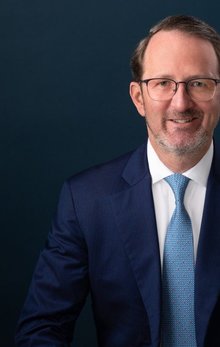
Paul Marsden
President, Bechtel Energy