Why are Data Centre Firms Becoming Green Energy Producers?
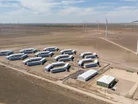
Construction and infrastructure development are entering a new phase in the data centre sector, as operators move beyond traditional energy procurement models to build and own their own power generation facilities.
With market volatility, price instability and consumption levels all on the rise across the global energy sector, the approach in data centre construction is starting to shift towards independent power generation infrastructure.
For years, the dominant model was the power purchase agreement. These are long-term contracts with energy providers (usually renewables) that gave operators clean credentials without the construction complexity of owning turbines or solar panels.
Recently, however, that model has started to be interrogated. Last week, Soluna Holdings, a Nasdaq-listed developer of green data centres, announced it had fully acquired Briscoe Wind Farm in West Texas for a sum of US$53m, with the facility capable of generating 150 MW of energy.
The deal gives Soluna something that power purchase agreements simply cannot – complete ownership of the energy infrastructure that is powering its facilities.
Infrastructure acquisition and site integration
The Briscoe Wind Farm is connected to Texas' main electricity grid and is equipped with GE Vernova turbines. It is co-located with Soluna's Project Dorothy, an existing data centre campus, which means the company now owns the land, the turbines and the computing infrastructure all in one place.
The firm expects the wind farm to contribute between US$20m and US$24.4m in annual revenue in its first year depending on prevailing power market conditions in Texas – a market known for its price volatility.
John Belizaire, CEO of Soluna, frames the acquisition in strategic, rather than purely financial terms.
"Energy sovereignty is the key durable moat in the AI infrastructure race," he says.
"By owning the Briscoe Wind Farm, we have secured the cornerstone infrastructure needed to build an AI campus with up to 300 MW of capacity. This acquisition delivers on our founding vision: building a utility-scale digital infrastructure company powered by its own renewable energy."
Sustainability, procurement and supply chain leaders won’t want to miss Procurement & Supply Chain LIVE, taking place at Navy Pier, Chicago, on April 21–22.
Co-located with Sustainability LIVE: The US Summit, the event unites senior decision-makers at a time when supply chains, sustainability and business performance are more interdependent than ever.
Secure your place now for The US Summit – group booking discounts available.
Construction investment accelerates across sector
Soluna is not alone in recognising that energy access has become the binding constraint on data centre construction and development.
Data centre capital expenditure reached US$770bn in 2025, surpassing investment in upstream oil and gas in the same year. The demand for power infrastructure that sits behind those numbers has pushed the entire sector towards increasingly direct energy arrangements.
A report from S&P Global found that the US data centre sector alone had contracted 50 GW of clean energy by the end of the third quarter of 2024, with solar accounting for 29 GW and wind for 13 GW.
Most of those deals are still structured as power purchase agreements rather than outright ownership – but that is beginning to change.

Google struck a deal with Intersect Power in December 2024 to co-locate data centres within energy parks built around US$20bn of renewable infrastructure, with the first phase expected to be operational by 2026.
Amazon, meanwhile, has helped finance more than 500 solar and wind projects globally, making it the world's largest buyer of renewable energy in 2024. Both approaches stop short of full ownership, however – which is precisely the distinction Soluna is now drawing attention to.
Site development plans expand
With the Briscoe acquisition closed, Soluna says it will now begin construction for Dorothy 3, a new 300-acre parcel of land adjacent to the existing Dorothy 1 and Dorothy 2 sites, with potential capacity of up to 300 MW.
The plan for this new site to serve high-performance computing and gen AI workloads. The expansion would rely on a combination of grid interconnection and onsite generation, though the timeline for development has not been confirmed.
Soluna's wider pipeline reportedly exceeds 4.3 GW across multiple sites, including the recently energised 83 MW Project Kati 1 and a joint venture with Metrobloks for a 300 MW+ campus at Project Kati 2.
Whether owning generation assets outright proves more advantageous than the PPA model used by most of the industry remains to be seen.
The prices of power from Texas' main grid are known to swing dramatically, but this is a feature that now cuts both ways for a company that both sells power into the grid as well as consuming it.
What the Briscoe deal does signal is that some operators believe the era of simply contracting for clean energy is giving way to something more capital-intensive and more permanent.
For Soluna, a company with a market capitalisation well below the giants it is competing alongside, that is a considerable bet on integrated infrastructure development.