
Building Africa: Mission 300 Hits US$100m Building Milestone
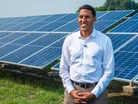
The 2026 Powering Africa Summit in Washington DC has underscored the scale of construction and infrastructure delivery required to electrify 300 million people across the continent by 2030, with The Rockefeller Foundation and the Global Energy Alliance for People and Planet confirming commitments exceeding US$100m to build the physical systems needed to achieve this goal.
The summit highlighted Mission 300, the World Bank Group and African Development Bank's initiative launched in April 2024, as not just a financial commitment but a construction challenge of unprecedented scale.
The funding represents a tenfold increase from the US$10m the two organisations announced 19 months earlier in September 2024, reflecting the urgent need to build transmission lines, distribution networks and generation facilities across some of the world's most challenging terrains.
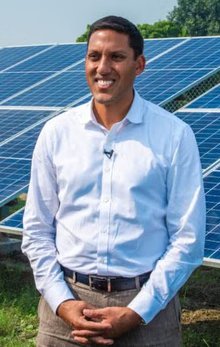
The announcement was made by Dr Rajiv J. Shah, President of The Rockefeller Foundation, during a fireside chat with Chris Wright, the US Secretary of Energy.
"The Rockefeller Foundation has made its biggest-ever bet on connecting people to electricity as the single best pathway out of large-scale poverty," Rajiv says.
"Our investment in Mission 300 reflects our commitment to the best way of advancing human well-being in the 21st century: putting countries in the lead, harnessing frontier technology and focusing relentlessly on achievable, measurable goals," he continues.
Infrastructure delivery gains momentum
Around the world, some 730 million people still go without access to basic electricity, with an estimated 85% of that number living in sub-Saharan Africa. According to the Oxford Poverty and Human Development Initiative, lack of access to electricity is the single greatest indicator of extreme poverty.

Since the World Bank and African Development Bank launched Mission 300, around 44 million people have been connected to electricity through the construction of new grid infrastructure and distributed energy systems, with tens of millions more expected to gain access before the end of this year.
The project has also supported the launch of National Energy Compacts in 30 countries to date.
The physical challenge is considerable. Connecting 300 million people requires building thousands of kilometres of transmission lines, constructing substations in remote locations and establishing distribution networks in areas where infrastructure has historically been minimal or non-existent.
Construction funding spans 23 countries
The Rockefeller Foundation is providing roughly 47% of the total US$100m commitment, while the Global Energy Alliance is covering the remaining 53%. The funding spans 23 countries, all the way from Nigeria to Madagascar.
The money covers a range of programmes including technical assistance to national Compact Delivery and Monitoring Units, 18 Mission 300 Fellowships and a new Clean Cooking Accelerator Initiative targeting the 70% of sub-Saharan African households still reliant on charcoal and wood for cooking.
There is also investment going into Zafiri, Mission 300's permanent capital fund, designed to provide patient equity in distributed renewable energy and rural electrification programmes. This funding could prove crucial for construction projects in rural areas where grid extension costs have traditionally made electrification economically challenging.
Woochong Um, CEO of the Global Energy Alliance, has been direct about where the initiative's focus lies.
"Reliable, affordable, abundant electricity is essential for jobs, prosperity and resilience," he says.
"Our focus is on ensuring that new electricity connections translate into durable economic opportunity for people and communities across Africa," he adds.
Building resilient grid systems
Beyond the headline numbers, a broader conversation at the Summit centred on the structural vulnerabilities of Africa's existing energy infrastructure. Woochong pointed to volatility in global energy markets as evidence of what happens when systems are overly dependent on imported fuels.
This has been plain to see this month, with the closing of the Strait of Hormuz causing turmoil across the global energy market.
"The world remains caught in a fragmented and vulnerable energy system, but the tools to change course are already at hand," he says.
Elsewhere, Agnes Dasewicz, who is the Chief Investment and Programme Officer at the Global Energy Alliance, says that the mood at this year's Summit felt different than the gatherings in years gone by.
"What's striking at this year's Powering Africa Summit is the shift from ambition to execution," she says.
"There is real momentum behind getting projects financed, built and delivering more affordable, abundant power for communities."
Kevin Kariuki, Vice President for Power, Energy, Climate and Green Growth at the African Development Bank, reinforced that the role of catalytic capital is not simply to fund projects directly, but to de-risk investment and unlock larger sums of money for the years to come.
"Mission 300 is fundamentally about delivery," he says, "and turning ambition into results at scale."
The construction and infrastructure delivery challenge presented by Mission 300 could represent one of the most significant rural electrification programmes undertaken globally, requiring coordination between governments, construction firms and energy providers to build the physical systems needed to power communities across sub-Saharan Africa.


Executives
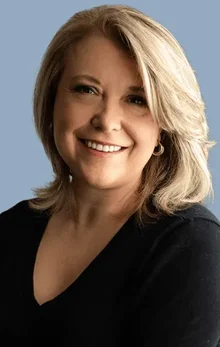
Agnes Dasewicz
Chief Investment and Programme Officer
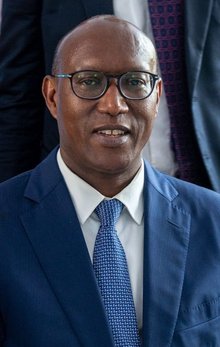
Kevin Kariuki
Vice President for Power, Energy, Climate and Green Growth
Rajiv J. Shah
President

Woochong Um
CEO