How Data Centre Infrastructure is Powering Entergy Savings
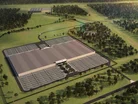
It has been two years since the US energy provider Entergy made its first foray into the world of data centres. At the beginning of 2024, the New Orleans-based firm penned a deal with AWS for two data campuses in Madison County, Mississippi.
This was a turning point for the company – one that has changed the fortunes of the firm itself, as well as its customers. Since then, Entergy has become extremely active in the US’s burgeoning digital infrastructure scene, sealing agreements to provide the energy for data centres across several states.
This month, Entergy revealed that it expects these deals to save its customers, located predominantly in Arkansas, Louisiana and Mississippi, US$5bn over the next two decades.
The announcement, made on 5 March, marks a significant moment for a utility that has positioned itself as an aggressive recruiter of hyperscale data centre investment in the American South.
Projected customer savings
The deals span five major technology companies – AWS, Meta, Google, Avaio Digital and Hut 8 – with campuses spread across all three states. The figure is projected rather than realised and covers a 20-year horizon, meaning the headline number requires some context.
According to the company, the savings are calculated by comparing expected data centre revenues against the incremental cost of serving those customers, including new generation and transmission infrastructure.
The firm’s Mississippi customers are expected to see the largest savings, at around US$2bn. This is primarily the result of AWS's three campuses, as well as its contribution to offsetting the cost of replacing two ageing power plants.
"During a rising cost environment, when we are having to replace two half-century-old power plants with new units, securing such relief right now is perfect timing for our residential and small commercial customers," explains Haley Fisackerly, President and CEO of Entergy Mississippi.

State infrastructure development
Arkansas follows close behind, with up to US$1.7bn in projected savings linked to its agreements with Google and Avaio Digital. The deal with Google is particularly notable as it includes a commitment to support construction of a new 600 MW solar and 350 MW battery facility.
"Our customers in Arkansas are going to see bills lower than they otherwise would have been if it had not been for Governor Sarah Sanders' successful recruitment of Google and the Arkansas Public Service Commission's review and approval of the contract," says Laura Landreaux, Entergy Arkansas' President and CEO.
"And this benefit is on top of Google covering its full cost to serve."
Laura highlights how the project development directly impacts the rate base.
Finally, there is expected to be savings of US$800m for Entergy’s Louisiana customer base.
The company’s agreement with Meta alone is set to deliver a 10% reduction in storm recovery and grid resilience costs for Entergy’s customers in the Pelican State.
Regulatory framework changes
There is far more to this story than savings. As a result of these projections, Entergy and its state regulators are now making an argument in favour of stronger regulations for utility companies.
The company suggests that in years gone by deregulated markets have led to customers bearing the brunt of cost spikes and reliability risks.
"Some states have deregulated and not maintained authority over resource adequacy,” says Phillip May, the President and CEO of Entergy Louisiana.
“In states where this authority has been relinquished without proper oversight, customers are experiencing higher electric bills and serious questions about the future availability of reliable power," Phillip adds.
This has led to the creation of “Fair Share Plus” – Entergy’s new business framework. This acts as a set of guiding principles for Entergy’s future data centre agreements.
The principles include requirements for multi-year contracts, cash deposits and letters of credit as collateral, as well as early termination penalties and grid reliability conditions.
Drew Marsh, Entergy's Chair and CEO, sees these principles as a response to state-level direction.
"State leaders made it very clear to us that protecting and benefiting existing electric customers in our agreements should be our overriding goal,” Drew says.
Whether those principles become an industry template or remain a regional footnote may depend on how the broader national conversation around data centre power procurement develops in the months ahead.
Company portals





Executives

Drew Marsh
Chair & CEO
Haley Fisackerly
President and CEO

Laura Landreaux
President & CEO of Entergy Arkansas

Phillip May
President & CEO of Entergy Louisiana