
Ford Converts EV Site for Battery Storage production
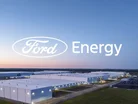
Ford has converted an idle electric vehicle battery manufacturing plant in Kentucky into a production facility for battery energy storage systems.
The company launched Ford Energy as a wholly owned subsidiary to manufacture the systems. The facility in Glendale will deploy at least 20 GWh each year, with first customer deliveries planned for 2027.
The site previously housed two of three plants operated by BlueOval SK, a 50/50 joint venture between Ford and SK On. The joint venture was dissolved following Ford's strategic reset in December 2025, when the company cancelled plans for next-gen large electric trucks and pure-EV commercial vans.
Workers at the Kentucky plant were laid off in February 2026. The facility is now home to Ford Energy's battery energy storage system manufacturing operations.
Repurposing existing infrastructure
Ford chose to repurpose the existing Glendale site rather than construct a new facility.
"Ford Energy allows us to maximise the value of our battery manufacturing capabilities," says Lisa Drake, President of Ford Energy.
"We're building a business focused first on utility-scale battery energy storage systems for large customers while also offering battery cells for residential energy storage solutions."
According to Ford, the December 2025 strategic reset totalled US$19.5bn. The company shifted its focus to affordable small EVs, hybrids and extended-range electric vehicles that use combustion engines as generators.
The Glendale location provides Ford with established infrastructure and manufacturing capacity to enter the battery energy storage market.
EDF secures supply agreement
EDF power solutions North America has signed a five-year framework agreement with Ford Energy.
The agreement allows EDF to procure up to 4 GWh of battery energy storage systems each year. Total potential volume over the full term could reach 20 GWh.
Deliveries under this agreement are expected to begin in 2028. Tristan Grimbert, CEO of EDF power solutions North America, says the agreement provides supply visibility for the company's expansion plans.
"As we continue to expand our energy storage portfolio, supply chain reliability and product quality are paramount," says Tristan.
"Ford Energy's commitment to domestic manufacturing and its rigorous approach to traceability and lifecycle support align with the standards we hold across our portfolio."
Growing demand for storage
According to the Solar Energy Industries Association, battery energy storage systems in the US are expected to see up to 70 GWh of growth in 2026 alone.
Advancements in lithium-ion and emerging chemistries have cut average global battery energy storage system prices to roughly a third of 2020 levels. Technologies like data centres and renewable energy are boosting demand alongside requirements for grid resilience.
Wood Mackenzie estimates that US battery cell manufacturing capacity met only around 6% of domestic demand in 2025. Manufacturing capacity remains limited across the supply chain.
Tristan says the framework agreement gives EDF "the supply visibility and product confidence we need to execute at the pace the energy transition demands."

Utility-scale storage systems
Ford Energy's flagship product is the DC Block, designed for utility-scale applications.
The Block is a standardised, 20-foot containerised energy storage system with capacity of 5.45 MWh per unit. The system uses 512 Ah lithium iron phosphate prismatic cells.
Applications include frequency regulation, voltage support, energy arbitrage, peak load shifting, demand response, backup power and microgrid integration. The system is available in two-hour and four-hour discharge configurations, with an operating voltage range of 1,040–1,500 VDC and integrated liquid-cooled thermal management.
Ford Energy will also offer battery cells for residential energy storage solutions.
Company portals


Executives

Lisa Drake
President of Ford Energy

Tristan Grimbert
CEO of EDF power solutions North America