Heidelberg Materials: Low Carbon Concrete in UK Construction
As the construction sector faces mounting pressure to decarbonise, materials suppliers are under scrutiny to prove that lower carbon products can perform at the same standard as conventional alternatives.
Heidelberg Materials UK offers its evoBuild range as an answer to that challenge, pairing low carbon cement produced using carbon capture technology with low carbon ground granulated blast-furnace slag (GGBS).
The combination delivers a substantial carbon saving over standard CEM I cement without sacrificing structural performance.

- Heidelberg Materials operates in more than 50 countries with around 51,000 employees
- The UK business runs over 300 manufacturing sites employing more than 4,000 people
- The UK operation spans aggregates, asphalt and recycled materials, cement and concrete
- Evergreen supply capability is anchored by the Brevik CCS cement plant in Norway
- A UK carbon capture facility is under construction to support near-zero cement output
Low-carbon concrete at 33-35 Piccadilly
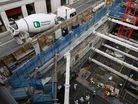
At the new retail and office construction project at 33-35 Piccadilly in London’s West End, the basement floors will be constructed from evoBuild low carbon, alongside a waterproofing system designed to protect below-ground structures from water ingress.
We were able to offer an innovative concrete solution that met the rigorous demands of the project while minimising its carbon impact
The Crown Estate is the client for the project, while the designer is Deborah Saunt David Hills Architects.
The redevelopment, delivered with main contractor Kier and groundworks specialist Realtime Civil Engineering, is targeting a National Australian Built Environment Rating System (NABERS) 5-star rating, WELL Platinum Certification and Building Research Establishment Environmental Assessment Method (BREEAM) Outstanding.
"Through collaboration with The Crown Estate, Kier and Realtime Civil Engineering we were able to offer an innovative concrete solution that met the rigorous demands of the project while minimising its carbon impact," says Phillip Rice, Concrete Key Account Manager at Heidelberg Materials UK.
“33-35 Piccadilly is the latest example in our growing commercial portfolio in London and highlights the value of embedding carbon considerations from the outset and maintaining that focus throughout delivery,” adds Graham Potts, Regional Director at Kier Construction London & Thames Valley.
“Through our strong partnership with The Crown Estate and Heidelberg Materials UK, and by combining our in-house design and engineering expertise, we’re proud to introduce this lower-carbon concrete solution to the UK for the first time.
“This innovative approach enables us to closely monitor and reduce carbon throughout the project lifecycle while helping meet growing demand for lower-carbon, cost-efficient buildings.”
Engineering durability into every pour
The performance case for evoBuild rests on two components working in tandem.
The evoBuild cement is produced using carbon capture and storage technology, which reduces the CO₂ emissions associated with production by around 50%.
The evoBuild GGBS, a by-product of steelmaking, is less permeable than standard CEM I cement, which increases the durability of finished concrete and extends the working life of structures built with it.
Historically, low carbon concrete mixes have carried a reputation for compromising on-site performance, particularly around curing times.
For contractors balancing sustainability commitments against tight build schedules, that combination of reduced emissions and unaffected programme delivery is often the deciding factor in specification decisions.
The evoBuild proposition rests on several distinct advantages:
- A verified 35% carbon saving over standard CEM I cement
- Improved durability through reduced permeability from GGBS content
- Integrated waterproofing systems suitable for below-ground applications
- No compromise on curing times or construction programme
- Supports green building certifications such as BREEAM and WELL
Scaling low carbon cement production
The evoBuild cement is produced at Heidelberg Materials' Brevik plant in Norway, where carbon capture and storage technology is applied at production scale.
This industrial-scale capability is what allows the company to supply lower carbon cement in commercial volumes rather than as a bespoke, project-specific solution, a distinction that matters for developers seeking consistent supply across large or phased schemes.
In the UK, that supply chain is supported by a network of manufacturing sites.
Heidelberg Materials is also progressing the UK's first carbon capture facility at a cement works, which is expected to enable production of near-zero carbon cement once complete, extending the decarbonisation approach beyond imported cement to domestic production.
Heidelberg Materials’ key business partners:
The Crown Estate
A major UK property and land management organisation with a long-term commercial portfolio spanning London's West End and beyond. It has prioritised carbon reduction across its developments, including material and construction method selection, positioning sustainability as central to its approach to creating future-ready commercial workplaces.
Kier Construction
Kier delivers commercial building projects across London and the Thames Valley as part of a wider national construction portfolio. The company has emphasised embedding carbon considerations from project outset through delivery, working with in-house design and engineering expertise to introduce lower-carbon material solutions to UK developments.
Realtime Civil Engineering
A groundworks contractor specialising in foundation and substructure delivery for commercial developments. The firm has worked directly with material suppliers to develop low carbon concrete mixes that maintain construction programme timelines, addressing historic performance concerns around curing times in sustainable concrete specifications.
Deborah Saunt David Hills Architects
The architecture practice responsible for designing the 33-35 Piccadilly redevelopment scheme, with sustainability integrated into the design approach. Its work supports the pursuit of high-level environmental certifications, including NABERS, WELL Platinum and BREEAM Outstanding ratings for commercial office and retail buildings.
Northern Lights
The carbon transport and storage partnership linked to Heidelberg Materials' Brevik cement plant in Norway, underpins the carbon capture and storage process that enables evoBuild cement production. This infrastructure supports the roughly 50% reduction in CO₂ emissions associated with the cement's manufacture.
Company portals





Executives
Graham Potts
Regional Director

Philip P.
UK Category Manager