How Construction Giants are Managing the Iran War Cost Surge
Major contractors are protecting profit margins through fixed-price contracts, hedging strategies and energy surcharges, despite rising fuel and metals costs caused by the Iran war.
Recent earnings calls from the sector's largest publicly traded contractors suggest the industry is managing the challenge more effectively than headline cost figures might suggest.
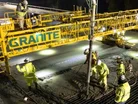
Kyle Larkin, President and Chief Executive Officer at Granite Construction, said oil prices increased as a result of the conflict in Iran, but that the company does not expect the increases to have a major impact on its annual outlook.
Pontus Winqvist, Chief Financial Officer at Skanska, told investors during a recent earnings call that the contractor had anticipated a prolonged conflict would raise costs for asphalt and plastic piping, but that exposure is partly absorbed by subcontractors and clients.
How firms are protecting margins
The mitigation approach taken by both Skanska and Granite is to lock in costs early and spread the risk across the supply chain. Fixed-price contracts protect against material price rises after a project starts, while hedging limits exposure to fuel price swings. Where contracts allow, energy surcharges pass exceptional costs directly to clients.
According to the Associated General Contractors of America (AGC), aluminium prices rose 39.1% year on year to February 2026 and steel increased 20.9%, the largest annual increases since 2022. Copper and brass rose 15.1% over the same period.
"The disruption of oil, natural gas and aluminium supplies from the Middle East is pushing up construction costs further and causing owners to delay projects," says Ken Simonson, Chief Economist at the AGC.
The fact that major contractors are absorbing those increases without significant profit warnings says a lot about how well the sector has prepared for instability.
Planning ahead for the second half of 2026
The current cost environment may not yet reflect the full impact of elevated fuel prices. Gordian, a leading provider of construction cost data, expects fuel costs to work through into broader material sectors in the second half of 2026.
Asphalt, plastics used in piping and cement are all energy-intensive to produce and have not yet fully absorbed the impact of high fuel prices.
Construction teams building cost models for the second half of 2026 will need to factor in further increases across these categories and apply the same hedging discipline that major contractors are already deploying for metals and fuel.
Construction input prices rose at a 12.6% annualised rate during the first two months of 2026, approaching levels last seen at the 2022 peak, according to CoStar data.
The firms that plan ahead now will be better positioned than those that wait for the second wave to arrive.

Data centre demand propels construction sector
Against the cost backdrop, demand-side momentum in construction remains exceptionally strong. Data centre construction starts reached US$49.5bn year to date in 2026, more than 300% above year-ago levels, according to ConstructConnect, a construction industry data provider.
Power infrastructure is following suit. First-quarter 2026 starts in power infrastructure rose 21.2% year on year, according to ConstructConnect, driven by the energy demands of the AI buildout.
Traditional construction is also stabilising. Year-on-year declines in non-residential spending have moderated to just over 2%, an improvement from the more than 4% contraction recorded a year earlier, according to CoStar.
The construction sector enters the second half of 2026 with real cost pressures but also the tools to manage them. The data centre pipeline alone gives the sector strong reason for confidence.
Company portals




Executives

Ken Simonson
Chief Economist
Kyle Larkin
President and CEO

Pontus Winqvist
Chief Financial Officer