
Iberdrola Builds Community Solar Network Across Portugal
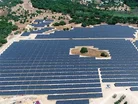
Iberdrola has begun construction of decentralised solar installations across Portugal as part of a community energy programme.
The Spanish firm is developing 10 solar photovoltaic facilities designed to serve local networks of households and businesses within a four kilometre radius of each installation. Eight of the projects are under development, with two already operational.
The solar community model involves physical infrastructure sited in villages and towns rather than centralised generation.
According to Iberdrola, the installations will share around 1.7 million kilowatt hours of renewable energy and avoid more than 250,000 kg of CO₂ emissions. The programme could see participation reach more than 2,000 businesses and residents.
Installing community solar networks
The infrastructure model places photovoltaic arrays within urban or semi-urban locations. Businesses and energy producers host the solar installations on their properties without capital investment.
The panels connect surplus electricity to consumers located within four kilometres through existing distribution networks.
The design allows participants to access renewable generation without on-site installation. This could address situations where cost, planning restrictions or property characteristics prevent individual solar deployment.
The physical footprint of each installation varies depending on the site and projected demand from the local network.
Producers receive the solar hardware at no upfront cost and consumers join the network without connection fees. The arrangement redistributes electricity that would otherwise remain unused within the existing grid infrastructure.
Decentralised generation infrastructure
The solar community projects represent a shift from large scale centralised renewable installations to localised generation networks. The infrastructure brings production closer to consumption points rather than relying on transmission from remote sites.
Pedro Torres, Director of Smart Solutions at Iberdrola Clientes Portugal, describes the approach as transformational. "Solar communities are transforming the way energy reaches people, making it more accessible and collaborative," he says.
"Through this initiative, Iberdrola aims to accelerate that transformation by promoting innovative solutions that bring generation closer to consumption, strengthen sustainability and deliver tangible benefits to local communities and the energy system as a whole."
The design considerations include proximity constraints, load balancing within the four kilometre radius and integration with existing distribution infrastructure.
Planning for these installations differs from conventional utility scale solar farms due to their embedded location within populated areas.
Iberdrola's hydroelectric construction programme
The solar community initiative sits alongside Iberdrola's larger infrastructure portfolio in Portugal. The company has operated in the country since 2004 and is constructing what it describes as Portugal's largest renewable energy project.
The Sistema Eletroprodutor do Tâmega comprises three hydroelectric facilities. The Alto Tâmega, Gouvães and Daivões power plants form an integrated complex with 1,158 MW of installed capacity including 880 MW of pumped storage capability.
According to Iberdrola, the hydroelectric scheme represents an investment of more than US$1.85bn.
Iberdrola also built seven photovoltaic projects awarded in Portugal's 2019 solar capacity auction. All seven are now operational with a combined installed capacity of approximately 186.3 MW.
In 2024, the company received the highest rating from Fitch Sustainable following its prevention of 26.7 million tonnes of CO₂ emissions the previous year.

Scaling decentralised infrastructure
Whether the community solar model extends beyond Portugal remains uncertain. The infrastructure design is replicable and demand for localised renewable generation continues to grow.
The physical installation requirements include suitable host sites, distribution network capacity and planning approval for embedded generation within residential or commercial areas.
Pedro's focus remains on completing the 10 projects currently in motion. The programme tests whether decentralised energy infrastructure can deliver measurable benefits to the communities it serves.
The construction and commissioning phase will determine if the model functions as designed across different site types and network configurations.
Each site presents distinct planning considerations that influence the commissioning timeline. The variation in host property characteristics, local grid capacity and community participation levels means the rollout progresses at different rates across the 10 locations.
This staggered approach allows Iberdrola to refine the installation process as operational data emerges from the two functioning sites.
Company portals

Executives

Pedro Torres
Director of Smart Solutions at Iberdrola Clientes Portugal