
Could Self-Healing Concrete Reshape Global Construction?
The construction industry could be approaching a fundamental shift in how concrete is specified, procured and maintained.
Recent archaeological findings at Pompeii, combined with cutting-edge research at North American universities, suggest that self-healing concrete and engineered living materials may move from laboratory curiosity to project specification within the next decade.
For contractors, asset managers and materials suppliers, these developments represent both a commercial opportunity and a challenge to existing business models.

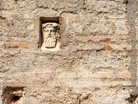
When Mount Vesuvius erupted in AD 79, construction workers were repairing a house in Pompeii.
The site, excavated by international researchers in 2023, preserved completed walls, half-built structures and raw materials in what Admir Masic, an associate professor of civil and environmental engineering at the Massachusetts Institute of Technology, describes as "literally a time capsule."
The findings, published in December in the journal Nature Communications, provide the clearest evidence of mixing processes that ancient Romans used to create concrete capable of lasting more than 2,000 years.
For an industry grappling with asset deterioration and maintenance costs, the implications are significant.
Autonomous healing technologies
Modern self-healing concrete research has progressed considerably since American researcher Carolyn M. Dry introduced the first concept in the early 1990s.
Traditional concrete can mend small cracks when water triggers leftover cement in a process known as autogenous healing, but this approach is slow and limited to narrow fissures.
This limitation drove researchers to develop autonomous healing systems that could address the costly problem of concrete degradation.
Mouna Reda, post-doctorate fellow, and Samir Chidiac, professor of civil engineering, both at McMaster University, are researching the optimum geometrical and mechanical properties of capsules compatible with surrounding concrete.
"In winter, Canada's roads, bridges, sidewalks and buildings face a familiar problem: cracks caused by large temperature swings," Mouna and Samir say.
"These cracks weaken infrastructure and cost millions to repair every year."
The research has explored both biological and chemical mechanisms. In 2006, Dutch microbiologist Hendrik M. Jonkers developed concrete that uses bacteria to heal cracks.
When moisture enters a crack, spores activate and produce calcium carbonate through microbiologically induced calcite precipitation, healing cracks up to one millimetre wide.
Chemical-based alternatives, using healing agents like sodium silicate stored in protective mediums such as vascular networks or tiny capsules, can repair larger cracks and work faster than bacteria-based approaches.
Living materials challenge traditional specifications
A team at Montana State University has developed an engineered living material that combines mycelium, the root-like threads of fungus, with bacteria that convert chemicals into stone.
The study, published in April 2025, demonstrates that this material stays alive for at least a month and could eventually replace portions of conventional concrete in buildings and infrastructure.
The team used the fungus species Neurospora crassa, guiding its mycelium to fill moulds and form porous, bone-like blocks. These fungal structures were soaked in a solution containing urea, calcium and the soil bacterium Sporosarcina pasteurii.
The microbe breaks down urea and forms calcium carbonate, cementing the scaffold into a stiffer structure while both organisms remain alive for at least four weeks.
What construction leaders need to know
The cement industry is estimated to cause around 7 to 8% of global carbon dioxide emissions, making it a focus for regulatory pressure and client sustainability requirements.
For project managers and designers, materials that can be produced near building sites, regrown for repairs or recycled could fundamentally alter carbon accounting and lifecycle costing models.
Asset managers facing recurring maintenance costs in harsh climates may find autonomous healing systems particularly relevant. The capsules being developed at McMaster must survive concrete's harsh mixing conditions while rupturing upon cracking, a technical challenge that will require close collaboration between materials suppliers and contractors to validate on site.
For engineers and specifiers, these technologies signal a shift towards performance-based specifications that account for material behaviour over decades rather than initial strength alone. Contractors may need to develop new handling procedures and quality control processes, while suppliers could face requirements for entirely new product lines.
The construction sector's exposure to these emerging materials is likely to increase as clients seek to reduce whole-life costs and meet increasingly stringent carbon reduction targets.
Company portals

Executives

Samir Chidiac
Professor