
Webuild Wins as US Water Infrastructure Spend Accelerates
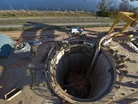
A joint venture between Webuild subsidiary Lane Construction and Brayman has won a US$1bn contract for the Allegheny County Sanitary Authority (ALCOSAN) Regional Tunnel System in Pennsylvania.
It is the first of three planned tunnels, the first running approximately 8km, and involves deep hydraulic routes. It is designed to prevent untreated sewage overflows into Allegheny, Monongahela and Ohio rivers during heavy rainfall.
The joint venture, named Steel City Tunnel Partners, will see Lane provide tunnelling operations while Brayman handles heavy civil and shaft construction.
"Lane, as a partner of Steel City Tunnel Partners, is proud to be awarded this landmark project, which will play a vital role in protecting the Ohio River and strengthening the region's wastewater infrastructure for generations to come," says Daniele Nebbia, Chief Operating Officer of Lane Construction.
"Our team brings deep tunnelling expertise and a long history of successfully executing complex underground works across the country."
The mega project points to a wider demand for complex projects being driven by America's outdated water infrastructure, which has remained largely underinvested in since the mid-20th century.
The ALCOSAN contract is one of hundreds of similar programmes underway across the US, as cities face mounting pressure to modernise systems that cannot handle current demand.

America’s water infrastructure problem
The US is connected by more than two million miles of water pipes, according to the American Society of Civil Engineers (ASCE), with some installed as far back as the late 1800s. Many of these sewage, reservoir and drainage pipes have already reached the end of their expected lifespan.
The US Environmental Protection Agency says 9.2 million lead pipes carry water into homes across the US, posing a serious risk to health. It is part of the reason the ASCE gives US drinking water infrastructure a C- rating.
For the sewage network specifically, around 700 combined sewer systems service approximately 40 million people. During heavy rainfall these systems regularly overflow, discharging untreated sewage into rivers, lakes and coastal waters.
Now, after years of urging municipalities to fix their crumbling sewage systems, the EPA has issued legally binding consent decrees enforcing spending. According to the ASCE, US$625bn is needed over the next two decades to maintain and modernise the existing network.
The Infrastructure Investment and Jobs Act has unlocked US$55bn in federal funding for water and wastewater infrastructure, and that money is now flowing into projects across the country. ALCOSAN's Regional Tunnel System is one example of the programmes that funding is enabling.
What it means for the construction industry
Deep tunnelling work is highly specialist, with only a handful of contractors globally that have the equipment and expertise to undertake these types of projects. With limited competition, those equipped to carry out the work can command a higher price.
For Lane and Brayman specifically, the ALCOSAN contract is just the start. Two more tunnels remain under the Regional Tunnel System, meaning the joint venture has a pipeline of follow-on work before it even looks elsewhere.
Water infrastructure is different from commercial construction in one important respect. Cities operating under EPA consent decrees have no choice but to spend. The work is legally mandated, which means the pipeline is resilient to economic downturns in a way that office or retail construction is not.
That makes it similar to data centre construction. Both sectors are generating sustained, multi-year pipelines of large, technically demanding contracts. The difference is that data centres get all the headlines; they are something of a cause célèbre at the moment. Water infrastructure quietly gets the contracts.
For contractors like Webuild, which has built its US presence through Lane's civil engineering capability, that combination of specialist skill, mandated demand and federal funding creates a strong market position.
The US$55bn unlocked by the Infrastructure Investment and Jobs Act is still there for the taking, and the consent decrees are still running. There are hundreds of ALCOSAN-scale programmes still to be awarded across the US.
Company portals



Executives

Daniele Nebbia
Chief Executive Officer