The Upending of the Construction Zero-Waste Paradox

Six decades after critics coined the phrase “throwaway society” to describe America’s addiction to disposability, the US now has set its sights on a zero-waste culture.
In the US and beyond, plastic bags and straws have been replaced with sustainable alternatives, while the construction industry has adopted its own waste-prevention methods.
Globally-recognised, voluntary frameworks provide guidance and incentives.
For example, the Total Resource Use and Efficiency (TRUE) certification reflects upstream choices, guiding developers to make decisions that reduce waste.
Meanwhile, Leadership in Energy and Environmental Design (LEED) certifies projects on one of four levels based on a number of sustainability criteria.
Similarly, BREEAM (Building Research Establishment Environmental Assessment Method) scores building sustainability performance across environmental categories.
However, there is some way to go before progress towards “zero waste” becomes a priority for most construction sites, as regulation remains fragmented globally.
What is zero waste?
The Zero Waste International Alliance defines the term as: “The conservation of all resources by means of responsible production, consumption, reuse, and recovery of products, packaging, and materials without burning and with no discharges to land, water or air that threaten the environment or human health”.
There is no doubt that transitioning to zero waste is a challenge for an industry synonymous with waste. The work required becomes clearest when you consider the industry’s waste-generation volumes.
Historically, construction has followed the “take-make-dispose” ideology, with demolition projects and widespread urbanisation as major generators of waste.
How much waste does construction generate?
According to the World Green Building Council, construction accounts for 32% of landfill waste.
Meanwhile, the United Nations Environment Programme has found the building sector represents 39% of CO₂ emissions.
In the US, construction and demolition (C&D) is the largest single waste stream by volume and weight.
The US Environmental Protection Agency has found the US generates more than 600 million tonnes of C&D waste annually.
Redefining waste as a valuable resource
Adopting practices that support zero-waste ambitions may be challenging, but it also presents opportunities for companies.
One strategy is to adopt circular principles. The circular economy reframes waste as a resource in transition that can be continuously reused or recycled.
The US Green Building Council (USGBC), which is linked to LEED and TRUE, says circular practices can unlock US$4.5tn in economic benefits globally, slash emissions and create millions of jobs worldwide.
According to USGBC, the task requires collaboration between multiple parties, including governments, industries and waste management sectors.
Another strategy the construction industry is adopting is reducing material usage to manage waste output.
An academic report by Hafsa Shajidha and Md Maruf Mortula suggests this can also reduce project costs by 10-20% by lowering raw material purchases, transportation expenses and disposal fees.
BREEAM, LEED and TRUE lead the way
TRUE, LEED and BREEAM certifications help by providing sustainability benchmarks and widely recognised accreditations.
BREEAM certifies the sustainability performance of buildings and infrastructure, with waste reduction a key consideration.
In 2025, 610,000 buildings had received BREEAM certification.
TRUE requires a minimum 90% diversion of waste from landfill, incineration and the environment.
A project that receives a LEED certification and Platinum TRUE certification qualifies for LEED Zero certification for zero waste.
There are more than 195,000 LEED-certified construction and building projects worldwide across 186 countries and territories, while a few hold the newer TRUE for Construction zero-waste certification which specifically applies to a project’s building stage.
USGBC claims that the LEED and TRUE programs have diverted millions of tonnes of waste from landfills.
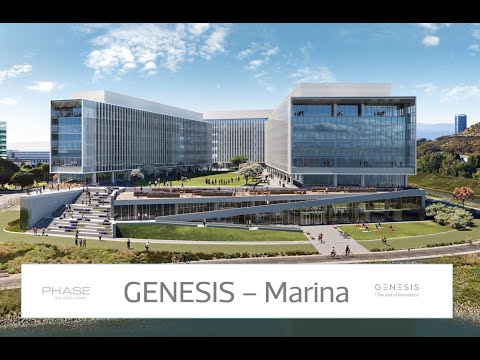
San Francisco-based general contractor, Webcor has emerged as a leader in construction-phase zero-waste certification.
The company achieved the world's first ever TRUE for Construction certification with GENESIS Marina, a 560,000-square-foot lab and office campus in California, US.
Working alongside consultant, All About Waste, Webcor diverted 98.4% of construction waste from landfills, earning the project TRUE Gold in February 2024.
Webcor followed this with a second landmark achievement at the Contra Costa County Administration Building B & Plaza in California.
It's the first government building in the world to achieve TRUE Construction certification, diverting over 95% of its waste, more than 15,000 tonnes, from landfills.
What distinguishes Webcor's approach is its philosophy of preventing waste before it's generated rather than managing it after the fact.
The company's sustainability director has emphasized that TRUE's framework reduces waste at the source, cutting transportation emissions and supporting local air quality and businesses.
By holding two of the small handful of fully-certified TRUE construction projects worldwide, Webcor has effectively defined the category.
It has demonstrated that a general contractor can apply rigorous, third-party-audited zero-waste standards across different project types and consistently exceed the 90% diversion threshold required for certification.
Nexii, a Canadian construction-technology company, distinguishes itself by applying zero-waste principles to its own manufacturing operations rather than a client's job site.
The company's manufacturing plant in Squamish, British Columbia, became the first construction-manufacturing facility in North America to achieve TRUE Gold certification for zero waste.
It diverted over 90% of the facility's waste from landfills. This is a meaningfully different achievement than a typical general contractor's project-based certification.
Nexii Building Solutions demonstrated that industrialised, factory-based construction methods – increasingly seen as a lower-waste alternative to traditional on-site building – can meet the same rigorous TRUE standard applied to conventional construction sites.
Nexii's core business model, which relies on prefabricated wall panels engineered to minimise material waste during both manufacturing and installation, is itself a waste-reduction strategy baked into the product rather than bolted on afterwards.
Earning TRUE Gold at the facility level validates that philosophy with third-party data, positioning the company as a reference point for how the broader modular- and prefab-construction sector might pursue zero-waste credentials at the manufacturing stage, distinct from certifying individual completed buildings.
Holcim's zero-waste credentials centre on its Construction Technology Innovation Center (CiTeC) in Toluca, Mexico, which became the first facility in Mexico's construction sector to achieve TRUE Zero Waste Silver certification.
It achieved the certification through measures including recycling construction demolition materials and urban solid waste, and composting organic waste to feed the centre's garden.
Beyond this single certified site, Holcim's zero-waste efforts operate at a much larger industrial scale through its Geocycle waste-management business
In 2025 alone, Holcim safely recycled 12.6 million tonnes of waste and byproducts globally for use as alternative energy or raw materials, converting them into low-carbon fuels for its cement plants.
In Latin America specifically, Holcim recycled almost 2 million tonnes of material in 2022 through Geocycle.
Marking its 30th anniversary, CiTeC has become a platform for advancing low-carbon concrete, circular construction practices, and harmonised recycling regulations for construction waste across Mexico.
Unlike Webcor or Nexii, whose zero-waste credentials centre on individual certified buildings, Holcim's strength lies in pairing one certified facility with an enormous, ongoing industrial-scale circular economy operation.
This economy positions material circularity as core to its decarbonisation strategy rather than a standalone certification achievement.
Top 10 Construction Companies for Zero Waste Sites
1) GENESIS Marina: GENESIS Marina lab and office campus in California is the world's first fully TRUE-certified construction project, epitomising Webcor’s success in zero waste site management
2) Squamish Manufacturing Plant: Nexii is the first construction-manufacturing company in North America to receive TRUE Gold certification for zero waste at its own manufacturing plant
3) CiTeC: Holcim México's Construction Technology Innovation Center (known as CiTeC) is the first building in Mexico to achieve TRUE Zero Waste Silver certification
4. Mercedes-Benz Stadium: Joining forces, Holder Construction Co., Hunt Construction Group, H.J. Russell & Co., and C.D. Moody Construction Co. (HHRM) built the Mercedes-Benz Stadium in Atlanta, US – one of the highest-profile dual-certified venues in the world, winning both LEED Platinum and TRUE Platinum certification
5. State Farm Arena: AECOM Hunt & Turner Construction transformed and renovated State Farm Arena, which is a TRUE Platinum-certified facility – the world's first sports and live entertainment venue to earn that top tier, maintaining 90%+ waste diversion from landfill in its ongoing operations
6. The Climate Pledge Arena: Mortenson redeveloped the Arena to achieve TRUE Platinum certification, making it the first venue on the US’ West Coast to reach that tier, sustaining a 93% waste diversion rate in its ongoing operations
7. Q2 Stadium: Built by Austin Commercial, the Q2 Stadium is TRUE Platinum-certified (upgraded from Gold in 2026) plus LEED Gold-certified, remaining the only soccer-specific venue in the world to hold TRUE certification
8. Chou Hall: Since Vance Brown Builders constructed Chou Hall at UC Berkeley Haas School of Business, it has obtained TRUE Platinum and LEED Platinum certifications, helping it stand out as one of the greenest academic buildings in the US
9. CalSTRS HQ: CalSTRS Headquarters has achieved both TRUE Gold status with a 95% diversion rate, and LEED Platinum status for the building overall, which was expanded by DPR Construction
10. Soldiers Memorial Military Museum: Renovated and restored by BSI Constructors, the Soldiers Memorial Military Museum already held LEED Gold when it became the first museum in the US to achieve a TRUE zero-waste certification