
Top 10: Biggest Buildings
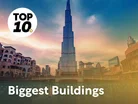
A "big building" usually means a supertall skyscraper: a structure exceeding 300 metres, engineered to defy wind, gravity and geography.
Humanity has chased height since the pyramids, but the modern skyscraper era began with steel-frame construction in 1880s Chicago, before the crown passed to New York's Art Deco towers and then to Asia and the Gulf, where cheap capital, dense cities and national ambition have driven a supertall boom since the 1990s.
Each record-breaker has pushed contractors to invent new concrete pumps, damping systems and construction methods.
Here, we list the top 10 biggest buildings in the world today, and the firms and leaders behind them.
10. CITIC Tower
Location: Beijing, China
Year Completed: 2018
Construction Company: China State Construction Engineering Corporation (CSCEC)
Chairman: Zheng Xuexuan
Also known as China Zun, CITIC Tower cost an estimated US$730m and anchors Beijing's Central Business District as a mixed-use office and retail landmark.
Its distinctive waisted silhouette, inspired by an ancient bronze ritual vessel, reduces wind load while giving Beijing a new skyline signature.
The tower houses Grade-A office space, sky lobbies and observation levels, and its deep foundations and damping systems were engineered to keep the capital's tallest building stable in a seismic zone.
9. Tianjin CTF Finance Centre
Location: Tianjin, China
Year Completed: 2019
Construction Company: China Construction Third Engineering Bureau (a CSCEC subsidiary)
Chairman: Zheng Xuexuan
Tianjin CTF Finance Centre cost an estimated US$1.5bn and combines offices, a hotel and serviced residences in a single tapering tower on the Hai River.
Built by China Construction Third Engineering Bureau, it introduced double-deck, high-speed elevators, which were among the fastest in the world at completion.
Its smooth, curved profile was designed to cut wind resistance, while its podium links directly into Tianjin's financial district, cementing the city's push to rival Beijing and Shanghai's skylines.
8. Guangzhou CTF Finance Centre
Location: Guangzhou, China
Year Completed: 2016
Construction Company: CSCEC
Chairman: Zheng Xuexuan
Also called East Tower, Guangzhou CTF Finance Centre cost an estimated US$1.5bn and mixes offices, serviced apartments, a hotel and a shopping mall across 111 storeys.
Built by China State Construction Engineering Corporation, it stands opposite its twin, the West Tower, framing Zhujiang New Town's central business district.
Its glass and steel form and double deck lifts were engineered for rapid vertical transport, while the tower's sky lobbies and mall anchor one of southern China's busiest commercial districts.
7. One World Trade Center
Location: New York City, United States
Year Completed: 2014
Construction Company: AECOM Tishman (Tishman Construction Corporation, an AECOM company)
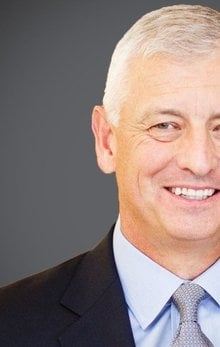
CEO: Troy Rudd
Built for roughly US$3.9bn, One World Trade Center is an all-office tower on the site of the original Twin Towers.
Its 1,776-foot height is a deliberate nod to the year of American independence. Constructed by AECOM Tishman, the same firm behind the 1973 towers, it features a fortified base, a glass parapet and an observation deck.
The tower anchors the rebuilt World Trade Center campus and stands as the tallest building in the Western Hemisphere.
6. Lotte World Tower
Location: Seoul, South Korea
Year Completed: 2017
Construction Company: Lotte Engineering & Construction
CEO: Oh Il-keun
Costing an estimated US$3.6bn, Lotte World Tower is South Korea's tallest building and a mixed-use complex of offices, a luxury hotel, residences, a mall and the Seoul Sky observation deck.
Built by Lotte Engineering & Construction, its tapering form draws on traditional Korean ceramics and calligraphy.
Outrigger trusses and a diagrid structure keep the tower stable in high winds, while double-decker lifts and a glass-floored skywalk have made it one of Seoul's most visited landmarks.
5. Ping An Finance Centre
Location: Shenzhen, China
Year Completed: 2017
Construction Company: China Construction Third Engineering Bureau
Chairman: Zheng Xuexuan
Ping An Finance Centre cost an estimated US$1.5bn and serves as the headquarters of Ping An Insurance, housing offices, sky lobbies and one of China's highest observation decks.
Built by China Construction Third Engineering Bureau, the all-office tower features a stainless-steel-clad exterior and a deep foundation anchored in Shenzhen's dense financial district.
Its structural design allows column-free floor plates, giving tenants unobstructed views across a city that has become one of the world's fastest-growing skylines.
4. Makkah Royal Clock Tower
Location: Mecca, Saudi Arabia
Year Completed: 2012
Construction Company: Saudi Binladin Group
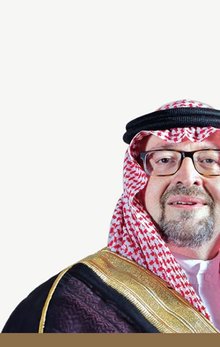
Chairman: Muhannad Al-Azzawi

Part of the roughly US$15bn Abraj Al-Bait complex, the Makkah Royal Clock Tower is primarily a hotel serving pilgrims visiting the adjacent Masjid al-Haram.
Built by the Saudi Binladin Group, it carries the world's largest clock face, visible for miles across Mecca, alongside a museum and prayer halls.
Its four-sided clock and crescent-topped spire were designed to be seen from vast distances during Hajj, making it as much a religious wayfinding landmark as a hotel tower.
3. Shanghai Tower
Location: Shanghai, China
Year Completed: 2015
Construction Company: Shanghai Construction Group
Chairman and President: Ye Weidong
Costing an estimated US$2.4bn, Shanghai Tower is a mixed-use tower of offices, retail and a luxury hotel, and the tallest building in China.
Its twisting, 120-degree-rotated form cuts wind loads by roughly 24%, a first for a supertall building.
A double-skin façade wraps nine indoor sky gardens spiralling up the atrium, cutting energy use while giving tenants panoramic views across Shanghai's Lujiazui financial district.
2. Merdeka 118
Location: Kuala Lumpur, Malaysia
Year Completed: 2023
Construction Company: Samsung C&T Corporation (joint venture with UEM Group)
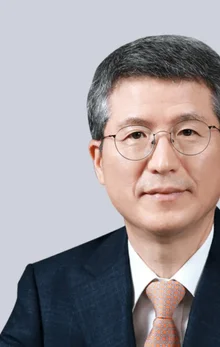
President and CEO: Oh Se-chul
Costing around RM5bn (roughly US$1.1bn), Merdeka 118 is a mixed-use tower combining offices, a Park Hyatt hotel, an observation deck called The View at 118, and a retail podium, 118 Mall, at its base.
Built by Samsung C&T Corporation in a joint venture with Malaysia's UEM Group, it is the second-tallest building on Earth and the tallest in Southeast Asia.
Its faceted glass façade draws on the geometric patterns of traditional Malay songket weaving and the raised-arm gesture Malaysia's first prime minister made when declaring independence in 1957.
Engineers used a raft foundation sunk deep into Kuala Lumpur's bedrock and a hydraulic jacking system to lift the 160-metre spire into place. The tower took nearly a decade to complete, after breaking ground in 2014.
1. Burj Khalifa
Location: Dubai, United Arab Emirates
Year Completed: 2010
Construction Company: Samsung C&T Corporation (joint venture with BESIX and Arabtec)
President and CEO: Oh Se-chul
Built for an estimated US$1.5bn, Burj Khalifa is a mixed-use tower housing luxury residences, the Armani Hotel, offices and two observation decks.
It has held the title of the world's tallest building and tallest freestanding structure since opening in 2010.
Constructed by a joint venture of Samsung C&T, Belgium's BESIX and the UAE's Arabtec, its Y-shaped, buttressed-core design was engineered to resist desert winds while allowing the tower to spiral upward through 163 storeys.
High-pressure concrete pumps developed with Putzmeister carried mix more than 600 metres skyward, a technique later reused on other supertalls.
Visible from up to 95km away, the tower anchors Dubai's Downtown district alongside Dubai Mall and the Dubai Fountain, and remains the benchmark every subsequent record-breaking skyscraper has chased since its record-setting completion ceremony in January 2010.
Company portals


Executives
Muhannad Al-Azzawi

Oh Il-keun
CEO
Oh Se-chul
Troy Rudd
Chairman and Chief Executive Officer

Ye Weidong
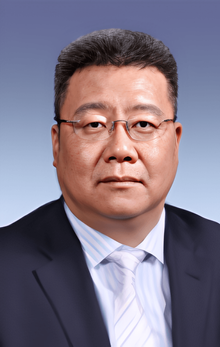
Zheng Xuexuan
Chairman