ABB's Role in Vulcan Energy's Bold Construction Project
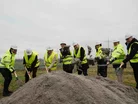
Vulcan Energy has appointed ABB as the main electrical contractor for the first phase of its Lionheart Project, located in the Upper Rhine Valley, Germany. The project is one of Europe's first fully-integrated operations combining lithium production with renewable energy generation.
Through a package of three contracts valued at more than US$50m, ABB is set to deliver the entire electrical infrastructure for the development.
The electrical scope will power Vulcan’s Lithium Extraction Plant in Landau, its Central Lithium Plant in Industriepark Höchst, near Frankfurt, and the surrounding well sites. ABB will manage the full electrical works from the high-voltage grid connection down to the building-level processes.
Björn Jonsson, Global Business Line Manager for Mining & Materials at ABB, says the partnership serves as a model for combining energy and electrification.
“The Lionheart Project is a blueprint for how clean energy and advanced electrification go hand in hand,” explains Björn.
“We are building the foundations for a stronger European battery supply chain, helping to meet growing demand for electric vehicles at a crucial point in the transition to clean mobility.”
Construction and project scope
The Lionheart Project aims to produce 24,000 tonnes of lithium hydroxide monohydrate (LHM) annually, a refined form of lithium used in batteries. According to Vulcan, this output could be enough to power around 500,000 electric vehicles each year.
The facility’s integrated design also aims to generate 275 gigawatt-hours (GWh) of electricity and 560 GWh of heat, supplying both its own industrial needs and contributing to wider energy goals.

This operational model allows Vulcan to supply both lithium and renewable energy from a single location. Vulcan has secured offtake agreements for its lithium, starting from 2028 with major firms including Stellantis, LG Corp, Umicore and Glencore.
Speaking to Reuters, Francis Wedin, Executive Chair of Vulcan Energy, stated that construction was now fully funded and set to commence immediately.
He confirmed the project would take two-and-a-half years, with full-scale operations expected once commissioning is complete.
The project’s multi-layered funding package totals US$2.56bn, combining equity grants and debt.
The equity portion includes up to US$709m from institutional placements and entitlement offers. This financing is supported by 13 financial institutions, including the European Investment Bank, five export credit agencies and seven commercial banks.
Furthermore, Vulcan has received US$122m in grants from the German government, which aligns with Berlin’s strategy to reduce reliance on imported raw materials and support domestic electric vehicle production.
The partnership with ABB follows a Memorandum of Understanding signed in April 2024 which aimed to streamline engineering optimise supply chains and lower project costs.
Cris Moreno Managing Director and CEO at Vulcan Energy, comments: "ABB’s expertise and systems give us the certainty to scale efficiently. Together we are establishing a robust model for industrial lithium production to meet market momentum while enabling battery supply chain decarbonisation at scale.”
ABB’s electrical infrastructure role
ABB’s contract scope covers high- medium- and low-voltage electrical systems including switchgear transformers protection equipment and uninterruptible power supplies.
The primary goal is to ensure a stable and efficient flow of electricity from the 110-kilovolt (kV) grid to every process within the plant. By managing the design engineering manufacturing and delivery ABB ensures the electrical performance aligns with safety and sustainability standards.
A central component of the infrastructure will be ABB’s MNS low-voltage switchgear which is widely used in mining and industrial sites globally.
As Vulcan prepares for the full-scale construction phase ABB’s electrical systems will be fundamental in delivering power safely and reliably.
With its lithium output backed by long-term contracts the Lionheart Project is positioned to become a key part of Europe’s transition to clean energy and transport.
Company portals

Executives
Björn Jonsson
Global Business Line Manager Mining & Materials
Cris Moreno
Managing Director and CEO
Francis Wedin
Executive Chair