How Amazon is Expanding Global Energy Infrastructure
For the fifth consecutive year, BloombergNEF has ranked Amazon among the leading corporate purchasers of carbon-free energy worldwide.
According to the research firm, Amazon now holds the largest such portfolio of any company within the global economy.
The online retailer has committed to developing more than 40GW of total carbon-free energy capacity across more than 700 projects in 28 countries.
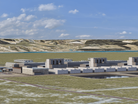
This vast portfolio comprises utility-scale solar and wind farms, offshore wind installations, huge commercial battery storage systems and a rapidly expanding nuclear energy footprint.
Kara Hurst, the firm's Chief Sustainability Officer, says that Amazon's investments in clean power go beyond distinct procurement for the company's own operations.
"When companies like Amazon invest in new carbon-free energy projects, we're not just helping to power our own operations," Kara explains, "we're adding brand-new sources of carbon-free energy to the power grid that everyone uses – the same grid that powers homes, hospitals and schools."
Amazon says the combined capacity is sufficient to power the equivalent of more than 12.1 million American homes.
However, the critical figure for the company is the capacity required for the energy-intensive data centres that are central to its cloud computing and AI operations.
Solving solar intermittency issues
The largest portion of Amazon's renewable energy portfolio is made up of solar and wind assets. While cost-effective, they introduce the challenge of intermittency.
Solar and wind cannot produce energy 24/7 as the sun does not always shine and the wind does not always blow.
To address this engineering challenge, Amazon is investing heavily in energy storage projects. To date, Amazon has 11 utility-scale battery projects and hopes to procure many more.
At its Baldy Mesa solar installation in the Mojave Desert, the company is deploying AI-driven software that analyses up to 33 billion data points annually.
This determines when to store and release energy based on live grid conditions. This combination of digital and physical technology could help Amazon smooth out supply during moments of peak demand.

Improving regional grid infrastructure
Amazon believes its capital investments in clean energy are beneficial to regional grid infrastructure and the communities that utilise those systems.
In Mississippi, Amazon has a partnership with utility company Entergy to develop 650MW of new renewable energy capacity.
Furthermore, Amazon is contributing to Entergy's US$300m "Superpower Mississippi" grid reliability campaign, which aims to reduce outage frequency for residential customers by around 50%.
Ray Long, President and CEO of ACORE, believes these infrastructure deals are significant for national energy security.
"Corporate renewable energy procurement has become one of the largest drivers of new carbon-free energy projects in the US," says Ray.
"Companies like Amazon that commit to long-term power purchase agreements provide the financial certainty that enables developers to build new renewable generation at scale – helping to meet America's growing electricity demands while establishing economies of scale that benefit all communities by adding low-cost carbon-free energy to the grid."
Amazon also points to efficiency improvements within its data centres. Amazon currently has a global Power Usage Effectiveness (PUE) score of 1.15 in 2024.
Regarding water usage, Amazon has a Water Usage Effectiveness figure of 0.15 litres per kilowatt-hour in 2024, a 17% improvement on its 2023 score.
"Amazon is committed to maximising energy efficiency across our global operations, including our data centre network, electric delivery fleets and hundreds of fulfilment centres," Kara says.
Company portals



Executives
Kara H. Hurst
Vice President, CSO, Worldwide Sustainability

Ray Long
President and CEO