Could Bamboo Become a Low-Carbon Building Material?
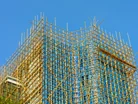
According to a recent report by the Institution of Structural Engineers, bamboo is the best alternative to steel and concrete.
The report brought together engineers from University of Warwick, the University of Pittsburgh, Arup, INBAR and BASE.
It acts as the first-ever published structural engineering manual for bamboo, but it explores the construction capabilities of the material, as well as the sustainability benefits.

Bamboo throughout history
For centuries, bamboo has been used as a key material for traditional construction in countries like Vietnam, Colombia, China and Indonesia. More than 5,000 years ago, Chinese people used bamboo to built treehouses, demonstrating its capabilities as a strong construction material. During the Han Dynasty, a palace for Emperor Hanwudi was built with bamboo.
During the Ming Dynasty in the 1300s, bamboo started being used as an interior building material in China, with bedding and flooring being crafted using the plant.
Around the world, bamboo has been used for a range of incredible buildings in modern years. In India, Terminal 2 of the Kempegowda International Airport has ceilings and pillars made of bamboo tubes. The Ninghai tower in north-east China stands at 20 metres tall and is considered to be the world's first bamboo-built high-rise building.
Now, engineers are stating that bamboo should be taken seriously as a construction material around the world, as it acts as a strong alternative to steel and concrete.
Professor Kent Harries, PEng, Professor of Structural Engineering and Mechanics, University of Pittsburgh states: “Structurally, bamboo has remarkable mechanical properties.
"It has also become a very promising bio-based resource, with growing credentials as a sustainable construction material. Nonetheless, this is hugely dependent on designing and building safe and durable structures. Our detailed manual helps to achieve this.”
All sustainability, net zero and sustainable procurement leaders should attend:
- Procurement & Supply Chain LIVE: The Net Zero Summit - QEII Centre, London, March 4-5
- Procurement & Supply Chain LIVE: The US Summit - Navy Pier, Chicago, April 21-22
Co-located with Sustainability LIVE, these events brings together CPOs, CSCO, CSOs, ESG leaders and senior decision-makers at a moment when sustainability, supply chains and commercial performance are increasingly interconnected.
Tickets can be booked online today for The Net Zero Summit and The US Summit. Group discounts available.
Sustainability capabilities
In 2022, the construction industry was responsible for around 33% of global carbon emissions, with more than half of that being caused by the use of cement. With growing urbanisation taking place, with greater demand for housing every year, the construction industry is faced with the question of how to meet net zero targets.
Now, engineers are suggesting that bamboo might be a strong solution to balancing demand with global responsibility.
Bamboo is a fast-growing resource, taking three-to-six years, as opposed to timber, which takes decades. It has a range of varieties which allows it to be used for a selection of construction projects. The crop is available across tropical and subtropical environments, with climate change resulting in its introduction to Portugal too.
The plant could contribute to a low-carbon construction sector, as it fixes carbon in its leaves, stem, roots and soil, but harvesting bamboo does not disturb the carbon that has been stored in the soil. As opposed to timber, this is a strong opponent for construction.
David Trujillo, Professor at the University of Warwick and lead author on the manual adds: “The idea that we can move people away from using carbon-intensive materials and towards low-carbon materials or, better still, carbon-fixing materials seems like a very wise way of minimising the emissions from urbanisation.”
Design benefits
Neil Thomas, the Director of Atelier One, says: “Everything you can do with timber, you can do with bamboo.”
Atelier One is a UK-based engineering company which worked on the Green School Project. This project oversaw the development of a sustainable space for Green School's gymnasium and wellness space in Bali. The building, named 'The Arc', was created in collaboration between Atelier One, a bamboo specialist architect and a a bamboo craftsman.
'The Arc' is built using a series of bamboo arches which have been stitched together. Through this building style, it blends strength with aesthetic.
Due to the nature of the plant, it is a flexible and pliable material which bends without breaking. As a result, it is used in constructions with the aim of withstanding earthquakes, bending with external force and able to return to its original shape. It is suited for humid climates as it is less likely to warp than wood, meaning it lasts much longer.
The Institution of Structural Engineers are calling for more architects and construction workers to adopt bamboo in their operations, celebrating it for its strength, material resistance and sustainability.



Executives

David Trujillo
Assistant Professor
Neil Thomas MBE
Founder & Director