How HOCHTIEF Delivers Advanced Infrastructure
Based in Essen, Germany, Hochtief AG is a global leader in construction and infrastructure technology. With a strong presence across North America, Australia and Europe, the company specialises in high-tech solutions, the energy transition and the development of sustainable infrastructure.
The firm will work as a project partner after being awarded a major contract for the German Armed Forces' billion-euro university campus in Hamburg. Awarded by the Federal Building Department, Hochtief will assist in the development of the Helmut Schmidt University campus of the German Armed Forces in Hamburg.

Major contract for campus DOK
Hochtief has secured a substantial contract for the “Campus DOK” development, handling demolition, shell construction and facades. This portion of the project is valued in the mid-hundreds of millions of euros, contributing to a total project investment estimated in the billions.
A multi-party contract was signed by all construction and planning partners, as well as the Federal Building Department as the client's representative; this will act as the basis for collaborative cooperation between all partners throughout the entire planning and construction process.
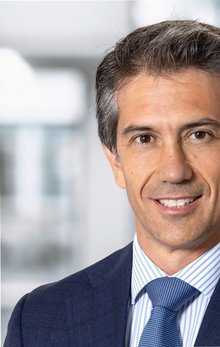
Hochtief CEO, Juan Santamaría, says: “This contract combines our end-to-end expertise in the defence and education sectors. We are delighted to be strengthening the infrastructure of the German Armed Forces and the City of Hamburg. The cooperative contract model enables us to optimise the entire project holistically and minimise the risks for all parties.”
Innovative alliances and sustainability
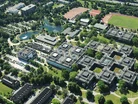
Backed by approximately €1bn (US$1.1bn) in funding from the German Armed Forces, the Douaumont Barracks (DOK) in Hamburg-Jenfeld is undergoing a massive redevelopment. The project aims to transform the 205,000 m² site into a climate-neutral, cutting-edge science hub, consolidating all university departments into a single modern campus.
The scope is ambitious, covering over 100,000 m² of new construction and renovations alongside complete infrastructure and landscape upgrades. To navigate the complexity of this major undertaking, the Federal Building Department has adopted an Integrated Project Alliance (IPA) model.
This innovative approach brings the client, planners and construction partners together into a single, equal alliance from day one. By sharing both risks and rewards through collaborative execution, the team ensures a more streamlined, efficient and transparent path to completion.
Advanced research in Kiel
This is just one example of how Hochtief is a construction leader, as it was recently awarded a contract by the Federal Agency for Real Estate (BImA) to develop one of Germany’s most advanced research facilities in Kiel. This €230m (US$271m) project for the new Max Rubner Institute (MRI) was formalised today in Berlin.
Under the terms of the agreement, Hochtief PPP Solutions will hold end-to-end responsibility for the design, construction and long-term operation of the facility for 30 years. Construction is currently on track for completion in autumn 2028.
The new centre is located near Christian Albrechts University and serves as a unified hub for the federal research institute's Kiel and Hamburg units. To protect highly sensitive instrumentation from external interference, Hochtief engineered the building to be virtually decoupled from its surroundings, effectively neutralising vibrations and shocks.
Sustainability was a core priority throughout the planning phase, resulting in a facility that meets BNB Silver sustainable building standards and the EGB 40 efficiency grade. The building’s energy needs are supported by innovative near-surface geothermal systems.
This project further strengthens Hochtief’s global reputation for delivering high-tech research infrastructure, building on a portfolio that includes major academic developments at UC Berkeley, Cleveland University and the Universities of Rosenheim and Duisburg-Essen, as well as the recent completion of a specialised laboratory for BASF in Schwarzheide.
Company portals

Executives
Juan Santamaria
Chief Executive Officer