
Holcim Foundation Drives Low-Carbon Urban Construction
The Holcim Foundation is entering a new phase, moving beyond design competitions to partner with C40 Cities, Arup and Ramboll on practical low-carbon urban development projects.
Operating since 2003, the foundation has supported cities to create greener, healthier and more resilient populations through construction project competitions.
The foundation's award has helped to define what sustainable architecture construction looks like. Over the past two decades, eight competition cycles have covered five world regions.
More than 81,000 participants from 166 countries have entered the competitions. Independent juries of 260 experts evaluated entries and recognised 362 winning projects.
Construction projects across continents
Award-winning projects have varied from circular construction projects in Switzerland to transforming neglected water reservoirs in Colombia. One winning project reimagined a 113,000 square metres prison in Bangladesh.
"What set the Holcim Foundation Awards apart was that, rather than rewarding completed projects, the programme recognised unbuilt projects in late-stage design, at the moment when teams were fighting for funding or approvals or simply needed the confidence to move forward," says Laura Viscovich, Executive Director, Holcim Foundation for Sustainable Construction.
Pritzker Prize laureate Diébédo Francis Kéré has spoken openly about how winning a Holcim Foundation Award early in his career changed perceptions of his work in the industry. According to Laura, he is now a world-renowned designer whose ideas commanded serious attention.
The foundation states that the challenge today is scaling sustainable construction. This applies especially in cities where climate pressures are increasing, populations are growing and the demand for resilient infrastructure is increasing.
Materials and governance standards
"What started as a question: 'Can we build sustainably?' became an expectation," says Laura.
Holcim has a more in-depth understanding of what the answer to this question looks like. This comes from the range of partners, researchers and city leaders connected with the company.
Sustainability definitions have expanded from only encompassing energy performance to including sustainable materials. The definitions now include governance, cultural identity and community agency.
"Cities concentrate both the greatest risks and the greatest opportunities for sustainable and regenerative development," says Laura. She adds that this is where the Holcim Foundation is now focusing its energies.
Urban construction partnerships
The foundation is focusing on responsible urban development, taking into account how cities are built, renewed and looked after.
The Holcim Foundation's renewed Board of Trustees brings together expertise from Arup, Ramboll, Urban Partners and Holcim. The foundation is also partnering with C40 Cities via the Reinventing Cities initiative.
The initiative brings together governments, the private sector and future generations. It aims to drive low-carbon, resilient urban development through practical construction interventions.
Through this partnership, new competitions for urban planning and design professionals will invite teams to reimagine underutilised sites in cities. Teams will need to propose construction methodologies that reduce material waste and carbon output.
Construction training for students
A Students Reinventing Cities competition is already live. It challenges young people across 10 cities, from Lagos to Barcelona and Jakarta, to envision greener, more resilient neighbourhoods.
The student competition could help train the next generation of construction professionals. Participants must consider building materials, construction sequencing and site logistics in their proposals.
"As I look back on two decades of hard work, not only from everyone at the Foundation but also all the partners we have had the privilege to work with, I am immensely proud of our legacy, but also energised by the future and the shared opportunity we have to accelerate responsible urban development worldwide," says Laura.
The foundation continues to evaluate construction projects that demonstrate practical approaches to reducing carbon in the built environment. This includes assessing material selection, construction waste management and building methodology innovations.
Company portals





Executives
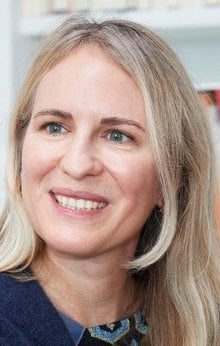
Laura Viscovich
Executive Director