
Meta Begins Constructing its First Canadian AI Data Centre
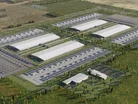
Meta has commenced construction on its first data centre in Canada. The facility in Sturgeon County, Alberta expands the company's global infrastructure to 33 sites.
The 1GW hyperscale campus will process AI workloads and support core products.
According to Meta, the development requires an investment exceeding C$13bn (US$9.1bn) and will power technologies used by billions of people for connectivity, community building, business growth and wearable device experiences.

Construction workforce and employment
The development will employ 3,000 construction workers at peak activity.
According to the company, the facility will create more than 300 permanent operational positions once complete.
Rachel Peterson, VP of Data Centers at Meta, explains the site selection criteria.
"I'm excited to share that Meta is building a 1GW data centre in Sturgeon County, Alberta. This is our first facility in Canada, and the 33rd in our global portfolio," she says.
"We selected Sturgeon County for its access to energy and infrastructure, strong talent base, and a great set of community partners committed to working with us to move this project forward," Rachel says. The project represents more than C$13bn (US$9.1bn) investment according to her LinkedIn post.
Rachel adds that the facility marks a milestone in the company's infrastructure programme. "As we continue scaling Meta's data centre fleet to meet the demands of AI, every site we add is a deliberate choice, not just about where to build, but about how we show up as a long-term partner," she says.
Power grid infrastructure development
Connecting a 1GW facility to the provincial electrical network requires extensive planning.
- 33rd – data centre in Meta's global operations at the time of breaking ground
- 3,000 – anticipated construction jobs during peak delivery
- C$13bn – Meta's total investment in Canada for its first data centre project in the country
- 300 – operational jobs once live
- 100% – the facility will be powered fully by renewable, clean energy
Meta worked with Greenlight Limited Partnership, AltaLink, Capital Power and the Alberta Electric System Operator to forecast energy requirements years before operations begin.
The company will fund all energy costs associated with its data centre operations. Meta is financing new power generation capacity and grid infrastructure improvements to prevent negative impacts on local consumers.
This approach could improve reliability across the Alberta grid network. The facility will match 100% of its electricity consumption with clean and renewable energy sources.
"We're fully funding new generation and grid infrastructure in Alberta which improves the reliability for all consumers," Rachel says. "We're grateful for the partnership of Greenlight Limited Partnership, AltaLink, Capital Power, and the Alberta Electric System Operator. And we'll continue to match this facility's electricity use with 100% clean and renewable energy."
Water conservation engineering systems
The facility incorporates water-efficient technology in its construction design. Meta targets water-positive status by 2030, planning to restore more water than it consumes across owned operations globally.
The Sturgeon County site uses a closed-loop, liquid-cooled system combined with dry cooling.
According to Meta, this design eliminates operational water consumption within the cooling loop, limiting onsite water use to domestic functions, fire protection and equipment maintenance.
The company will cover all water and wastewater infrastructure costs. Meta publishes annual withdrawal data on its website.
Rachel explains how sustainability informs construction decisions. "When it comes to water, this facility is designed with a closed-loop, liquid-cooled system, which means our annual operational water use is projected to be less than one typical golf course in the region," she says.
"We pay the full costs of our energy and water use so other consumers aren't impacted," Rachel says. She notes that construction approach matters because it reflects "responsible operations by design."
I'm proud to add Canada to our global portfolio and even more proud to call Sturgeon County and Alberta home.
Regional infrastructure investment programme
Meta is allocating approximately C$60m (US$42m) for regional municipal infrastructure improvements. The funding will target roads and water system upgrades to benefit the surrounding area.
The company plans to launch its annual Data Center Community Action Grants program in the region this autumn. The initiative will provide direct funding to local non-profit organisations.
"Our Sturgeon Data Center will support more than 3,000 construction jobs at peak, and more than 300 operational jobs once online," Rachel says. "We're also investing C$60m in local infrastructure, and this fall we'll launch our Community Action Grants program to provide direct funding to local nonprofits."
Rachel describes long-term community commitment as crucial to the project framework. "I'm proud to add Canada to our global portfolio and even more proud to call Sturgeon County and Alberta home," she says.
Company portals

Executives

Rachel Peterson
Vice President of Data Centers