NBA: Sustainability from Construction to Court
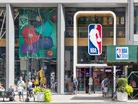
In 2007, Former NBA Commissioner David Stern approached Environmental Scientist Dr Allen Hershkowitz with a plan to embed sustainability deep within the league's operations.
This initiative evolved into NBA Green, a comprehensive environmental programme that has since become a benchmark in professional sport.
It demonstrates how large-scale industries with large environmental footprints can address their impact through strategic planning and innovative construction.
The core idea articulated by Allen is to engage with the public on their terms.
“Less than 20% [of adults in the US] follow science, and over 80% follow sports. So if you want to educate people and hopefully change behaviour, you need to meet people where they’re at,” Allen explains.
This principle has guided the programme's development from simple fan-facing recycling schemes to complex sustainable construction projects.
LEED certification and sustainable arena construction
A cornerstone of NBA Green's success is its focus on the built environment. The league has championed sustainable building practices with 10 of its arenas now holding LEED certification.
Leadership in Energy and Environmental Design (LEED) is a globally recognised green building certification system. The Sacramento Kings' Golden 1 Centre stands out, having achieved LEED Platinum status, the highest possible rating.
This made it the world's first indoor sports venue to receive such a distinction, setting a new standard for arena construction.
Individual franchises have pushed the boundaries of sustainable design even further. The Los Angeles Clippers' new Intuit Dome features an extensive array of solar panels connected to battery storage systems.
These installations are capable of powering the entire arena for the duration of a match entirely off the electrical grid. This demonstrates a major step forward in energy self-sufficiency for large-scale entertainment venues.
The programme’s influence extends globally with projects like eco-friendly basketball courts in Madrid, built from recycled glass and a sustainably constructed basketball academy in Senegal.
Waste management and circular economy in venues
Beyond initial construction, the NBA and its teams have focused on sustainable operations. In Atlanta, State Farm Arena has successfully diverted a minimum of 90% of its fan-generated waste from landfills since 2021.
In 2023 alone, this effort saved over 3 million pounds of material from ending up in landfill. This achievement is a result of robust waste management systems integrated into the venue's daily functions.

The Portland Trail Blazers provide another example of operational excellence by launching the first full-venue reuse programme in American professional sport.
By replacing single-use cups with reusable alternatives, the franchise eliminated over 320,000 disposable items in just one season.
These initiatives show a commitment to circular economy principles, reducing waste and promoting resource efficiency within the sport's infrastructure. These operational successes are often rooted in the initial design and construction phases, which plan for such processes.
Tackling the carbon footprint of travel
Travel remains one of the most difficult environmental challenges for professional sports. The NBA has started to address the 1,300,000 air miles flown by its teams during a regular season by optimising travel schedules.
Restructuring game calendars to group matches in the same city or region, such as playing both Los Angeles and New York teams in a single trip, reduces redundant cross-country flights.
However, team travel constitutes only a small fraction of the total emissions.
“The biggest ecological impact of running events is actually the fan travel. That can be anywhere between 65% and 80% of the carbon footprint of the event industry,” says Justin Zeulner, Founder of the Wave Foundation.
Recognising this, the NBA has implemented measures to reduce the impact of fan travel. For the 2024 All-Star Game in Indianapolis, the league offered free public transport to and from the arena, mitigating a substantial number of individual car journeys.
In April 2023, the NBA Arena Sustainability Task Force was launched to unite all venues in sharing best practices, accelerating progress in eco-data collection, impact reduction, and climate justice.
As Allen says, what started as "the right thing to do" has now become "an essential business management obligation," proving that sustainability can be integral to business success.
Company portals


Executives
Allen Hershkowitz, Ph.D.
NBA Green Sustainability Adviser

Justin Zeulner
President