
How Siemens and Rittal are Standardising AI Infrastructure

Siemens and Rittal have struck up a strategic partnership to address AI’s growing demand for energy.
In data centres designed for AI, individual racks now routinely draw in excess of 100 kW of power. By the end of the decade, that figure is projected to hit 1 MW per rack.
That kind of intensity would test the very limits of today’s electrical and cooling systems. But together, Siemens and Rittal hope to develop a new standard of system capable of reaching those heights.
Siemens Smart Infrastructure, known for its expertise in intelligent power systems, and Rittal, a specialist in modular data centre hardware, are a good match for such a project.

Developing modular power solutions
The companies’ shared vision is to create a future-proof, highly efficient power distribution model within the IEC market.
Their first joint innovation – a next-generation “sidecar” power rack – is slated to bring power directly into the data centre’s white space, next to the server cabinets themselves.
This isn’t standard in data centres currently, but this proximity of power source to computers could help to reduce energy loss and enhance scalability. That also means that operators could expand their operations rapidly as the demand for AI rises.
Placed alongside computing units, the sidecar rack consolidates power electronics into a dedicated module. It is thought that this design can provide a reliable, modular supply that is both quick to deploy and easy to scale.
Friedhelm Loh, Owner and CEO of the Friedhelm Loh Group, which owns Rittal, sees the new partnership as the deepening of an already productive alliance.
“We have a long-standing collaboration with Siemens in a number of fields,” Friedhelm says. “We are proud to be taking our partnership to the next level. Both companies are driven by the desire to innovate.
“As technology leaders, we have a responsibility to keep strengthening our customers’ competitiveness with the latest technologies.”
Improving infrastructure build times
The initiative’s focus on standardisation could prove quite timely. With the sector expanding so quickly, the ability to standardise infrastructure could dramatically reduce the time it takes to build new data centres.
Siemens says that its approach to identikit digital infrastructure is “minimising time-to-compute”.
Andreas Matthé, CEO Electrical Products at Siemens Smart Infrastructure, sees the partnership with Rittal as an important step in the firm’s data centre operations.
“To enable the rapid growth of AI, we need smart, reliable, and scalable power supply solutions for data centres and we need them quickly,” Andreas explains.
“In combination with our innovative electrical products and solutions, Rittal is an ideal partner when it comes to speed and standardisation in infrastructure.”
While the sidecar design is the most immediate outcome, further joint projects are already underway.
Enhancing future energy performance
What underpins this partnership is not only the rise in rack power density but also the wider question of energy performance.
With data centres already accounting for a growing share of global electricity use, any innovation that allows operators to achieve more “tokens per watt” – as the companies themselves describe it – could ripple across the sector.
The combination of electrical efficiency, modularity and coordinated component design could indeed lead to measurable gains in both uptime and sustainability.
Beyond the data centre, both Siemens and Rittal see opportunities to extend their jointly developed architectures into other high-reliability applications.
The collaboration, they suggest, marks only the beginning of a broader realignment in how industrial power distribution adapts to digital demand.
For an industry seeking to reconcile exponential AI growth with sustainability and supply constraints, that alignment could be one of the defining developments of the decade.
Company portals
Executives
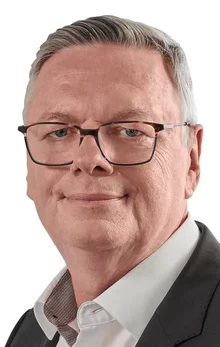
Andreas Matthé
CEO of Electrical Products at Siemens Smart Infrastructure
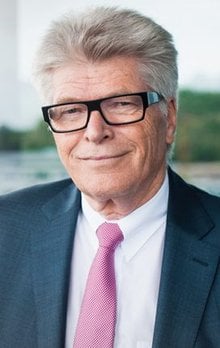
Friedhelm Loh
Owner