
The Rise of 'Island-Moded' Data Centre Construction

The race to construct AI infrastructure could be exposing the limitations of the US power system, pushing data centre developers to consider off-grid generation as a necessary strategy. According to forecasts, global investment in data centres could reach US$6.7tn by 2030. Approximately US$2.7tn of this investment is expected to occur in the US, with much of the new electrical load targeting already stressed grids such as Texas.
AI could be changing the physics of digital infrastructure faster than the grid can adapt. Traditional server racks previously drew 5kW to 10kW, but AI-specialised racks have surged to between 50kW and 100kW each over the past two years. Power demand is expected to continue climbing as new chips enter the market.
Jon Clark, Associate Director at consultancy Gleeds, argues that the balance of power has shifted away from long-time cloud giants towards AI specialists deploying increasingly energy-intensive hardware.
"The chips are driving the power, the cooling, the infrastructure, the sites, where the availability is, where the customers need to be, where the customers are then buying that technology and where they need to be placed," Jon explains.
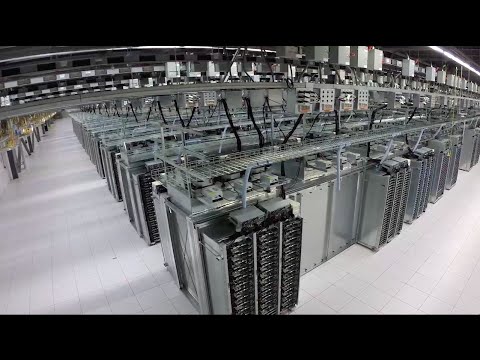
Building independent power islands
In Texas, the Electric Reliability Council of Texas (ERCOT) has warned that data centre demand alone could reach roughly 78GW by 2031 on an unadjusted basis. This figure is equivalent to approximately 36% of the state-wide load. Against this backdrop, interconnection queues have become a limiting factor for AI growth rather than just a procedural hurdle.
Developers now routinely face multi-year waits to connect major new campuses as large-load requests accumulate in ERCOT’s queue. Consequently, off-grid or ‘island-moded’ power has moved from an edge case to a serious option. Instead of waiting for a grid connection, data centres co-locate with dedicated generation, often on the same site or via private lines, to create a self-contained power island that can operate independently from the utility network.
Maura Yates, CEO of Mothership Energy, says developers have been drawn to off-grid designs as they collide with congested queues.
"We're seeing this increased demand for it because the grid-tied interconnect queue is congested and this alternative may provide a way to bypass it," Maura says. "We're going to see this demand for off-grid projects because the juice is now worth the squeeze."
Gas supply chain pressures
In the near term, this move off-grid is primarily powered by natural gas. Developers require dispatchable capacity that can hit ‘five nines’ reliability and run 24/7. Intermittent renewables cannot yet deliver this at the scale AI workloads demand without significant overbuilding and storage.
Peter Perri III, Managing Partner at Jupiter Island Capital, says the primary bottleneck has flipped.
"What we've seen over the last couple of years is that movement from chips being the primary scaling constraint to power generation being the primary scaling constraint," Peter explains.
Because wind and solar typically operate at relatively low capacity factors, developers would need vast amounts of land to match the output of a single 1GW gas plant. Such a plant might fit on about 40 acres, often situated far from the fibre networks AI tenants require. Natural gas plant supply chains are now feeling the strain, with turbine availability, transformers and skilled technicians emerging as pinch points.
Whitney Switzer, CEO at Sorellis, says developers are fighting over a finite pool of proven equipment and expertise.
"Even when you're thinking about gas generation, there are only a couple of companies that produce the equipment that is validated and tried and true to deploy," Whitney says. "When you're in these big projects, especially in remote areas, everybody on site is dependent on certain processes and timelines in these contracts."
Because wind and solar typically operate at relatively low capacity factors, developers would need vast amounts of land to match the output of a single 1GW gas plant. Such a plant might fit on about 40 acres, often situated far from the fibre networks AI tenants require. Natural gas plant supply chains are now feeling the strain, with turbine availability, transformers and skilled technicians emerging as pinch points.
Whitney Switzer, CEO at Sorellis, says developers are fighting over a finite pool of proven equipment and expertise.
"Even when you're thinking about gas generation, there are only a couple of companies that produce the equipment that is validated and tried and true to deploy," Whitney says. "When you're in these big projects, especially in remote areas, everybody on site is dependent on certain processes and timelines in these contracts."
Regulatory and planning hurdles
Policymakers are attempting to catch up with this AI-driven expansion. In Texas, Senate Bill 6 took effect in 2025 and tightened oversight of very large loads above 75MW. This legislation forces them to disclose on-site backup generation, accept curtailment during emergencies and contribute more directly to the cost of network upgrades. At the federal level, US President Donald Trump’s administration has coupled pro-AI rhetoric with efforts to streamline permitting and protect households from new digital infrastructure costs.
One proposed statute, the Decentralized Access to Technology Alternatives (DATA) Act of 2026, would exempt fully off-grid power systems serving data centres from Federal Energy Regulatory Commission rules and North American Electric Reliability Corporation standards, provided they remain isolated from the bulk grid.
This could effectively carve out a new class of private mini-utilities able to side-step interconnection studies.
Project plans are also colliding with local politics. According to research, around US$64bn of US data centre projects had been delayed or blocked by early 2025 due to opposition concerning power prices, water use and neighbourhood impacts.
Sam Lai, Head of Development at Sorellis, says that AI has pushed data centres into the public spotlight.
"There's no getting around the fact that data centres are not super-popular right now," Sam says.
He argues that early engagement and clear economic benefits, combined with behind-the-meter generation, can soften resistance. New models involving modular facilities co-located with renewable farms show how AI workloads could use surplus output. However, as data centres unplug from the grid, execution risk moves onto project partners. A single facility can cost more than US$1bn.
Brandon Lobb, a Partner in Troutman Pepper Locke’s Energy Transactional Practice Group, argues that AI has changed the hierarchy of concerns.
"AI has shifted the centre of gravity in the energy market," Brandon suggests. "Power availability – not just price – is now the defining variable in digital infrastructure strategy."
With no utility fallback, factors such as creditworthiness, technical competence and supply chain resilience are central filters for energy providers and tenants, turning off-grid power into a structural feature of the energy landscape.
Brandon Lobb, a Partner in Troutman Pepper Locke’s Energy Transactional Practice Group, argues that AI has changed the hierarchy of concerns.
"AI has shifted the centre of gravity in the energy market," Brandon suggests. "Power availability – not just price – is now the defining variable in digital infrastructure strategy."
With no utility fallback, factors such as creditworthiness, technical competence and supply chain resilience are central filters for energy providers and tenants, turning off-grid power into a structural feature of the energy landscape.





Executives
Brandon Lobb
Partner

Jon Clark
Associate Director

Maura Yates
CEO

Peter Perri III
Managing Partner

Whitney Switzer
CEO