
Skanska, TotalEnergies & Grids: Top 5 Construction Stories

Skanska's £273m Construction Project in the Heart of London
Global construction firm Skanska has taken on a new £273m construction project, which will see it refurbish a key building in the heart of London.
The project is expected to finish in 2029 and will result in a 14-storey build.
At the heart of the project is a series of sustainability goals, aiming to develop in a way that is not only good for the people, but for the planet too.
Skanska is adding the latest project to its London portfolio, taking over the transformation of One Appold Street, Broadgate. The development was originally built in the 1980s, but is set to undergo a renovation in a £273m (US$373m) construction contract.
TotalEnergies' Google Deal: A Boost for Construction
TotalEnergies has signed two long-term Power Purchase Agreements (PPAs) to deliver 1GW of solar capacity to Google's data centres in Texas.
The agreements will supply 28TWh of renewable electricity over 15 years, marking a significant development in the renewable energy infrastructure sector that could have implications for construction firms specialising in large-scale solar installations.
The power comes from TotalEnergies-owned sites under development in Texas.
The Wichita site will provide 805MWp and Mustang Creek 195MWp, with construction due to begin in the second quarter of 2026.
These new PPAs complement separate gross agreements of 1.2GW recently secured by Clearway, a California-based renewables company 50% owned by TotalEnergies. They will support Google's data centres across ERCOT, PJM and SPP markets.
GEP Index Shows Construction Materials Demand Surges
The GEP Global Supply Chain Volatility Index has revealed a marked bounce back in procurement activity during January.
This leading indicator tracks demand conditions, shortages, transportation costs, inventories and backlogs based on a monthly survey of 27,000 businesses. For many of the world's largest economies, procurement activity expanded.
This upward movement saw the strongest rise in worldwide demand for commodities, raw materials and components in almost four years.
A number of industrial firms in major economies underpinned this expansion. This included activity in China, Japan, Korea, India and across ASEAN markets which showcases a broad-based strength across the region.
Is Solar Farm Construction Poised for Boom in Middle East?
The Middle East and North Africa is preparing for an unprecedented construction boom in renewable energy infrastructure.
According to DNV, the region's wind and solar capacity could increase ten times over by 2040, requiring a dramatic acceleration in utility-scale project development and construction activity across the energy sector.
DNV's report, titled The Rise of Renewables in the Gulf Region, predicts that variable renewable capacity in MENA will need to be built out to generate approximately 85% of the region's electricity by 2060.
IEA: Why Global Grid Investment Must Rise by 2030
Every new EV on the road, every heat pump replacing a boiler and every AI search adds a drop to the rising tide of electricity demand that is starting to test the limits of the world's ageing, ailing power systems.
The IEA has warned that the global demand for electricity is on track to grow by more than 3.5% every year for the next five. This growth rate means electricity demand will expand at least 2.5 times faster than overall energy demand during the period.
In order to cope, the IEA believes that investments in electricity grids will have to increase by 50% by turn of the next decade.
"At a moment of significant uncertainty across energy markets, one certainty is that global electricity demand is growing much more strongly than it did over the past decade," says Keisuke Sadamori, the IEA's Director of Energy Markets and Security.
"In this Age of Electricity, the increase in global power consumption through 2030 is set to be equivalent to adding more than two European Unions."





Executives
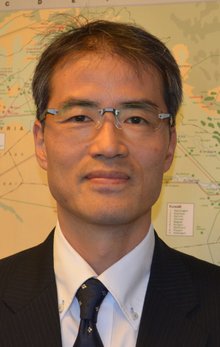
Keisuke Sadamori
Director of Energy Markets & Security