This Week's Top Five Stories in Construction

BMW Constructs Bavarian Battery Plant for EV Future
The heart of the BMW Group has been beating in Bavaria for over a century. Now, with the automotive industry moving towards a carbon-neutral future, the company is confirming its commitment to its home region through a significant new construction project.
To support the 2025 launch of the "Neue Klasse" – a new generation of vehicles designed to usher in a fully electric era – BMW is developing a dedicated high-voltage battery assembly plant in Irlbach-Straßkirchen, Lower Bavaria. The plant is needed to supply the vehicle manufacturing plants in Dingolfing, Regensburg and Munich.
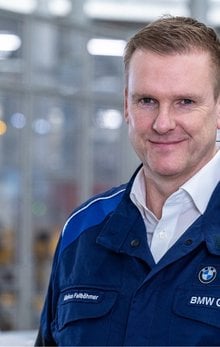
"We use lean, highly intelligent production processes that are already tested in our Bavarian pilot plants," says Dr Markus Fallböhmer, Senior Vice President Battery Production, BMW.
"We profit from short distances. We use digital twins to plan, train and optimise production processes. The ramp-up is a collaboration within the whole production network."
Best Software for Managing Heavy Equipment Rentals
Heavy equipment rental is key in construction, as it’s used on almost every project and enables access to the newest technology. However, the number of transactions can make it challenging to coordinate and manage pickups.
As construction-centric software becomes more prominent, it’s important to find a program that meshes with a company’s existing workflow. The right system should address several pain points, such as double bookings and downtime caused by manual scheduling and dispatch.
It should also eliminate billing errors and inconsistent rental contracts that can slow cash flow. Software that provides real-time visibility into equipment location and utilisation is also critical as it aids decision-making.

Data Centre Power Needs Shift Grid Construction Strategy
As pieces of critical infrastructure, data centres are zero-downtime, always-on facilities with an insatiable appetite for energy. The construction of these facilities has traditionally been constrained by grid capacity, with development timelines stretched by the need to build new power infrastructure before projects can break ground.
However, a study published in February 2026 by Duke University in Nature Energy has found that dozens of gigawatts of new load could be brought onto the US grid if large users were amenable to even modest curtailment.
This finding could have significant implications for construction schedules and project feasibility across the data centre sector.
Over the past 18 months, Google has been making a determined case that its facilities can be exactly that kind of flexible customer. The company has now integrated a total of 1GW of demand response capacity into its long-term energy contracts with multiple utilities across the US.
The announcement, made by Michael Terrell, Google's Head of Advanced Energy, represents the most recent step in what has become a notable shift in the tech giant's position in the energy markets.
A Major Project: Behind the Restoration of Hangar One
Built more than 90 years ago, Hangar One has served as a major landmark for the San Francisco Bay Area.
The old naval airship facility has sat for years in disarray, unusable due to chemical toxins used in original construction.
Rather than demolish the site, a major restoration has taken place, led by Google, NASA and backed by community support.
Now, Hangar One has been restored to its original form, marking a historic moment for the landmark.
Nevada Lithium Hub Hits 93% Design as Construction Speeds Up
Lithium Americas is making significant construction progress at its Thacker Pass lithium project in Northern Nevada, with the development representing one of the largest mining construction projects currently underway in the US.
The Canadian mining corporation has released its Full Year 2025 results, highlighting substantial advancement across the site as it works towards bringing industrial-scale lithium production online.
The project could play a vital role in strengthening America's critical minerals supply chain, with the facility designed to extract lithium from one of the world's largest known reserves.
The development aims to reduce US dependence on foreign lithium sources whilst creating substantial construction and operational employment opportunities in the region.
Company portals



Executives
Dr. Markus Fallböhmer
Bereichsleiter Produktion Hochvoltspeicher, Energiemodul