Why Construction Is ZINOVA’s Physical AI Proving Ground
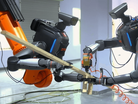
Physical AI has spent years promising to move beyond the laboratory, but few sectors offer a harder test than construction.
ZINOVA, a physical AI research and development company, has launched with exactly that challenge in mind.
Led by CEO Ryan Cox and Founder Ziyou Xu, the company is developing what it calls Tool Intelligence. It is a hardware and software layer designed to let robots recognise, grasp and operate the tools that already exist on site.
ZINOVA's pitch is that adaptability, not a single perfect robot, is the real breakthrough worth paying attention to.
A layered approach to tool use

Rather than engineering a bespoke machine for every task, ZINOVA is building Tool Intelligence around three interconnected research areas.
Each area is aimed at a different part of the problem of getting a robot to work like a skilled tradesperson rather than a single-purpose gadget:
- Grasp (General Tool Grasp) – enabling robots to recognise, pick up and manipulate a broad range of tools built for human hands, without requiring a custom system for every application
- Feel (TEISI) – the Tool–Embodiment Interaction Sensing Interface, which captures force, torque, vibration, resistance and contact between tool, environment and robot, giving the system a form of "hand feel" while generating operational data for future improvement
- Form (The Third Form) – experimental robotic embodiments designed around the work itself rather than human anatomy, potentially offering different reach, height, payload or physical capability while drawing on the same shared intelligence layer
The logic underpinning all three is that the form of the robot should be able to change without the underlying intelligence having to be rebuilt from scratch each time.
"Almost everything humans have built, from homes and factories to infrastructure and spacecraft, was made possible through the skilled use of tools. Our goal is to give physical AI that same capability, allowing the form of the robot to change while the intelligence to use tools remains,” says ZINOVA Founder Ziyou Xu.
That distinction matters because it reframes the competitive question facing physical AI companies.
Instead of asking which robotic body will win, ZINOVA is betting that the more durable asset is the layer of intelligence sitting above any single body, one that can be redeployed as new robotic platforms, sensors and actuators come to market.
Why construction is the proving ground
Construction was not chosen at random. ZINOVA argues the industry combines persistent skilled-labour shortages, high-value physical tasks.
It also has a vast existing ecosystem of tools and jobsites that shift far more than any controlled laboratory setting ever could.
That combination makes it an unusually demanding, and therefore useful, environment in which to stress-test an intelligence layer meant to generalise across tasks and robotic forms.
A system that can only cope with a tidy, predictable factory floor tells a company relatively little about how it will perform when material deliveries are late, weather changes conditions overnight, or a task has to be improvised around an obstacle no engineer anticipated.
The opportunity is much larger than building a different robot for every individual task.
- ZINOVA's team draws on researchers, professors and industry veterans with backgrounds at Carnegie Mellon University, the University of Pennsylvania, Columbia University, MIT and Tsinghua University
- The company's first public demonstration involves completing a portion of a steel-reinforced concrete tilt-up panel, a structural element common in industrial and data-centre construction, a booming market
- Initial demonstration partners include robotic platforms from LimX Dynamics and KUKA, alongside construction-industry expertise from RIC Robotics
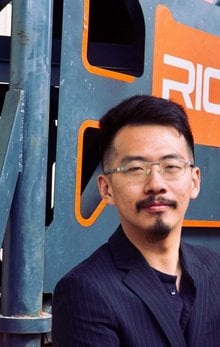
- ZINOVA operates as an independent research entity while maintaining a relationship with RIC Robotics, a company also linked to ZINOVA’s Founder and CEO
- The long-term roadmap extends beyond construction into manufacturing, energy, maintenance, infrastructure and aerospace
"The opportunity is much larger than building a different robot for every individual task. ZINOVA is focused on developing intelligence that enables robotic systems to use the tools industries already rely on, independent of any single robotic form, allowing us to test more configurations, learn faster and support many kinds of physical work,” explains Ryan
Beyond the jobsite
The near-term relevance of ZINOVA's Tool Intelligence platform is clear: a system that can adapt to existing tools rather than demanding entirely new equipment is a lower-friction path to adoption on live sites.
Contractors need not redesign their toolkits around a robot; the premise is closer to the reverse, with the robot expected to learn the toolkit the industry already relies on.
That is a meaningfully different proposition to automation pitches that require wholesale changes to workflow, procurement or training before any value can be realised.
It is also clear that ZINOVA views construction as a starting point rather than a destination.
The company points to remote, hazardous and eventually off-world environments as places where capable, tool-using physical labour will matter just as much as it does on a jobsite today.
Whether Tool Intelligence ultimately becomes commonplace infrastructure for physical AI, or one of many competing approaches to embodied automation, the construction industry has a direct stake in how it develops.
An industry perennially short of skilled labour, and reliant on tools that will not disappear simply because a robot has arrived, is precisely the environment in which such a layer would need to prove itself first, before any claim to relevance in harder or more remote environments can be taken seriously.
ZINOVA is the latest in a string of companies that have recently announced projects involving Physical AI. Hitachi Construction Machinery is developing the technology in relation to human excavators while Caterpillar and FieldAI are collaborating to help industries enhance safety and efficiency across jobsites.
Zinova's key partners:
RIC Robotics
A California-based construction technology company specialising in AI-powered, large-scale 3D concrete printing and automated construction hardware, including its RIC-M1 PRO and RIC-PRIMUS printers. Founded by ZINOVA's Ziyou Xu and commercially led by Ryan Cox, RIC Robotics has delivered large-scale builds such as a Walmart Supercenter extension and now offers its systems through a Robotics-as-a-Service model.
LimX Dynamics
A Shenzhen-based embodied-intelligence robotics company founded in 2022, developing general-purpose legged robots including biped and quadruped platforms under its TRON range. The company pairs proprietary hardware with motion-control foundation models and its COSA operating system, targeting research, manufacturing, logistics and household applications for innovators and integrators worldwide.
KUKA
Founded in 1898 and headquartered in Augsburg, Germany, KUKA is among the world's longest-established industrial robotics manufacturers, producing robots, controllers and automation software used across automotive, aerospace and general manufacturing. Now part of the Midea Group, KUKA also supplies autonomous mobile robots and intralogistics systems through a global partner network.