World's Tallest: How Jeddah Tower Surpassed 80-Floor Mark
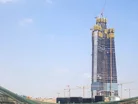
The skyline along Saudi Arabia's Red Sea coast is experiencing significant transformation as the Jeddah Tower officially moves past the 80-floor mark.
The important milestone, confirmed on 6 January, 2026, signals that the world's first "kilometre-high" structure is no longer a distant concept, but a rapidly advancing reality shaped by engineering excellence and logistical coordination.
Following a seven-year pause that began in 2018, the project – formerly known as the Kingdom Tower – resumed full-scale operations in January 2025. Since then, the construction site has become a centre of industrial activity, advancing at what engineers describe as a "blistering" pace.
The Jeddah Tower serves as the centrepiece of the broader Jeddah Economic City, a 57-million-square-foot development designed to reposition the Kingdom as a premier global hub for business and luxury tourism.
Designed by Adrian Smith + Gordon Gill, the firm behind Dubai's Burj Khalifa, the structure is engineered to reach a final height of at least 1,008 metres.
Overcoming unprecedented physical constraints
Achieving such verticality requires overcoming unprecedented physical constraints.
The Saudi Binladin Group (SBG) was rehired in late 2024 under a SR 7.2bn (£1.5bn/US$2bn) contract. Following their return in January 2025, SBG representatives note that resuming a "paused" megastructure presented immense technical challenges.
At the recommencement ceremony, the group emphasise their commitment to Vision 2030 goals, stating the project is now "utilising advanced 'pumpcrete' technology capable of delivering high-performance concrete to heights never before reached in human history."
According to Thornton Tomasetti, the project's structural engineers, the central core and flanking wings indicate more than 50% of the total concrete work is now complete. The current delivery schedule is notably aggressive, with crews adding a new floor approximately every three to four days.
In a technical update released on 6 January, 2026, Thornton Tomasetti confirmed the tower is on track to reach its 100th floor by February.
The companty highlights the structural core is performing exactly as modelled in wind-tunnel tests, state: "The Jeddah Tower project advanced strongly in 2025... our team is pairing innovation with advanced computational modeling to ensure the structure withstands the unique wind forces at 1,000 metres."
The tower's "three-petal" footprint is not merely aesthetic; it is a critical aerodynamic feature designed to shed wind vortices and reduce structural sway at extreme altitudes.
Managing complexity at unprecedented scale
Managing the sheer scale of the site falls to Turner Construction, which took over project management in March 2025. It describes the site as "one of the most complex construction environments on Earth," requiring precise coordination between the tower's construction and the surrounding infrastructure of Jeddah Economic City.
Perhaps the most technically demanding aspect is the vertical transport system. Finnish elevator specialists KONE are installing 59 lifts, including five double-decker units.
KONE describes the Jeddah Tower as the ultimate "proving ground" for their UltraRope technology, states that the elevators will travel at speeds exceeding 10 metres per second, using "carbon-fibre cores to eliminate the weight issues associated with traditional steel cables in supertall buildings."
Delivery timeline and strategic importance
The completion of the Jeddah Tower, currently slated for August 2028, is a cornerstone of Saudi Arabia's Vision 2030, serving as a symbol of the nation's economic diversification and technical ambition.
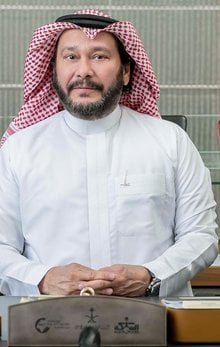
Talal Ibrahim Al Maiman, CEO of the Jeddah Economic Company (JEC), remarked during the 80th-floor celebrations: "Jeddah Tower will serve as a beacon of innovation and a catalyst for growth... Today's progress represents the realization of a vision that was years in the making."
At its final height, the Jeddah Tower will stand roughly 173 metres taller than the Burj Khalifa, claiming the crown of the world's tallest building. It will house a luxury hotel, high-end residences and the world's highest observation deck, featuring a cantilevered "sky terrace" overlooking the Red Sea.
While the tower is currently the Kingdom's most prominent project, it is part of a wider vertical race; plans are already in motion for the Rise Tower in Riyadh – a £4bn (US$5.3bn) proposal aimed at reaching a staggering two kilometres in height.
For now, however, attention remains on Jeddah, as the construction sector watches the first kilometre-high landmark take shape along the Red Sea coast.