Start Campus: Coal Site to 1.2 GW Data Campus in Portugal
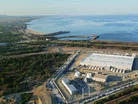
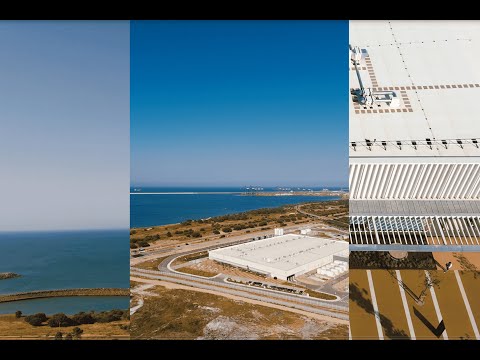
Start Campus identified an opportunity on Portugal's Alentejo coast in 2020. A decommissioned coal-fired power station owned by EDP had left behind industrial land in Sines and existing seawater intake infrastructure.
The Lisbon-based developer saw the foundations for what could become one of Europe's largest data centre projects.
The SINES Data Campus is expected to reach 1.2 GW of computing capacity when construction completes in 2030.
The first phase delivered SIN01 in late 2024. Nscale, which operates the site alongside Start Campus and Microsoft, announced a new €695m (US$812.6m) investment in the project in 2026.
The scale and engineering approach attract attention from data centre operators and hyperscalers. The site demonstrates how industrial land can be repurposed for high-density computing infrastructure without building new cooling systems from the ground up.
Site acquisition and classification
Start Campus was founded in Lisbon in 2020. The company quickly identified Sines as a location with two existing assets: direct access to international subsea fibre cables and the former coal plant's seawater intake basin.
The site is a parcel of repurposed industrial land adjacent to the decommissioned EDP facility. Start Campus began drawing up plans for the location shortly after acquisition. The Portuguese government classified the project as one of National Interest in March 2021.
Sines is a small town on the coast, but the site's proximity to existing port and power infrastructure made it a candidate for conversion.
The decision to reuse the coal plant's seawater intake rather than construct new cooling infrastructure shaped the project's engineering direction from the start. That decision was both practical and financial.
Phased construction timeline
Construction began in April 2022. SIN01, the campus's first data centre, came online in late 2024. The full campus is expected to be completed by 2030.
Nscale's €695m (US$812.6m) investment announced in 2026 funds the next phases of physical build-out.
Nscale Founder and CEO Josh Payne says: "Building on a proven foundation, the expanded deployment in Sines, Portugal creates one of the most advanced environments in Europe for high-density AI infrastructure."
Payne adds: "It also represents one of the largest AI infrastructure investments in Portugal's history – and among the most significant in the EU – reflecting the surging demand we're seeing for Nscale's services."
The phased approach allows construction to continue while SIN01 operates at full capacity. The campus is designed to scale incrementally rather than deliver all 1.2 GW in a single phase.
Seawater cooling infrastructure
SIN01 uses ocean water as its primary cooling method. Water is drawn directly from the Atlantic and returned one degree warmer. The facility reuses the same piping infrastructure that cooled the coal plant.
That decision avoided the need to build new freshwater cooling systems. It also avoided the regulatory and engineering work required to construct new seawater intake channels. The existing pipes were already rated for industrial use and connected to the Atlantic.
The result is a Water Usage Effectiveness rating of zero and a design Power Usage Effectiveness of 1.1. Both figures are among the best in the data centre industry.
Speaking in 2025, Start Campus CEO Robert Dunn says: "At Start Campus, we are committed to building the foundation for the next generation of sustainable, AI-ready digital infrastructure."
"Power is one of the most critical resources in today's digital infrastructure. But it's not just about access, it's about managing power efficiently, intelligently, and sustainably at scale."
Implications for future projects
The SINES project offers a model for repurposing decommissioned industrial sites. Coal plants often leave behind cooling infrastructure, electrical substations and grid connections that data centres require. The sites are typically zoned for industrial use and located near transport links.
Reusing existing infrastructure can reduce capital expenditure and construction timelines. It can also reduce the environmental footprint of new builds.
According to Eurostat, 87.5% of Portugal's electricity was generated by renewables in 2024, the year SIN01 came online.
Dunn says: "It takes daily attention to make sure that you can be as sustainable as possible."
The campus's PUE and WUE ratings could show that engineering decisions made during the design and construction phases have measurable operational outcomes. The project is one of the largest of its kind in Europe.
Company portals




Executives
Josh Payne
Founder & CEO

Robert Dunn
CEO