
UK Nuclear Build: From Mega-Projects to Modular Reactors
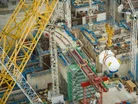
Britain's decade-long decline in nuclear capacity could be creating a multibillion-pound opportunity for construction firms.
The sector now faces a difficult choice between backing conventional gigawatt-scale projects with long delivery timelines, or betting on small modular reactor (SMR) technology that remains commercially unproven.
The UK generated 52.5% of its electricity from renewables in 2025, according to the Department for Energy Security and Net Zero.
Nuclear output fell 12% to 35.9 TWh, roughly half the volume recorded 10 years earlier. Gas generation rose 4.7% to 91.6 TWh, filling the baseload gap left by decommissioned nuclear plants.
The pattern creates an infrastructure procurement challenge for government and a strategic question for construction leaders.
New nuclear capacity is needed, but the delivery model that gets commissioned will determine which firms win work and how much risk they carry.

Construction pipeline under pressure
Nuclear output fell 13% in the fourth quarter of 2025 to 8.3 TWh as outages continued across the ageing fleet. Gas turbines compensated for the shortfall.
That trend could persist as existing plants approach the end of operational life, according to energy analysts.
The implication for construction is straightforward. Britain needs replacement capacity, but the two pathways available present different commercial profiles.
Traditional large-scale nuclear projects offer substantial contract value but carry well-documented cost and schedule risks.
Small modular reactors promise faster delivery and lower capital exposure per unit, but the technology has yet to be deployed at scale in the UK.
John Haw, Chief Executive Officer of energy procurement firm Fidelity Energy, frames the challenge in operational terms.
"The record renewable figures are genuinely impressive, but they're masking a problem," he says. "Every time a nuclear plant goes offline for maintenance or decommissioning, gas turbines spin up to compensate.
"We're building a clean energy system on top of a baseload void, and until that void is filled, whether by new nuclear, grid-scale storage or something else, gas isn't going anywhere."
Hinkley Point lessons for contractors
Hinkley Point C, the EDF-led plant under construction in Somerset, will not generate electricity until the late 2020s at the earliest.
Sara Stefanini, EMEA Climate Policy Editor at Carbon Pulse, has described the project as a "headache" for around a decade due to cost overruns and delays.
The delivery challenges at Hinkley Point C could influence procurement strategies for future nuclear builds.
Contractors evaluating bids for Sizewell C or other large projects must account for the reputational and financial exposure that comes with extended construction schedules.
France offers a contrasting case study. The country generates around 70% of its electricity from nuclear power, built over decades of consistent state investment. That fleet now provides some of the lowest-carbon electricity prices in Europe.
The French model relied on standardised reactor designs and centralised project management.
Britain has not replicated that approach, which could mean higher risk for construction firms operating without the same institutional support.
SMR opportunities and capacity questions
The Labour government has backed small modular reactors as a faster route to new nuclear capacity. GB Energy struck deals with Rolls-Royce SMR for installations in North Wales.
The SMR approach could reduce individual project risk for construction firms by lowering capital requirements and shortening build programmes. Factory fabrication of reactor modules could also reduce on-site labour exposure and improve quality control.
However, SMR technology remains unproven in commercial operation. Construction leaders must weigh the potential for repeat business across multiple installations against the risk of cost and schedule uncertainty on first-of-a-kind projects.
Whether SMRs can deliver at the pace and scale the UK needs is not yet clear. In the interim, gas generation continues to compensate for lost nuclear output.
Procurement strategy for contractors
Energy procurement strategies built on the assumption of a steadily decarbonising grid may be underpricing risk, according to John.
"What this means for businesses is that wholesale electricity prices remain far more gas-exposed than the renewable headline figures suggest," he explains.
"A company that thinks the grid is now 'mostly green' and therefore stable may be in for a rude awakening the next time gas prices spike."
For construction firms with energy-intensive operations or long-term projects, the cost volatility created by reliance on gas could affect margin forecasts.
Understanding the baseload gap and how it gets filled could inform hedging strategies and contract pricing.
Total fossil fuel generation rose 2% in 2025, driven almost entirely by gas. That trend could continue until new nuclear capacity comes online, which means construction executives need visibility on government timelines and procurement pipelines to plan resource allocation.
The numbers from 2025 show that Britain's energy transition has made progress, but the infrastructure deficit left by nuclear decommissioning remains unresolved.
How that gap gets filled will determine which construction firms secure work and what commercial terms they face.
Company portals




Executives

John Haw
CEO