

The Construction Interview: Mathias Schluep
The Construction Interview: Mathias Schluep
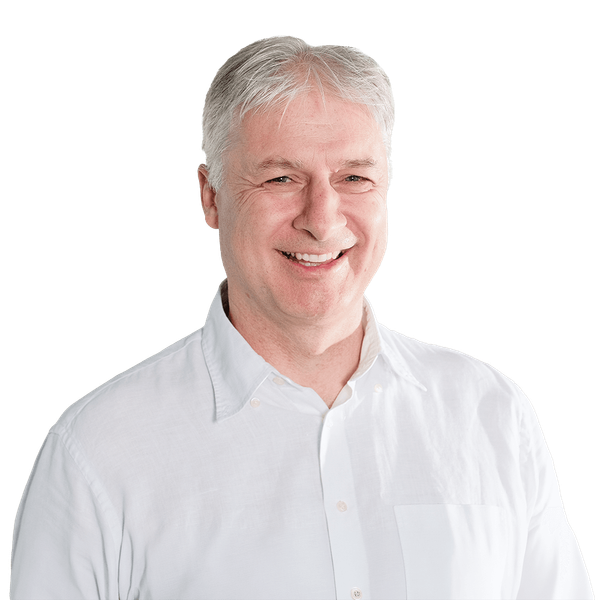
“Think about the legacy,” Mathias Schluep, Managing Director of the World Resources Forum (WRF), says.
Mathias is referring to the sustainability of raw materials, a cause to which he has committed his career. His passion is born out of his childhood in the nature of Switzerland.
“This is our resource but not just to be used and destroyed,” he says. It’s a sentiment that pervades everything the World Resources Forum does.
A Swiss based non-profit organisation with a global focus, WRF’s projects and biennial conference are centred on driving the sustainable management of natural resources – mainly minerals and metals – throughout the value chain.
Circularity and construction
The circular economy and secondary raw materials are a large focus for the forum, and two areas that have historically been less prominent in construction compared to other industries.
“The construction business, if you want to compare it to other things like consumer products like electronics, it's a very different business,” says Mathias.
The materials used in construction are often diverse and unique in their purpose as they are typically meant to last for an extended period of time.
Mathias continues: “We are talking about materials which are built into infrastructure buildings, roads etc., which stay there for a long long time, so it's very difficult to think in terms of when they come back into a circular economy and when we can reuse these materials.”
- 50% - Percentage of global material extraction attributable to the buildings and construction sector
- 37% - Percentage of global emissions attributable to the buildings and construction sector
- 18% - Percentage of global building-related emissions that is embodied carbon created from producing materials such as steel and concrete
Mathias compares these examples to a mobile phone that may be used for a considerably shorter time of around five years, although this is seen as a long period for many people.
Another stark contrast must be noted. While there is mainly an international standard which applies to the manufacturing of consumer products, rules in the construction sector are often localised.
“It’s not that easy to say we apply the same mindset when it comes to the circular economy and keeping these resources in the loop [in construction],” Mathias explains. “The incentives are completely different.
“Physics and thermodynamics tell us that nothing is perfect. You know through the energy law that you will always need primary raw materials at one point, but I think we are far from maximising the use of secondary raw materials.”
The legacy of construction materials
A circular economy necessitates thinking about the future of materials as secondary raw materials, rather than as waste once they are no longer of use.
“There's already a lot of thinking about how we can keep certain materials in the loop,” says Mathias.
From rubble to steel, there is opportunity for reusing and recycling in construction.
“I think when it comes to these things, whatever has a value as secondary raw materials is going to be recycled,” he adds.
Finding opportunities for reusing and recycling will require knowledge of the materials used in a construction project, as Mathias highlights:
“If you have a building which will stand there for decades, you have to think, ‘Will the people in some decades still know what I have put into this building? Is there documentation?’”
With the effects of climate change and the energy transition a global focus, replacing energy-intensive materials with energy-efficient ones is also crucial.
“If you use a lot of concrete, it has quite a big footprint on climate change and energy consumption,” says Mathias.
“This means considering both embodied carbon – the emissions associated with producing and using construction materials – and operational carbon, generated through the energy needed to heat, cool and operate a building over its lifetime. This distinction is becoming increasingly important as European countries move towards regulating the whole-life carbon footprint of buildings.”
Differing regional perspectives
As the US and many European nations readjust their focus to secondary raw materials, Mathias highlights the need other countries have for new resources.
He says: “We have actually used all our resources, we have to keep them in the loop now and other places should be allowed to use new resources to build up but they have to do it by being clever, building more efficiently and building more for the future – so, leapfrogging all the mistakes.”
Having worked with partner countries in Latin America, Asia and Africa, he cites Egypt’s capital, Cairo, as an example. From one visit to another 12-18 months later, he witnessed how the city had rapidly expanded. Where there used to be fields now stood new buildings.
“They cannot just rely on secondary raw materials,” he goes on. “They need to be allowed to actually build new buildings and that will need a lot of resources.
“In Europe, it's more about efficiency and how we keep things in the loop. In Africa it's more like how do we build up new infrastructure. We will need a lot of resources for that and of course Africa needs to be allowed to use these resources.”
The legacy of the WRF
Projects in Africa and beyond are central to the World Resources Forum and something Mathias has introduced during his time with the organisation, first joining as Program Director.
The conference itself is what the forum was founded on, with each edition designed to have a unique storyline.
“We need to understand what we have achieved, how the world has changed and then link [the last] conference to the next,” says Mathias. “The whole conference we organise is a story of failure and success and learnings and seeing how we continue.”
Through the conference and projects, the forum is not only meeting stakeholders, but working on problems it can actually address.
You know through the energy law that you will always need primary raw materials at one point, but I think we are far from maximising the use of secondary raw materials
Amid the energy transition and the rush for the critical raw materials, the forum has advanced responsible sourcing, recycling and sustainable governance.
Mathias adds: “We have supported raising it on the agenda of politicians, with many others, so they realise it's not just about climate change or energy provision, it's also about how we can access the raw materials.”
The forum recently collaborated with the International Organization for Standardization (ISO) to advance global circular economy frameworks. This includes helping to transition early secondary-material guidelines into formal standards such as ISO 59014:2024 for sustainable and traceable secondary material recovery.
Balancing shareholder relations
As an engineer, it’s no surprise Mathias is technically-minded. However, as a leader, he also appreciates human relatability.
“In the end, if you want to convince other people about solutions you need this human touch,” he asserts. “You need to while you have to convene stakeholder processes. We have to build consensus; we have to be empathic about other people to understand why they are thinking differently because they all have a reason.
“If you start to understand why they're thinking differently, maybe you will find a way to convince them that maybe they could change their mind – or maybe they could also say yes to a solution they didn't think about before.”
“Your enemy can also be your friend. It just depends on how you talk to them.”
World Resources Forum
The World Resources Forum is an international non-profit organisation mobilising collaborative action for sustainable and fair resource use. Through its global, multi-stakeholder activities, WRF scales knowledge and solutions for human wellbeing within planetary boundaries.
Did you know?
Company portals

Executives
Mathias Schluep
Managing Director